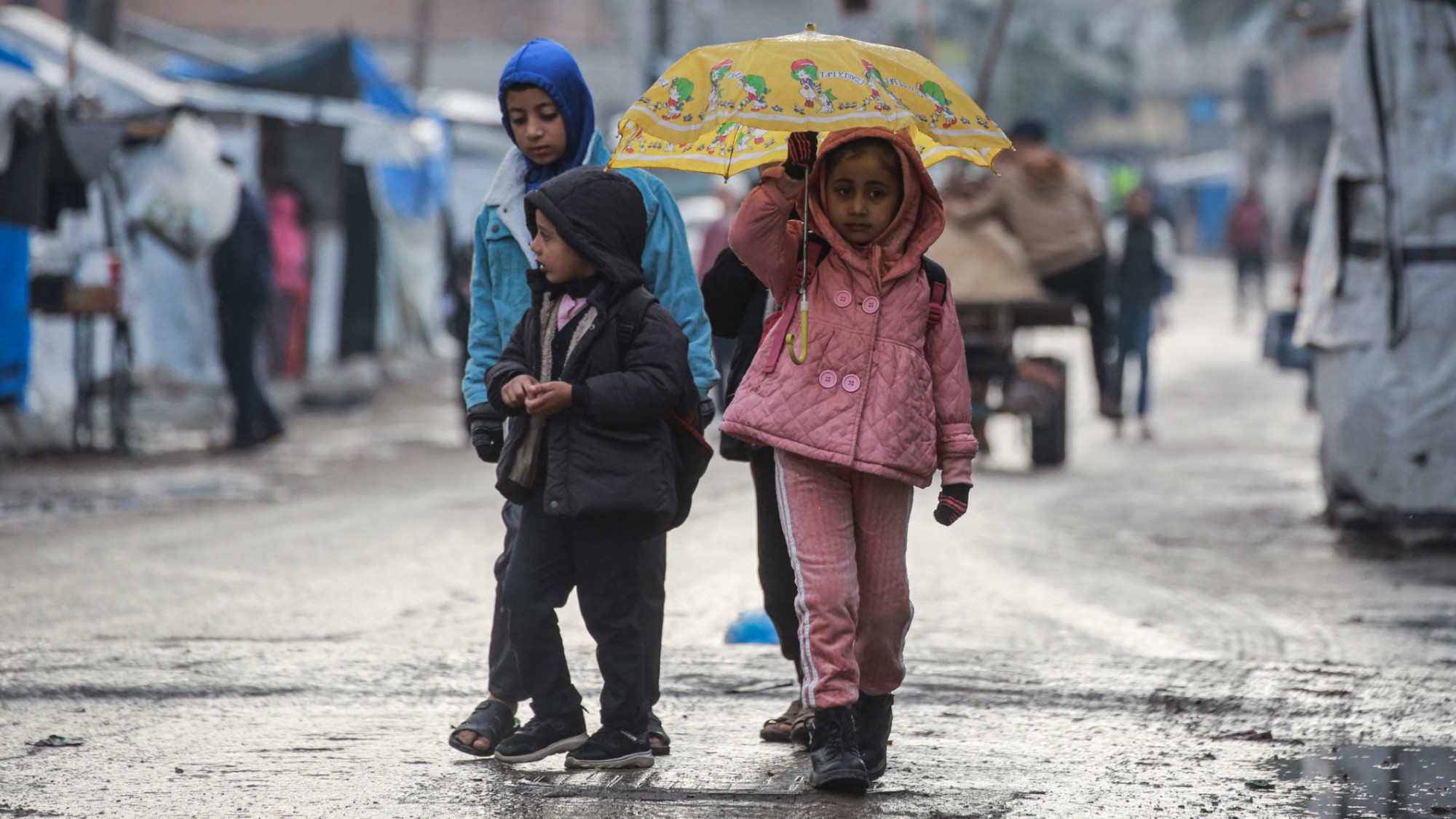
Torrential rainfall has plunged Gaza into a deepening humanitarian catastrophe, submerging thousands of makeshift tents and exacerbating the already desperate conditions for displaced Palestinians. The severe weather event, which commenced before dawn on Wednesday, resulted in widespread flooding across the northern regions of the Strip, with water levels reaching approximately half a meter in numerous areas.
The devastating downpour, lasting nearly four hours, completely inundated low-lying coastal zones and exposed the critical shortage of waterproof materials. With basic protective supplies largely unavailable and those remaining on the market priced prohibitively, displaced families face increasingly dire circumstances.
According to Gaza’s Government Media Office, approximately 300,000 tents and prefabricated housing units are urgently required to address basic shelter needs. This crisis persists despite October’s ceasefire agreement, which explicitly mandated the entry of shelter materials—a provision Israel continues to violate through its blockade of essential humanitarian supplies.
The Civil Defence Directorate issued an urgent appeal for international intervention, emphasizing that “displaced people in the Gaza Strip are drowning in their dilapidated tents” and characterizing rescue efforts as both a “humanitarian and moral duty.”
UN Special Rapporteur on the Right to Adequate Housing Balakrishnan Rajagopal described the situation as “extremely urgent and critical,” noting that approximately 1.5 million people currently lack access to proper shelter. Rajagopal revealed that while UNRWA has prepared shelters for approximately 1.3 million people outside Gaza, Israel systematically prevents their entry into the territory.
The UN expert condemned Israel’s persistent violations of the ceasefire agreement, documenting at least 738 direct breaches including airstrikes, shootings, and residential demolitions since October. These actions have resulted in at least 379 fatalities while simultaneously restricting humanitarian aid to insufficient levels that exclude essential shelter, food, and medical items.
Rajagopal characterized the systematic obstruction of aid as a form of “slow genocide,” expressing unprecedented concern about the “level of cruelty and suffering” exceeding that witnessed in other conflicts. Meteorological forecasts indicate continued adverse weather conditions throughout Palestine until Friday, with additional heavy rainfall, flash floods, and strong winds anticipated.