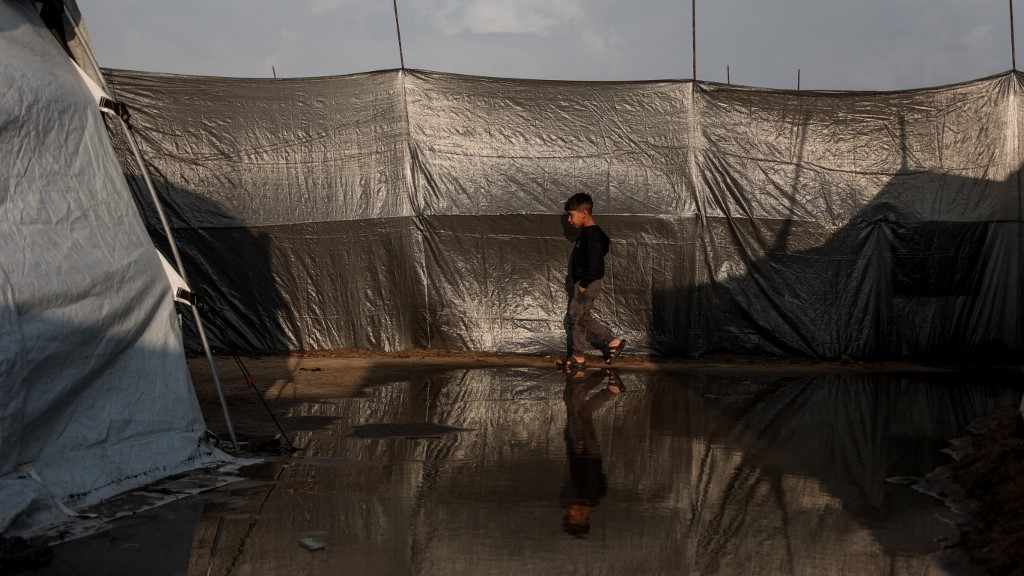
Across Gaza’s displacement camps, families surviving in makeshift shelters face a new humanitarian emergency as winter storms overwhelm their fragile living conditions. Multiple households report catastrophic flooding, structural collapses, and sewage contamination amid freezing temperatures, creating life-threatening conditions for vulnerable populations.
At al-Yarmouk stadium in central Gaza, Saber Dawas recounts his futile attempts to reinforce his family’s tent against relentless rain. Despite borrowing money for plastic tarpaulins and wooden supports, the structure collapsed during recent storms, soaking all possessions and leaving his seven daughters shivering through flooded conditions. His youngest child, a two-year-old with stomach cancer and compromised immunity, now battles influenza without access to medication. “I wish I had died before reaching a day where I watch my daughters freezing while I can’t provide them warmth,” he told Middle East Eye.
Nearby, Sanaa al-Ayubi’s family shelters in equally dire circumstances. Her husband, a double amputee from Israeli airstrikes that destroyed their Tel al-Hawa home in December 2024, now crawls through sewage-contaminated floodwaters after their tent’s central pole snapped. The malfunctioning sewage infrastructure has created biohazard conditions, with bacteria forming on her husband’s residual limbs and most bedding ruined by contamination. Despite contacting municipal authorities, no assistance has arrived.
In northern Gaza’s al-Karama neighborhood, widow Nesma Hassan and her four-year-old daughter occupy the remnants of their bomb-damaged home. Though two rooms remain partially roofed, winter winds tore away protective coverings, leaving them scooping water throughout nights while huddling in corners. The child now exhibits trauma responses to thunder and wind noises echoing through the rubble.
Gaza’s civil defense reports at least 11 fatalities and 11 injuries from partial building collapses during the three-day storm period, with emergency teams responding to 13 structural failures and hundreds of flooded tents. The agency has prioritized water pumping and drainage channel clearance, but overwhelming needs outstrip available resources.
Many displaced residents express bitter irony that their suffering continues despite ceasefire declarations, with one father questioning: “Is this what a ceasefire looks like? Instead of being in our homes we are dying of cold in fragile tents.”