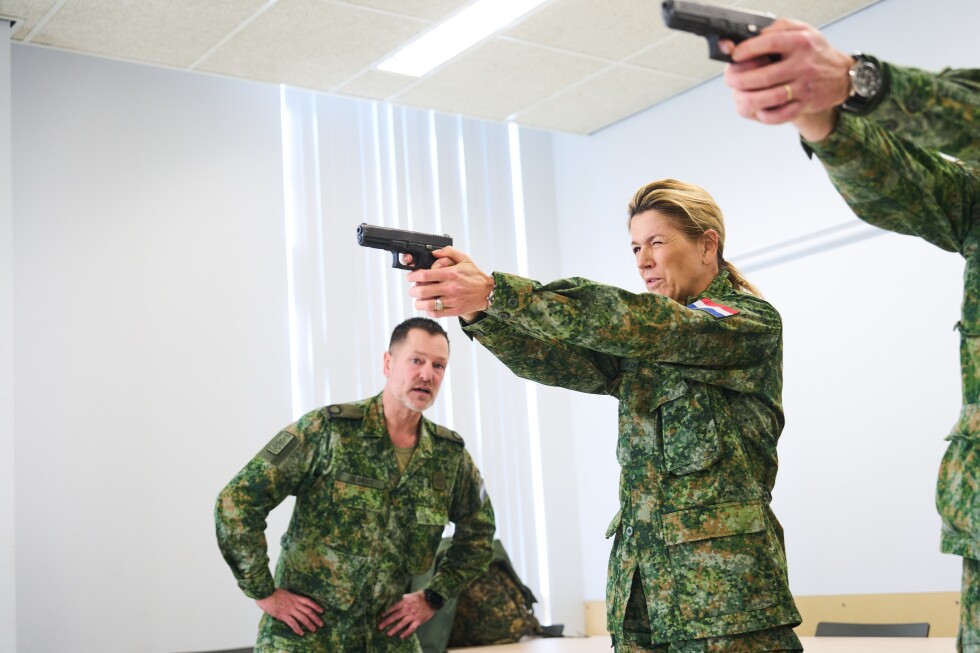
In a striking demonstration of royal commitment to national defense, Queen Máxima of the Netherlands has commenced military training to become an army reservist. The 54-year-old monarch, born in Argentina, began her preparatory program this week at a military academy in Breda, following in the footsteps of her daughter Crown Princess Amalia who recently completed basic training.
The Dutch Ministry of Defense confirmed the Queen’s voluntary enrollment, stating that her decision reflects growing concerns about European security in the wake of Russia’s ongoing conflict in Ukraine. ‘Because the security of the Netherlands can no longer be taken for granted, Máxima has decided to become a reservist,’ the ministry announced in an official communiqué.
Her comprehensive training regimen will encompass practical and theoretical components including marksmanship, physical endurance exercises, self-defense techniques, topographic navigation, and military jurisprudence. Photographs released by the Royal House show the Queen actively participating in combat simulations, firearms training, and aquatic obstacle courses.
Upon completion, Queen Máxima will receive the rank of lieutenant-colonel and will be deployed according to operational requirements. While reservists typically serve within national borders, overseas assignments remain possible on a voluntary basis.
This royal initiative coincides with broader European efforts to strengthen military capabilities. The incoming Dutch coalition government plans to expand armed forces to 122,000 personnel from the current 80,000, while Germany, France, Denmark, and Belgium have implemented parallel recruitment strategies. These measures respond to heightened security apprehensions across the continent and align with NATO’s revised defense spending targets established during the 2023 summit.
Defense officials express optimism that the Queen’s participation will inspire broader civic engagement with military service, potentially addressing recruitment challenges that have persisted for years.