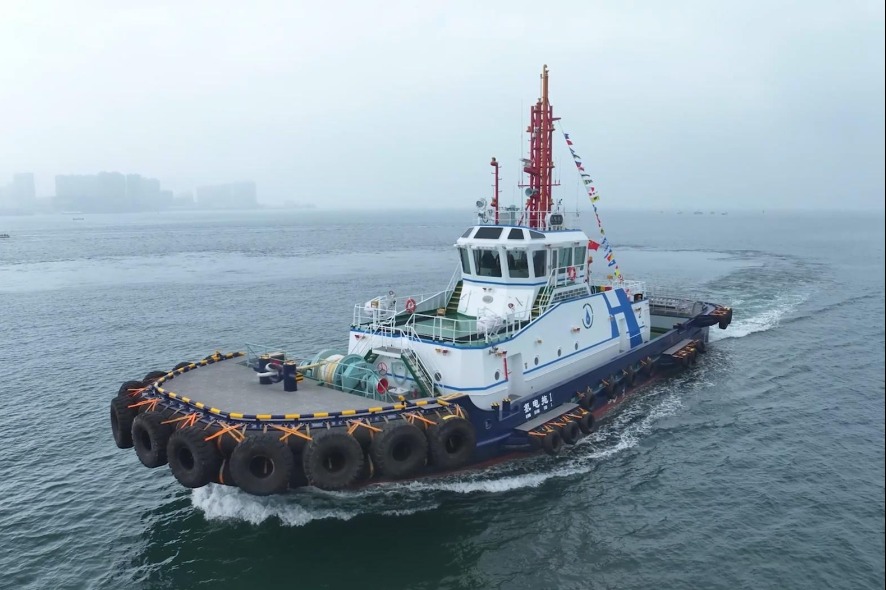
Qingdao Port in Shandong Province has launched a groundbreaking clean energy initiative with the commissioning of China’s first hydrogen-electric hybrid tugboat, marking a significant advancement in sustainable maritime operations. Since its mid-summer deployment, the innovative vessel has been actively supporting port operations while demonstrating substantial environmental benefits.
According to Captain Zhou Zixiang, the tugboat features an advanced hybrid propulsion system integrating hydrogen fuel cells with liquid-cooled lithium battery technology. This configuration enables approximately 12 hours of continuous operation on a single charging cycle. The vessel represents a technological leap forward in port machinery, offering superior energy utilization efficiency and enhanced maneuverability compared to conventional diesel-powered tugboats.
The environmental impact is particularly noteworthy, with projections indicating an annual reduction of approximately 1,500 tons of carbon dioxide emissions from this single vessel alone. The tugboat incorporates China’s Beidou Navigation Satellite System for precise positioning and operations, complemented by an intelligent shore-based charging infrastructure specifically designed for hydrogen and electric vessels.
This maritime innovation forms part of Qingdao Port’s broader green transformation strategy. Despite handling a record annual cargo throughput exceeding 700 million tons, the port has aggressively integrated renewable energy sources throughout its operations. The facility has established comprehensive solar and wind power generation systems combined with large-scale energy storage solutions, creating an integrated charging zone dedicated to clean energy vehicles and equipment.
Current statistics reveal impressive sustainability metrics: photovoltaic installations generate approximately 25 million kilowatt-hours of electricity annually, nearly 80% of operational vehicles within the port now utilize new energy sources, and clean energy accounts for 69% of the port’s total energy consumption. These collective efforts are reducing carbon dioxide emissions by approximately 20,000 tons each year, positioning Qingdao Port as a leader in environmentally responsible port management and sustainable shipping technology.