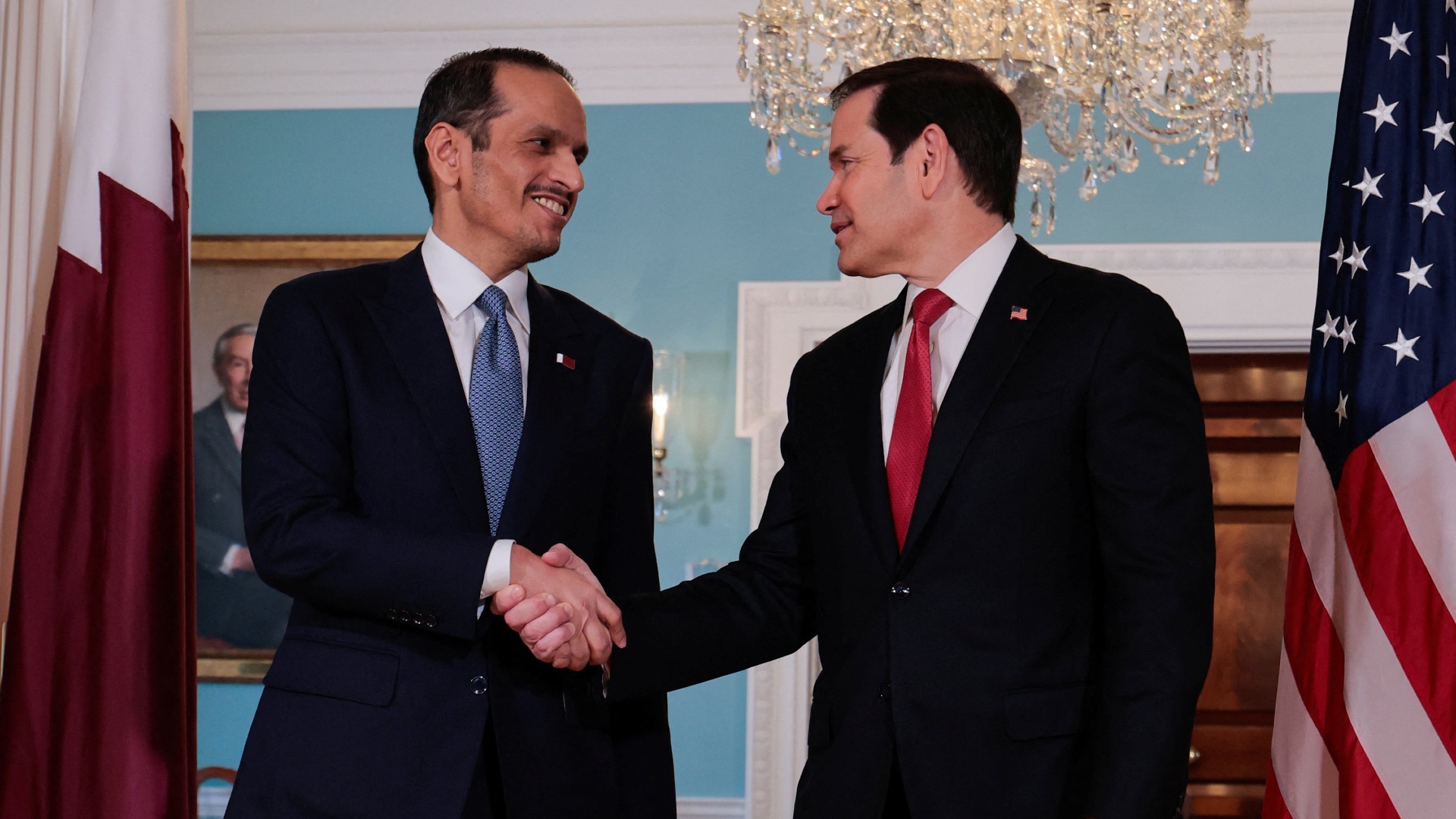
On a Monday address to Al Jazeera, Qatar’s Prime Minister Mohammed bin Abdulrahman Al Thani issued a stark warning that the broader Middle East lacks the capacity to absorb another full-scale flare-up of hostilities between the United States and Iran, as the small Gulf state leads quiet diplomatic efforts to unblock long-stalled de-escalation negotiations between the two longstanding adversaries. Thani delivered the remarks immediately following high-level closed-door talks in Washington with newly appointed U.S. Secretary of State Marco Rubio, framing his visit as a critical opportunity to align shared priorities amid spiraling regional risks. “The current fragile security landscape across the Middle East cannot sustain any new escalation of direct conflict between the U.S. and Iran,” Thani emphasized in the interview. Beyond diplomatic outreach, the Qatari prime minister confirmed that Doha and Washington are actively working to expand and deepen bilateral military and defense cooperation, pointing to their longstanding security partnership anchored by the U.S. military’s largest regional base and the forward headquarters of U.S. Central Command, both hosted on Qatari territory. “Our annual strategic dialogue with the United States forms the backbone of our bilateral relationship, and our core priority now is to reinforce collaborative frameworks across all defense domains,” Thani added. The urgent diplomatic push comes against a backdrop of severe economic strain on Qatar itself: during the peak of recent hostilities between the U.S., its regional allies and Iran, repeated Iranian strikes targeted Qatari critical infrastructure, inflicting major damage that disrupted the nation’s energy production capacity — the core engine of its entire national economy. Persistent disruptions and partial blockades of the strategic Strait of Hormuz, a chokepoint for roughly a third of global seaborne oil trade, have further amplified the economic pressure on Doha. Parallel to Qatari diplomatic overtures, senior Iranian officials also signaled a shifting stance on the ongoing impasse the same Monday. Speaking via the Iranian Tasnim News Agency, Iran’s parliament speaker Mohammad Bagher Ghalibaf revealed that Supreme Leader Mojtaba Khamenei had publicly stated that the years-long “no war, no peace” limbo between Iran and the U.S. can no longer be allowed to continue and must be resolved through deliberate action. “Our enemies are deliberately imposing this no-war, no-peace status quo to drain our national resources over time,” Ghalibaf noted, adding that Iranian leadership is now actively debating the specific mechanisms, responsible parties, and concrete policy steps required to break the stalemate. Significant uncertainty remains, however, over the level of commitment from the U.S. presidential administration to pursue meaningful, sustained peace negotiations. Earlier this month, U.S. Vice President JD Vance openly acknowledged that widespread public anger over the massive economic fallout from prolonged Middle East conflict was a key factor that cost the ruling Republican Party critical seats in the recent U.S. midterm elections. For his part, U.S. President Donald Trump told reporters gathered at the White House the preceding Friday that his administration would only entertain a genuine, enforceable agreement with Iran, rejecting any potential “fake deal” that failed to advance U.S. national security interests. Hours after Thani’s public remarks on Monday, the U.S. Department of the Treasury announced a fresh round of sweeping sanctions targeting a sprawling Iranian “shadow banking” network that the administration claims funnels illicit funds to the country’s military and proxy operations. The new sanctions list designates eight Iranian nationals alongside a network of trading firms registered in the United Arab Emirates, Turkey, and Hong Kong. A Treasury spokesperson described the targeted network as “the last remaining financial lifeline for a bankrupt regime,” framing the penalties as a deliberate pressure tactic to force Iranian leadership back to the negotiating table on terms favorable to Washington.