Qatari Prime Minister Sheikh Mohammed bin Abdulrahman Al-Thani has articulated a firm stance on the proposed international stabilization force for Gaza, emphasizing the critical need for impartiality in postwar arrangements. Following high-level discussions with US Secretary of State Marco Rubio during the seventh Qatar-US Strategic Dialogue in Washington, the Prime Minister asserted that any security presence must prioritize protecting the ceasefire agreement itself rather than favoring any single party.
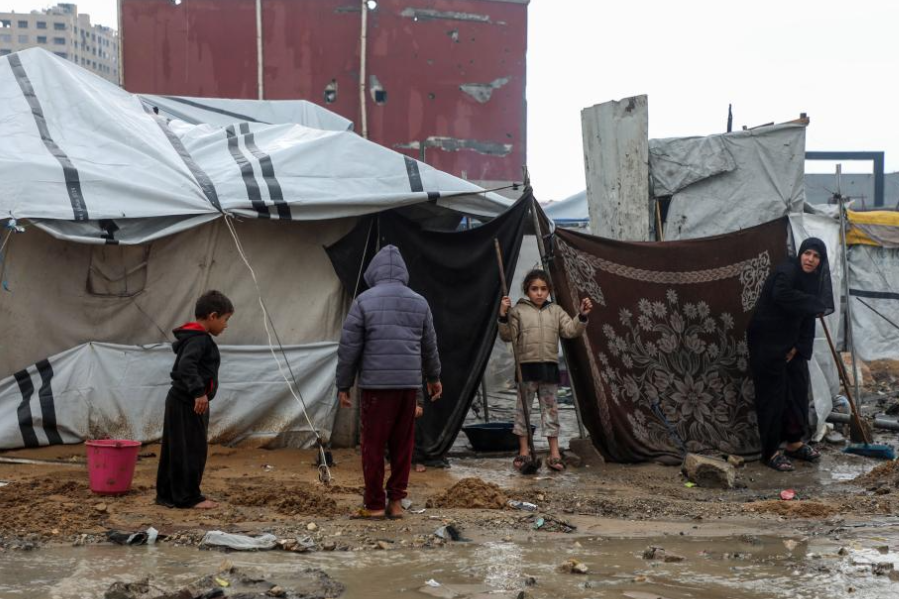
The diplomatic engagement occurred against the backdrop of deteriorating humanitarian conditions in Gaza, where recent winter storms have exacerbated the crisis. UNRWA reports indicate at least 16 fatalities resulting from Storm Byron’s impact on vulnerable shelters, with three children among the deceased. Agency chief Philippe Lazzarini characterized the disaster as “man-made” due to the population’s forced displacement into inadequate shelters.
Concurrently, Egyptian Foreign Minister Badr Abdelatty advocated for full implementation of UN Security Council Resolution 2803 during discussions with his Slovak counterpart. The resolution, adopted last month, mandates deployment of an International Stabilization Force while emphasizing the interconnection between humanitarian progress and Palestinian administrative continuity.
Diplomatic developments suggest movement toward governance structures, with the Times of Israel reporting six nations—Egypt, Qatar, UAE, UK, Italy, and Germany—have committed to participate in a proposed Board of Peace for postwar Gaza management. However, regional analysts caution that such initiatives risk credibility gaps if pursued alongside ongoing military operations and settler violence in the West Bank.
Arhama Siddiqa of the Institute of Strategic Studies Islamabad notes these diplomatic exchanges reveal emerging regional consensus that stabilization mechanisms must be internationally grounded, impartial, and intrinsically linked to unimpeded humanitarian access. The convergence of Qatari and Egyptian positions highlights Arab concerns that postwar arrangements must not evolve into instruments for managing occupation or shielding Israel from accountability.