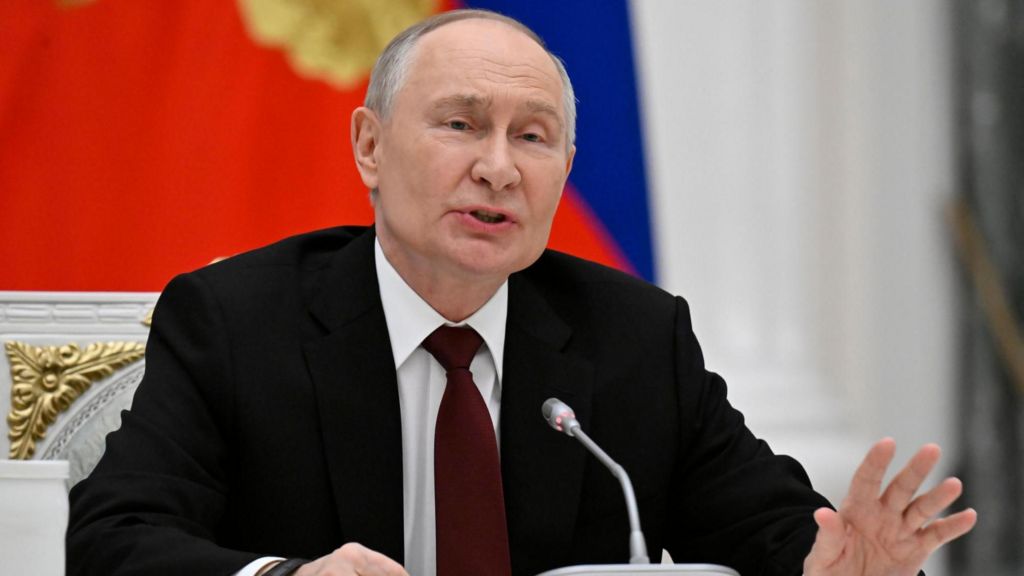
A critical diplomatic engagement is set to unfold in Moscow as Russian President Vladimir Putin prepares to meet US Special Envoy Steve Witkoff on Tuesday. This high-stakes meeting follows the White House’s expression of “very optimistic” sentiments regarding a potential agreement to conclude the Ukraine conflict.
The anticipated summit gains additional significance with the expected participation of Jared Kushner, former President Donald Trump’s son-in-law, who has maintained an advisory role in these diplomatic exchanges. This development comes after intensive negotiations in Florida between Ukrainian and US officials, including both Witkoff and Kushner, focused on refining a US-supported peace proposal initially perceived as advantageous to Russian interests.
Ukrainian President Volodymyr Zelensky characterized recent discussions as “constructive” while acknowledging persistent challenges. Following his meeting with French President Emmanuel Macron in Paris, Zelensky emphasized Kyiv’s non-negotiable priorities: preserving Ukraine’s territorial sovereignty and obtaining robust security assurances. The territorial question remains particularly contentious, with Moscow continuing to demand concessions in eastern Ukraine—a condition Kyiv has consistently rejected.
The diplomatic landscape shows increased complexity as Witkoff engaged with multiple European leaders, including UK Prime Minister Sir Keir Starmer and Ukraine’s newly appointed chief negotiator Rustem Umerov. Several key European figures also participated virtually in the Zelensky-Macron discussions.
White House Press Secretary Karoline Leavitt indicated that the peace draft had undergone substantial refinement, stating: “The administration feels very optimistic… We’re hopeful that this war can finally come to an end.” This optimism echoes Putin’s recent acknowledgment that he had reviewed the US proposal and considered it a potential foundation for agreement.
However, Kremlin officials subsequently expressed reservations about accepting the proposal after Ukraine and European allies secured modifications to the initial terms. The original draft, circulated in November, had caused significant concern across European capitals for its perceived alignment with Moscow’s demands. The document addressed sensitive matters including the investment of frozen Russian assets held in European institutions and conditions for Ukrainian market access in Europe.
President Macron clarified that no finalized peace plan currently exists, insisting that any legitimate proposal must incorporate input from both Ukraine and European nations. He stressed that territorial concessions could “only be finalized by President Zelensky” and highlighted the necessity of European involvement in decisions regarding frozen assets, security guarantees, and Ukraine’s EU accession prospects.
The French leader simultaneously commended the Trump administration’s efforts to resolve a conflict that originated with Russia’s 2014 annexation of Crimea and escalated into full-scale invasion in 2022.
EU Foreign Policy Chief Kaja Kallas characterized this week as potentially “pivotal” while expressing concerns that Moscow might seek additional concessions beyond current gains. She warned against pressuring Ukraine into surrender, noting such an outcome would serve nobody’s interests.
As diplomatic efforts intensify, Russian officials claim to have captured strategic eastern towns of Pokrovsk (Krasnoarmeysk) and Vovshansk—assertions contradicted by Ukrainian authorities and open-source intelligence monitoring the conflict. These battlefield developments occur alongside persistent disagreements over security guarantees, with Kyiv seeking NATO membership protection against future aggression—a proposition both Russia and Trump explicitly oppose.