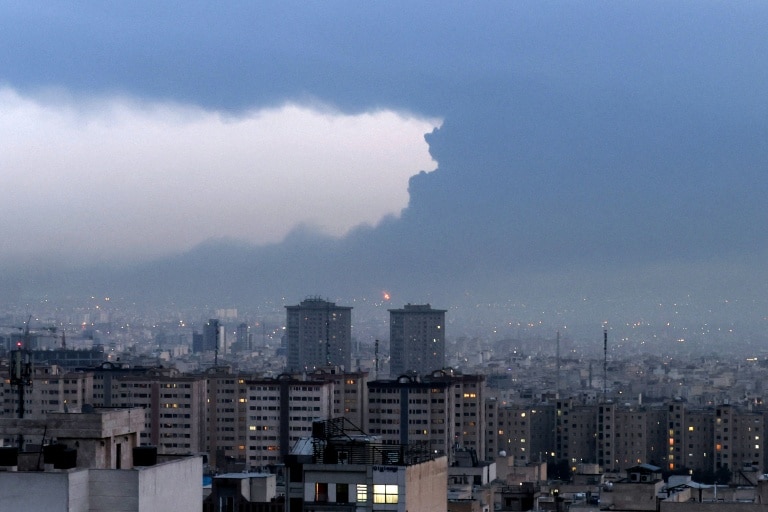
Tehran’s metropolitan landscape has undergone a dramatic transformation as residents navigate an unprecedented state of wartime existence. The Iranian capital, alongside other urban centers, faces sustained aerial bombardments from Israeli-US forces in a conflict intensity not witnessed since the 1980s war with Saddam Hussein’s Iraq.
The city’s rhythm has fundamentally altered: educational institutions remain shuttered, commercial activity has significantly diminished, and armored security vehicles now patrol streets once filled with ordinary traffic. Residents have adopted practical survival measures, taping windows to prevent shattering from explosion debris and largely confining themselves to their homes except for essential movements.
A complex psychological adaptation is underway among Tehran’s populace. While many express remarkable calmness and resilience, the constant uncertainty of attacks creates underlying tension. Residents report no advance warning systems for incoming strikes, forcing them to interpret target patterns independently. Many find solace in believing strikes primarily target institutional structures like police stations, mosques, and military sites rather than residential buildings, though collateral damage remains widespread.
The social fabric demonstrates remarkable strength with neighbors providing mutual support, including housing for those displaced by destruction. Infrastructure has adapted to crisis conditions: public transportation operates with minimal passengers, delivery services maintain essential goods circulation, and critical neighborhood establishments like bakeries remain operational despite widespread commercial closures.
Communication networks face severe restrictions, with only domestic intranet services functioning, virtually isolating Iran from global digital connectivity. The visual landscape has changed with the emergence of billboards featuring Mojtaba Khamenei, the newly appointed successor to his father, the slain Supreme Leader, though his public absence since appointment fuels uncertainty.
Despite the turmoil, religious faith provides comfort for many residents, who combine practical preparations with spiritual resolve. The approaching Iranian New Year (Nouruz) creates poignant contrast to the conflict, with traditional celebrations likely overshadowed by ongoing security concerns. International observers note significant refugee movement, particularly among Afghan migrant workers returning home amid the deteriorating conditions.