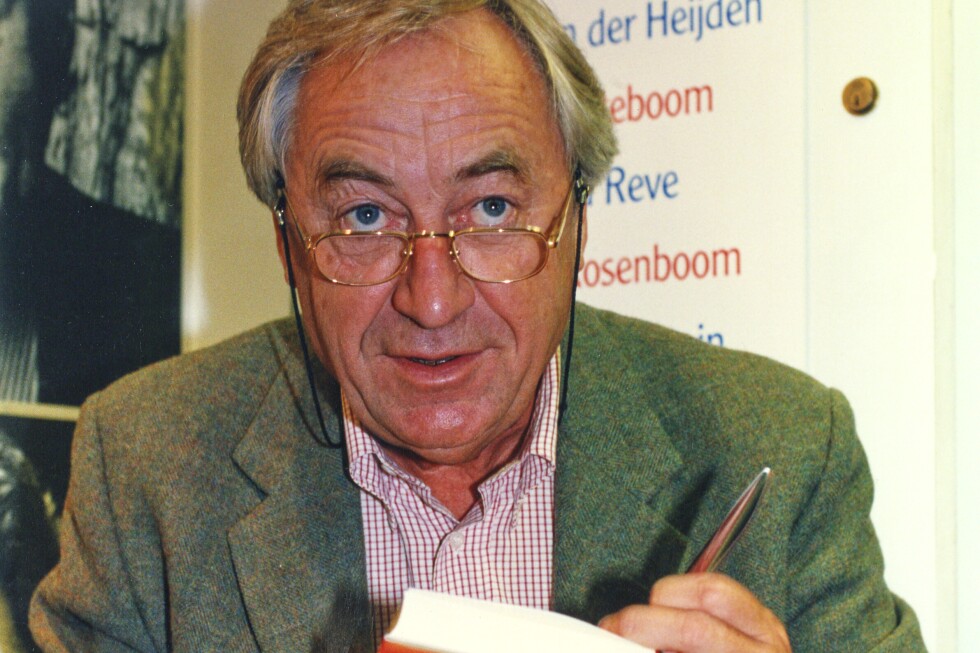
THE HAGUE, Netherlands — Cees Nooteboom, the celebrated Dutch author whose profound literary works exploring European identity made him a perennial Nobel Prize contender, passed away peacefully Wednesday at age 92. His publisher, De Bezige Bij, confirmed the eminent writer died on his beloved island of Menorca.
Nooteboom’s remarkable seven-decade career spanned multiple genres, establishing him as one of the Netherlands’ most distinguished literary voices. His passing marks the end of an era for European letters.
The publisher’s statement, composed on behalf of Nooteboom’s wife Simone Sassen, noted the international literary community would deeply miss “the friendship, erudition, passion, and idiosyncrasy of this internationally acclaimed writer.” No cause of death was provided.
Nooteboom’s literary journey began with his 1955 debut novel “Philip and the Others,” now considered a Dutch classic that drew inspiration from his hitchhiking adventures across France and Scandinavia. This work established his signature style—meticulously constructed narratives showcasing linguistic mastery and profound cultural insight.
Beyond fiction, Nooteboom distinguished himself as an observant journalist chronicling Europe’s transformative moments. He reported firsthand on pivotal historical events including the 1956 Soviet invasion of Budapest, the 1968 Paris student uprising, and the 1989 fall of the Berlin Wall.
After focusing on journalism and travel writing during the 1960s-70s, Nooteboom reemerged as a major novelist with his 1980 work “Rituals,” which achieved both critical acclaim and popular success, eventually being adapted into a feature film. His extensive body of work has been translated into more than 25 languages, with particularly strong recognition in Germany.
Though never awarded the Nobel Prize, Nooteboom received virtually every major Dutch literary honor plus Germany’s prestigious Konrad Adenauer Stiftung literature prize in 2010. The Dutch National Library noted his “well-considered constructions” and “mastery of language” as consistently praised by reviewers.
Funeral arrangements remain unannounced as the literary world mourns the loss of one of Europe’s most insightful cultural voices.