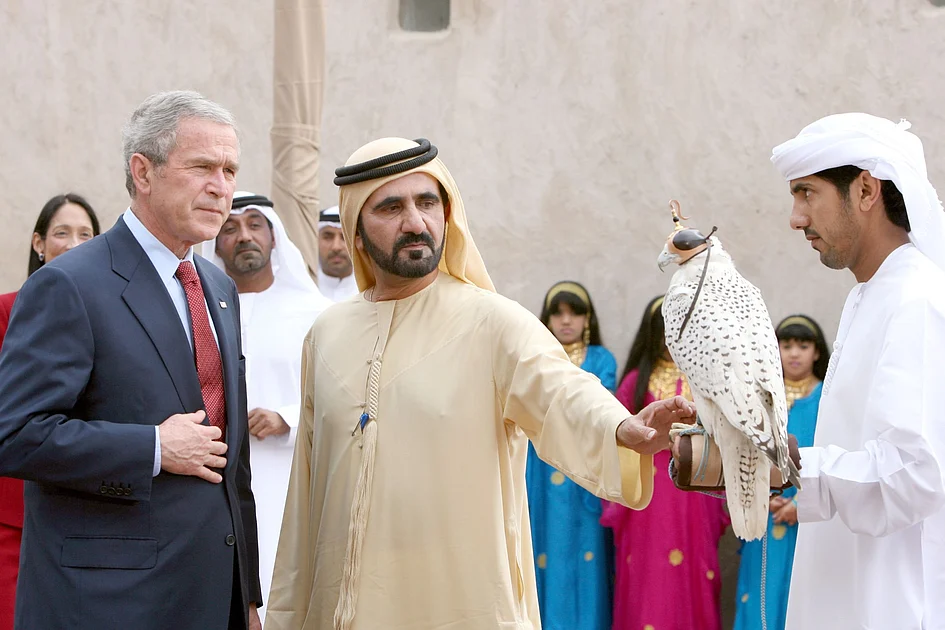
Eighteen years ago, Dubai experienced a remarkable transformation from its characteristic bustle to unprecedented tranquility to host a distinguished American leader. On January 14, 2008, the emirate implemented extraordinary measures to welcome President George W. Bush, marking the first visit by an incumbent US president to the UAE.
Authorities declared an unexpected public holiday, creating a surreal urban landscape where normally congested highways stood empty. From 6:00 AM until 4:00 PM, Dubai’s extensive road network underwent comprehensive closures as part of an elaborate security operation. Major transportation arteries including Garhoud Bridge, Maktoum Bridge, and Shindagha Tunnel were secured, while alternative routes were designated for essential travel.
The presidential itinerary featured culturally significant engagements, beginning at the historic former residence of Dubai’s Ruler, now converted into a museum preserving the emirate’s heritage. President Bush experienced traditional performances and participated in an informal lunch with students at the Dubai School of Government, seated on cushions in a circle while dining from bowls placed on carpeted floors.
At the iconic Burj Al Arab, the president addressed entrepreneurs, expressing particular admiration for Dubai’s ambitious spirit. “I am most impressed with what I’ve seen here,” Bush remarked, highlighting the city’s entrepreneurial dynamism and commitment to creating societal opportunities.
While residents adapted creatively to the unexpected holiday—with children playing cricket in suddenly quiet streets and families enjoying mall visits—the transportation disruptions presented significant challenges. Airport arrivals faced extended stranding periods, with passengers from international flights like one family from Lahore reporting taxi services unavailable until road reopenings. Dubai Duty Free employees completed night shifts only to undertake long walks to residential areas like Satwa due to suspended public transport.
Despite the logistical complexities, the day concluded without reported accidents or official complaints—a testament to both the comprehensive planning and public cooperation. The event remains etched in civic memory as a demonstration of Arabian hospitality that briefly but completely altered the rhythm of one of the world’s most dynamic cities.