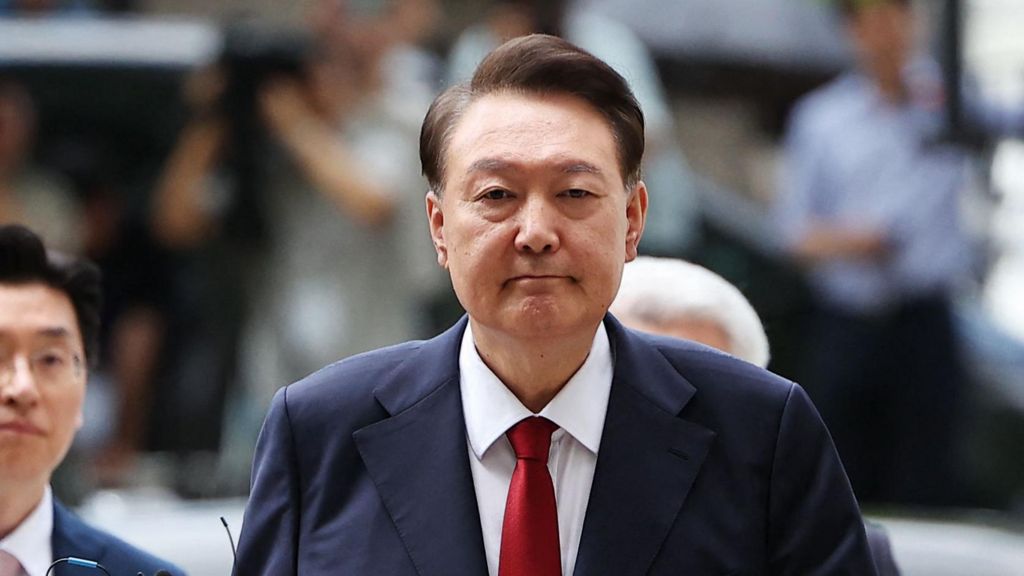
In a landmark legal proceeding that has captivated South Korea, prosecutors have formally requested the death penalty for former President Yoon Suk Yeol, who stands accused of masterminding an attempted insurrection through his abrupt imposition of martial law in December 2024. The Seoul court heard closing arguments in a trial that has merged cases against three senior figures from Yoon’s administration, including former defense minister Kim Yong-hyun and former police chief Cho Ji-ho.
The prosecution’s case centers on Yoon’s December 2024 declaration of military rule, which plunged the nation into political chaos despite lasting only hours. While no fatalities resulted from the attempted power grab, prosecutors argued that Yoon’s intentions were fundamentally violent, presenting as evidence a memo from one of the martial law planners that discussed ‘disposing’ of hundreds of journalists, labor activists, and lawmakers. A military commander testified that Yoon had directly ordered the arrest of opposition lawmakers.
Yoon’s defense maintains that the martial law declaration was merely symbolic, intended to draw public attention to alleged wrongdoings by the opposition Democratic Party. The former president has denied all charges, characterizing himself as a patriot attempting to protect South Korea from North Korean threats amid domestic political tensions.
The case represents an extraordinary fall from power for Yoon, who became South Korea’s first sitting president to be arrested and charged. His impeachment following the failed power grab triggered snap elections that brought current President Lee Jae Myung to power in June.
South Korea’s legal system mandates that prosecutors must seek either death or life imprisonment for insurrection convictions. The nation has not carried out an execution in nearly three decades, with the last death sentence for a former leader being imposed on military dictator Chun Doo-hwan in 1996 for his 1979 coup—a sentence later commuted to life imprisonment.
A verdict in Yoon’s case is anticipated in February, with the court’s decision likely to have profound implications for South Korea’s political landscape and democratic institutions.