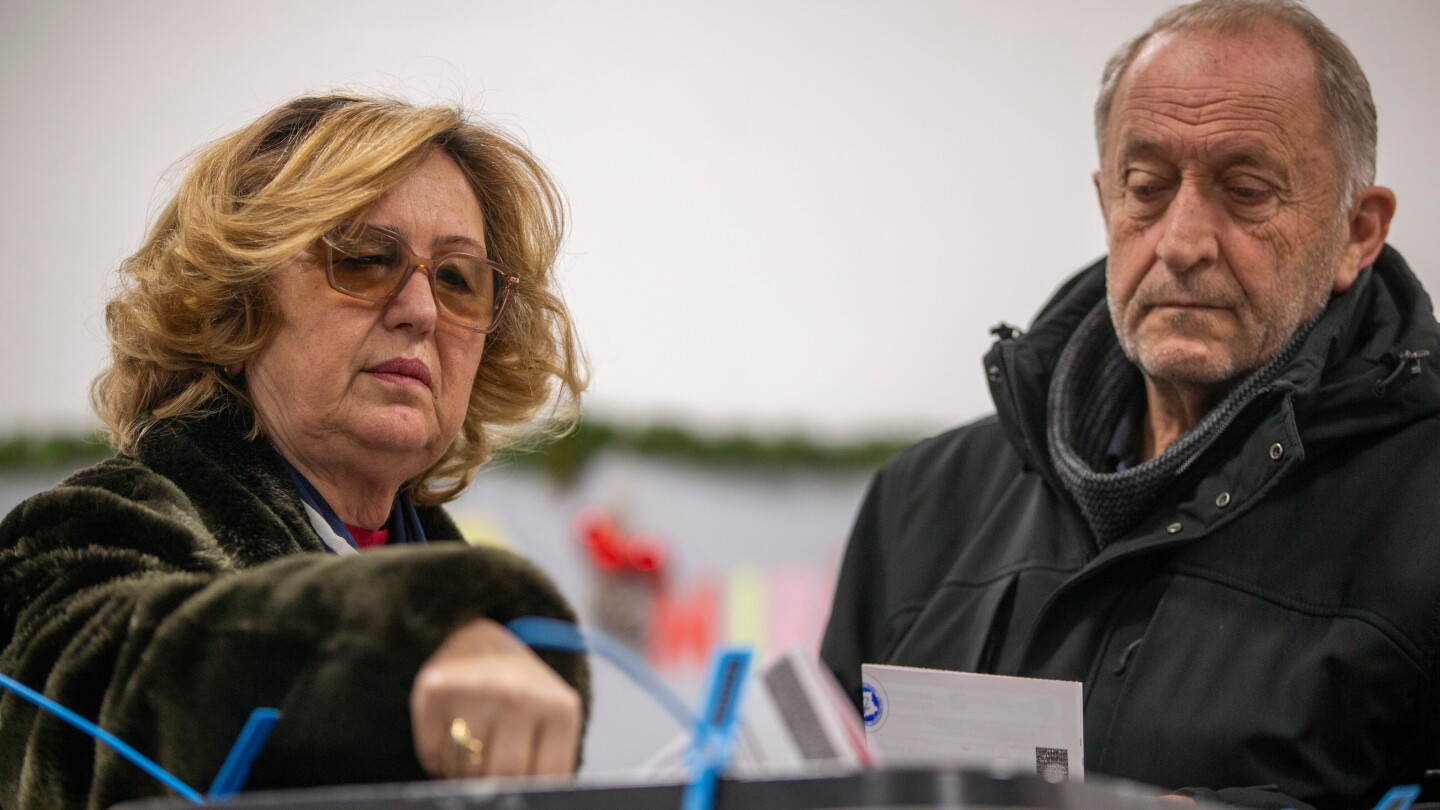
PRISTINA, Kosovo – Prime Minister Albin Kurti’s political party has achieved a resounding victory in Kosovo’s snap parliamentary elections, positioning the incumbent leader for another term governing the Balkan nation. Preliminary results released by state election authorities indicate Kurti’s Vetevendosje (Self-Determination) party secured approximately 50% of the vote, dramatically outperforming rival parties.
The Democratic Party of Kosovo trailed distantly with 21% support, while the Democratic League of Kosovo garnered nearly 14% of ballots counted. Celebrations erupted outside party headquarters in Pristina as supporters chanted Kurti’s name following the announcement.
This electoral contest emerged from prolonged political gridlock after Kurti’s party, despite winning the February 9 election, failed to establish a governing coalition. The deadlock marked an unprecedented constitutional crisis in Kosovo’s young democracy, which declared independence from Serbia in 2008 following the 1998-99 conflict that concluded with NATO intervention.
Kurti immediately addressed the nation, stating: “Congratulations on the biggest victory in the history of the country. We don’t have time to lose and must move forward together as quickly as possible.” The Prime Minister emphasized that parliamentary formation and government establishment would proceed without delay.
Critical challenges await the new administration, including approval of the national budget for the coming year and election of a new president before incumbent Vjosa Osmani’s mandate expires in April. Voter participation registered at approximately 44% among Kosovo’s 1.9 million eligible voters.
The political landscape remains complex, with 20 parliamentary seats automatically allocated to ethnic Serb representatives and minority parties under Kosovo’s election laws. Kurti’s administration has faced criticism from opposition parties accusing him of authoritarian tendencies and damaging relationships with key international allies including the United States and European Union.
The 50-year-old leader, a former political prisoner during Serbian rule, has maintained a firm stance in EU-mediated normalization talks with Belgrade, resulting in punitive measures from Western partners. Recent tensions with ethnic Serbs in northern regions culminated in violent clashes in 2023 that injured numerous NATO peacekeepers, though more recent municipal transitions occurred peacefully.
Kurti’s government has also agreed to accept third-country migrants deported from the United States under Trump-era immigration policies, with one individual having arrived thus far. Kosovo continues to grapple with one of Europe’s weakest economies while pursuing EU membership alongside other Western Balkan nations, contingent upon normalized relations with Serbia.