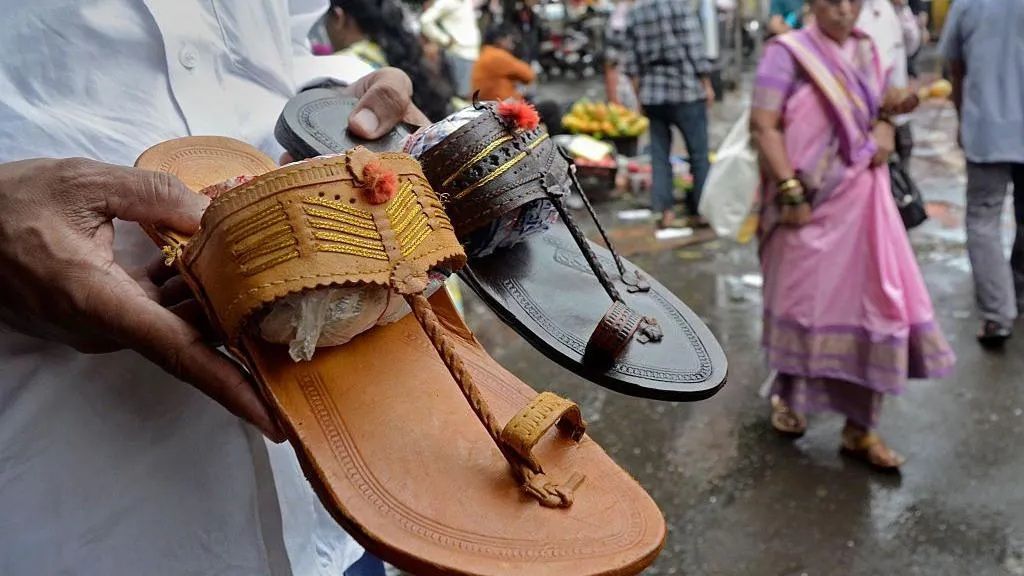
In a significant reversal following accusations of cultural appropriation, Italian luxury giant Prada has established a formal manufacturing partnership with Indian artisans to produce Kolhapuri-inspired sandals. The agreement, signed during the Italy-India Business Forum 2025, commits to producing 2,000 pairs of sandals through collaborations with state-backed entities in Maharashtra and Karnataka.
The limited-edition collection, branded as ‘Prada Made in India – Inspired by Kolhapuri Chappals,’ represents a reconciliation between global luxury fashion and traditional Indian craftsmanship. Lorenzo Bertelli, Prada’s head of Corporate Social Responsibility, emphasized the hybrid approach: “We’ll merge the original manufacturer’s standard capabilities with our sophisticated manufacturing techniques.”
Scheduled for global release in February 2026 through Prada’s online platform and 40 select stores worldwide, the sandals will carry a premium price tag of $939 (approximately £800 or 84,000 rupees) – a stark contrast to traditionally priced Kolhapuri sandals.
The partnership includes substantial investment in artisan development, with approximately 200 Kolhapuri craftspeople receiving three years of specialized training in Italy. Additional technical training will be provided locally through LIDCOM, a Maharashtra state entity supporting leather industries. The Maharashtra government has committed financial assistance to support artisans throughout this five-year agreement, though officials express confidence in its long-term extension.
This development follows June’s controversy when Prada showcased sandals bearing striking resemblance to traditional Kolhapuri designs without acknowledging their Indian origins. The subsequent backlash prompted the luxury brand to formally recognize the footwear’s cultural heritage and engage with local trade bodies, including the Maharashtra Chamber of Commerce, Industry & Agriculture.
Kolhapuri sandals, named after their city of origin in Maharashtra, represent a centuries-old craft tradition dating to the 12th century. Characterized by their durable leather construction, intricate braided patterns, and natural dye techniques, these handcrafted sandals have long been valued for their adaptability to India’s climate and their artisanal heritage.