China’s largest freshwater lake has reached a critical hydrological milestone as Poyang Lake’s water levels dropped below the extreme low threshold on Sunday morning. According to data from Xingzi Station, the key monitoring point, water levels fell to eight meters at 6 am on December 14, 2025, marking a severe environmental challenge for the Jiangxi province ecosystem.
The current water surface connecting Poyang Lake to the Yangtze River has dramatically shrunk by 90% compared to peak levels, continuing a troubling pattern of earlier and more prolonged dry periods. This year, the lake dipped below the 12-meter mark on August 8—87 days ahead of the historical average—and has experienced 217 days of below-threshold water levels in 2023 alone.
Scientific data reveals an accelerating trend of hydrological extremes. Since 2022, when water levels hit a record low of 4.6 meters, Poyang Lake has consistently broken records for early onset, extended duration, and severity of low-water periods. The transition from high to low water levels has become increasingly abrupt, with 2024 witnessing unprecedented daily drops of 0.45 meters and weekly declines of 2.68 meters.
The ecological consequences are substantial. Hydrological experts warn that hundreds of thousands of migratory birds—including protected species like white cranes and oriental storks—face severe wintering challenges. The Yangtze finless porpoise and other aquatic species similarly confront breeding and survival threats due to the shrinking habitat.
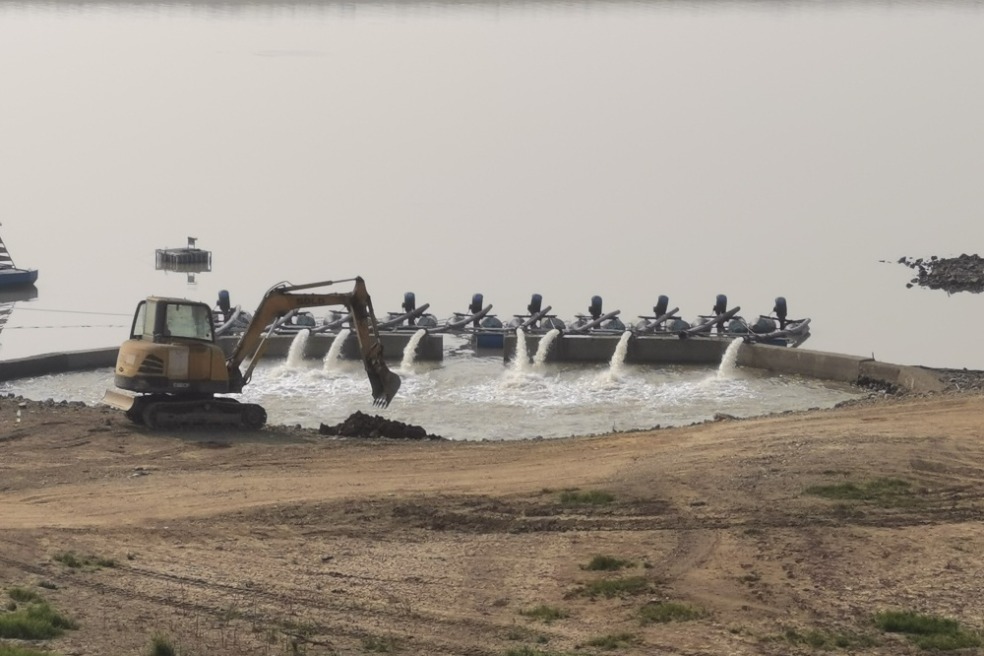
Local authorities have implemented emergency measures to address the crisis. At Guanhu Water Plant, all ten water pumps operate at maximum capacity, with additional pumps installed to extract water from the receding lake. Enhanced inspection protocols and water quality testing ensure safe drinking water for approximately 160,000 residents in surrounding communities.
Environmental managers are employing scientific water management strategies, including dredging operations and ecological water replenishment projects, to mitigate the impact of persistent low-water conditions. Continuous monitoring and adaptive management approaches remain crucial for balancing ecological protection and human water security needs.