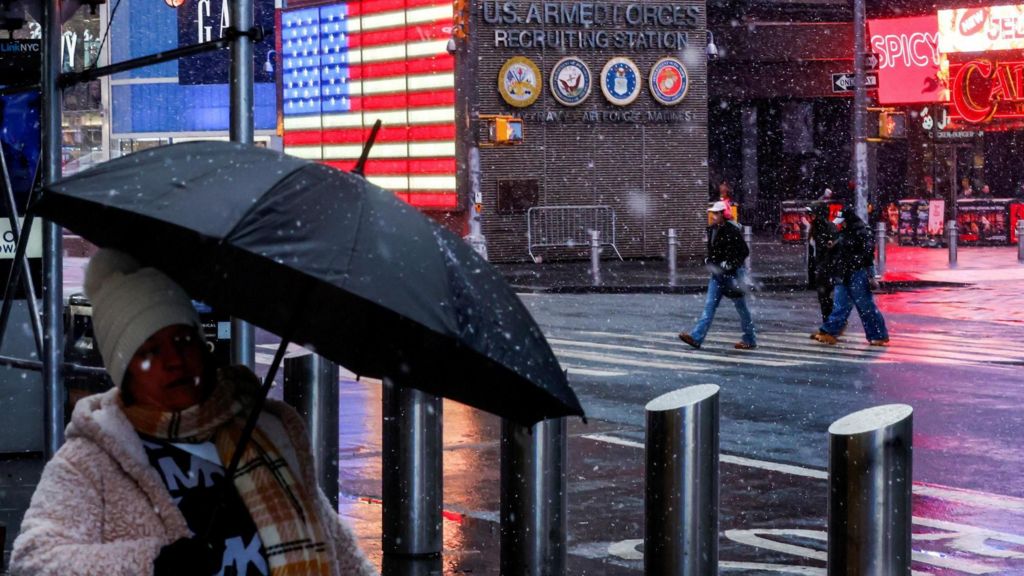
A monumental winter storm of historic proportions is unleashing its fury across the northeastern United States, compelling unprecedented emergency responses from state and local governments. Meteorological experts are characterizing this nor’easter as the most potent to strike the region in nearly a decade, with its impacts stretching from the Central Appalachians to coastal Maine.
The tempest has triggered blizzard warnings for approximately 35 million residents while subjecting an additional 19 million people to winter storm alerts. The National Weather Service indicates the storm’s low-pressure center intensified dramatically throughout Sunday afternoon and evening, generating formidable winds, substantial snowfall accumulations, and significant coastal flooding threats.
New York City, the nation’s most populous metropolitan area, implemented a comprehensive travel prohibition effective Sunday evening through Monday afternoon—marking the first instance of such stringent measures in nine years. Mayor Zohran Mamdani projected snowfall totals reaching 18-28 inches in various districts, accompanied by dangerously plummeting temperatures. The city’s emergency declaration follows a January cold snap that resulted in 19 fatalities, amplifying concerns about public safety during this extreme weather event.
Regional coordination has intensified as multiple governors enacted states of emergency across Connecticut, Delaware, New Jersey, Rhode Island, Massachusetts, and Pennsylvania. New York Governor Kathy Hochul mobilized approximately 100 National Guard personnel, emphasizing that Long Island, New York City, and the lower Hudson Valley reside ‘in the direct eye of the storm.’ Concurrently, transportation networks face massive disruptions with over 3,500 flight cancellations recorded Sunday alone, according to FlightAware data.
New Jersey Governor Mikie Sherrill suspended all state transit operations, including bus, light rail, and Access Link services, while cautioning residents this potentially represents the most severe storm since 1996. Connecticut Governor Ned Lamont instituted commercial vehicle restrictions on statewide highways, and Massachusetts officials preemptively closed educational institutions.
The storm’s repercussions extend beyond the United States, with Canada’s Nova Scotia province anticipating severe impacts through early Tuesday. Meteorological authorities warn of coastal wind gusts reaching 65-70 mph, creating hazardous conditions including downed power lines, tree damage, and probable electricity outages affecting thousands of households.