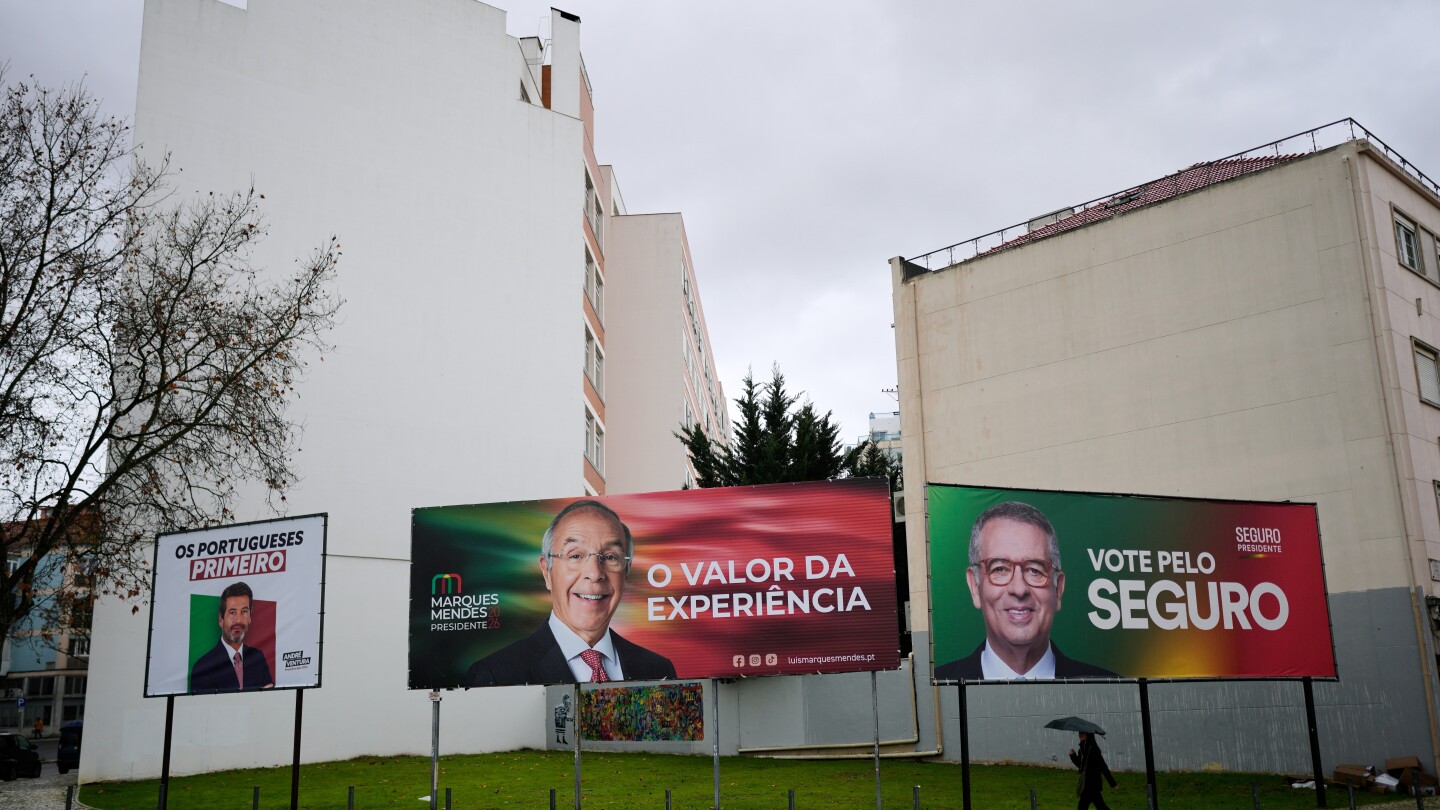
LISBON, Portugal — Portugal’s political landscape has entered a critical phase as an unprecedented field of 11 presidential candidates officially commenced their campaigns on Sunday, marking the start of a fiercely contested two-week campaign period ahead of the January 18 election. Political analysts predict that the exceptionally crowded field will likely prevent any single candidate from securing an outright majority, necessitating a runoff election between the top two contenders on February 8.
Recent opinion polls indicate that the frontrunners include representatives from Portugal’s two dominant political forces that have governed the nation for the past half-century: Luís Marques Mendes of the ruling center-right Social Democratic Party and António José Seguro from the opposition center-left Socialist Party. However, these established political figures face formidable challenges from emerging forces, notably André Ventura, whose populist anti-immigration Chega party achieved a remarkable political breakthrough last year by becoming Portugal’s second-largest parliamentary party. Another significant contender is retired Rear Admiral Henrique Gouveia e Melo, an independent candidate who gained widespread public admiration for his exceptional management of Portugal’s COVID-19 vaccination program.
While the Portuguese presidency is primarily a ceremonial position without executive authority, the head of state plays a crucial constitutional role as an arbiter of political disputes and possesses substantial powers including legislative veto authority (subject to parliamentary override) and the ability to dissolve parliament and trigger snap elections. This election occurs against the backdrop of Portugal’s most severe political instability in decades, following three general elections within three years that concluded last May.
The incoming president will immediately confront several contentious legislative matters, including a controversial citizenship bill that would establish new limitations on obtaining Portuguese citizenship and conditions for its revocation—legislation previously rejected by the Constitutional Court but returned to Parliament for reconsideration. Additional pressing issues awaiting presidential action include a package of labor reforms that has already provoked significant street protests and nationwide strikes, plus legislation permitting euthanasia and physician-assisted suicide that Parliament approved in 2022 but has been delayed due to constitutional challenges.
Approximately 10.9 million registered voters are eligible to participate in this pivotal election that will determine Portugal’s political direction for the coming years.