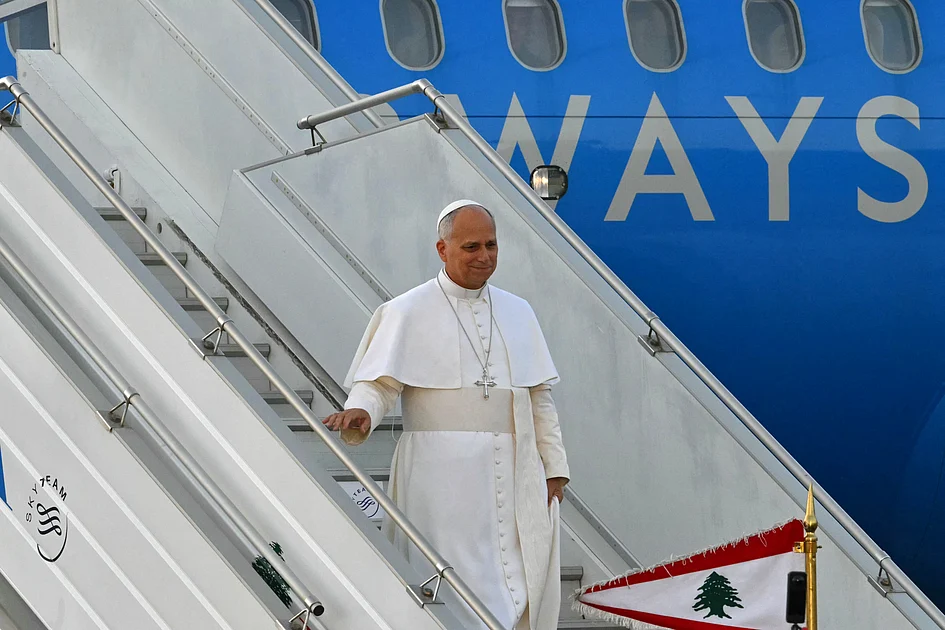
Pope Leo XIV commenced his inaugural international journey as pontiff with a significant diplomatic mission to Lebanon on Sunday, November 30, 2025. The spiritual leader of the world’s 1.4 billion Catholics arrived in Beirut amid elaborate ceremonial welcomes, including a 21-gun salute, military aircraft escorts, and enthusiastic crowds lining the route from the airport.
The pontiff’s visit carries profound symbolic weight for Lebanon, a nation grappling with multiple overlapping crises including economic collapse, the aftermath of the 2020 port explosion, and lingering tensions from recent hostilities between Hezbollah and Israel. President Joseph Aoun, the Arab world’s sole Christian head of state, personally welcomed the Pope alongside other high-ranking officials.
In statements to journalists during his flight, Pope Leo XIV emphasized that his two-nation tour—which began in Turkey—centered on being “a messenger of peace” dedicated to promoting regional stability. His arrival sparked remarkable displays of interfaith solidarity, with both Christian and Muslim citizens expressing enthusiasm for his visit. Zahra Nahleh, a 19-year-old from Lebanon’s conflict-affected southern regions, articulated the shared sentiment: “The pope is not just for Christians but for Muslims too.”
The visit presented a distinctive diplomatic challenge for the first American pope, whose restrained leadership style contrasts markedly with his predecessor’s approach. While his earlier stop in Turkey focused primarily on ecumenical dialogue between Christian denominations, the Lebanon segment addresses more complex geopolitical tensions.
Notably, scouts affiliated with Hezbollah joined welcoming committees along the pontiff’s route through Beirut’s southern suburbs, where banners honoring the Pope stood adjacent to posters of slain Hezbollah leader Hassan Nasrallah. The Iran-backed group had previously urged the spiritual leader to condemn Israeli military actions in Lebanon.
The papal itinerary included high-level meetings with President Aoun, Prime Minister Nawaf Salam, and Parliament Speaker Nabih Berri, followed by an address to government authorities and diplomatic corps. The visit marks the first by a pope since Benedict XVI’s 2012 journey and occurs as Lebanon’s Christian community—though constitutionally privileged through the reserved presidential office—faces continued demographic decline through emigration.