Hong Kong-listed toy manufacturer Pop Mart International Group Ltd. witnessed its shares plummet by nearly 23% during Wednesday’s trading session, creating a stark contrast to its otherwise impressive financial performance. This dramatic sell-off occurred despite the company reporting extraordinary growth in both revenue and profitability for the 2025 fiscal year.
The company’s financial disclosures revealed annual revenue reaching 37.1 billion yuan (approximately $5.4 billion), representing a staggering 185% increase compared to the previous year. Profit figures showed even more dramatic growth, with net income surging to 12.8 billion yuan ($1.9 billion) from 3.1 billion yuan in 2024—a remarkable increase exceeding 300% year-over-year.
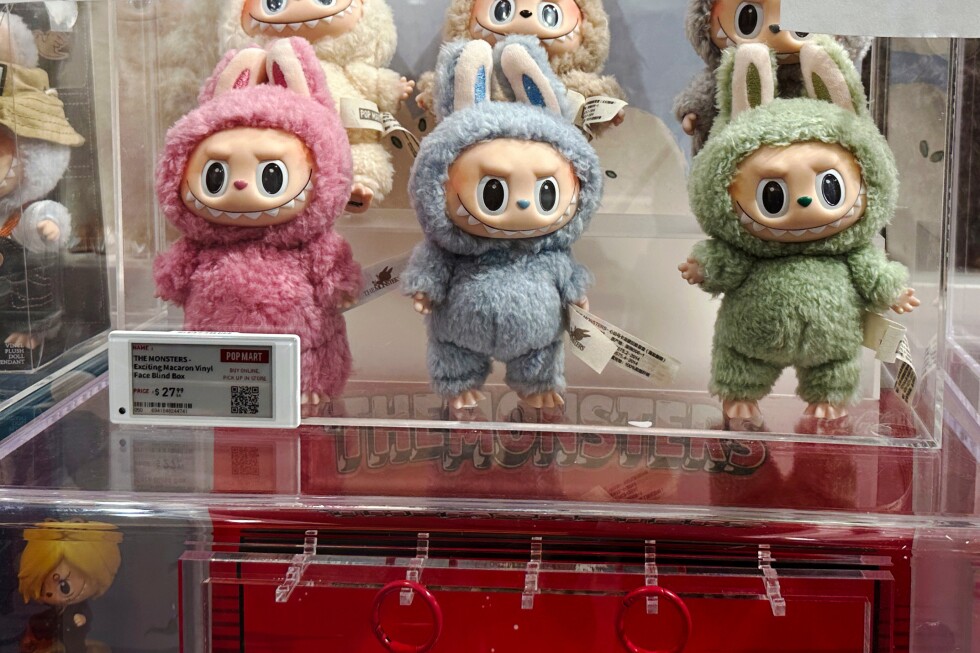
Market analysts immediately identified the paradox behind the disappointing market reaction. Jeff Zhang, equity analyst at Morningstar, noted that while Pop Mart’s financial results were fundamentally strong, investor concerns primarily centered on the company’s heavy reliance on its flagship Labubu product line. These distinctive pointy-eared monster dolls have achieved global phenomenon status since 2024, generating intense social media buzz and celebrity endorsements that translated into long queues at retail locations worldwide.
The concentration risk became particularly evident when examining revenue composition. Approximately 38% of Pop Mart’s total revenue originated from ‘The Monsters’ proprietary intellectual property characters, with Labubu serving as the dominant contributor within this category.
Gary Ng, senior economist at French bank Natixis, elaborated on market apprehensions: ‘While Labubu’s popularity represents an undeniable commercial success, the absence of a clearly identifiable second growth driver creates vulnerability. Should growth momentum for Labubu-related products decelerate, this concentration could transform into a significant risk factor affecting overall market sentiment.’
Company leadership addressed these concerns directly during Wednesday’s earnings conference. Chief Executive Officer Wang Ning acknowledged investor anxieties while expressing confidence in Labubu’s enduring appeal: ‘Some observers question whether Labubu represents merely a temporary craze subject to market fluctuations. Our observations, however, indicate that Labubu is evolving into a sustainable lifestyle choice for an expanding global community, giving us substantial confidence in its long-term prospects.’
Pop Mart is actively pursuing diversification strategies to mitigate dependency concerns. The company recently confirmed a partnership with Sony Pictures Entertainment to develop a feature film centered on the Labubu character universe. Additionally, Pop Mart continues expanding its global manufacturing footprint with production facilities in Cambodia, Indonesia, and Mexico alongside its Chinese operations, while maintaining its Beijing theme park as an experiential retail destination.