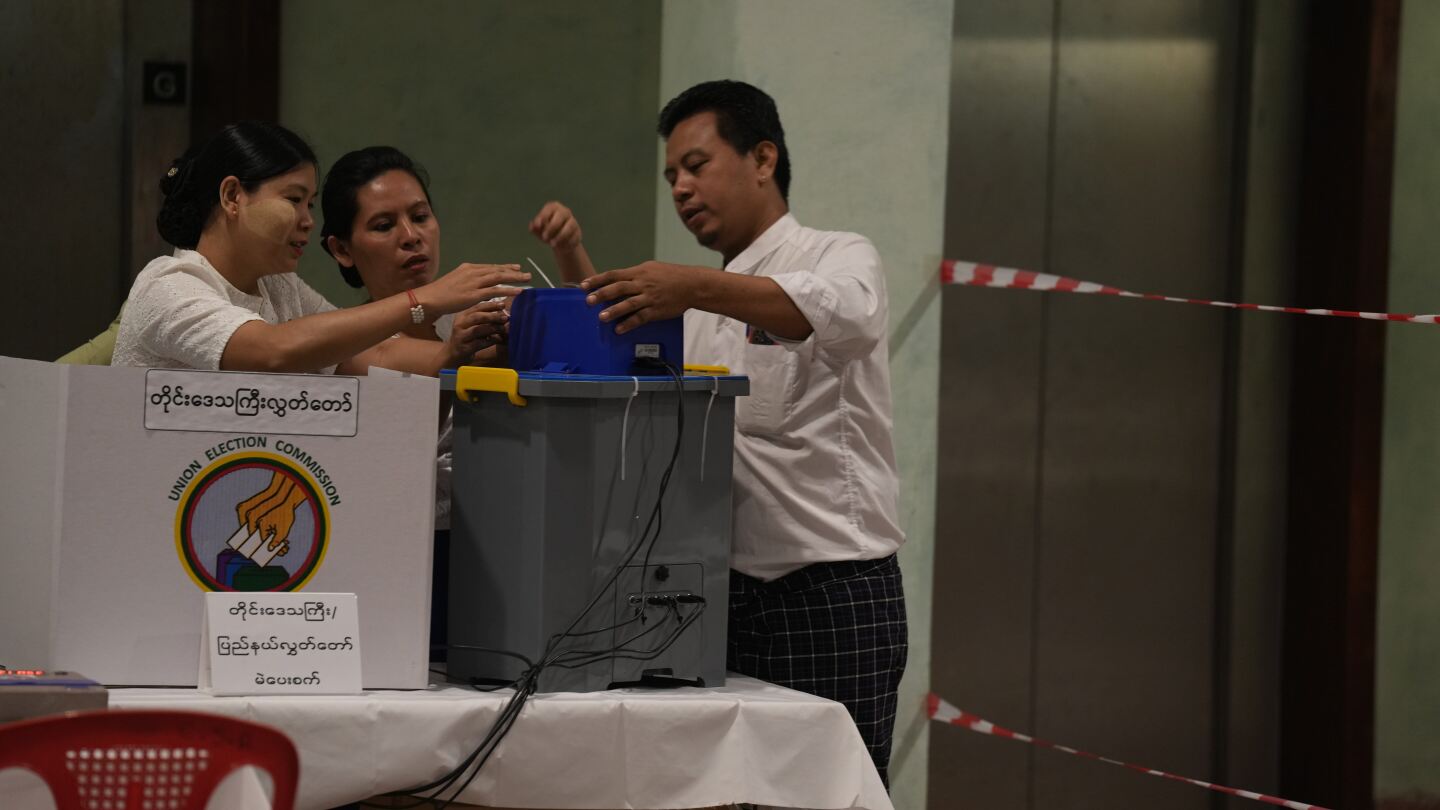
Myanmar conducted the initial phase of its first general election in five years on Sunday under the supervision of the military government, despite ongoing civil conflict across significant portions of the nation. The polling occurred amid tightened security measures in Yangon, Naypyitaw, and other urban centers, with armed guards stationed at voting locations and military vehicles patrolling streets.
Critics and international observers have denounced the electoral process as a calculated effort to create a veneer of legitimacy for military rule. The election follows the army’s February 2021 seizure of power, which ousted the democratically elected government of Aung San Suu Kyi. Her National League for Democracy (NLD), which achieved a landslide victory in the 2020 polls, was dissolved in 2023 after refusing to comply with new military regulations.
The electoral landscape reveals severe constraints on political freedom. Major opposition parties either boycotted the process or were excluded, while a newly enacted Election Protection Law criminalizes public criticism of the polls. According to monitoring organizations, 73% of voters who participated in the 2020 election supported parties that no longer exist in the current political framework.
Human rights conditions have deteriorated significantly since the military takeover. The United Nations reports that violence and intimidation have intensified, with over 22,000 individuals detained for political offenses and more than 7,600 civilians killed by security forces. The subsequent civil conflict has displaced approximately 3.6 million people.
Despite these challenges, the military-backed Union Solidarity and Development Party is anticipated to secure a victory, potentially enabling neighboring countries such as China, India, and Thailand to justify continued engagement by citing stability concerns. Western nations, however, have maintained sanctions against Myanmar’s ruling generals due to persistent anti-democratic practices and human rights abuses.
The voting process will continue in two additional phases scheduled for January 11 and January 25, with final results expected by month’s end.