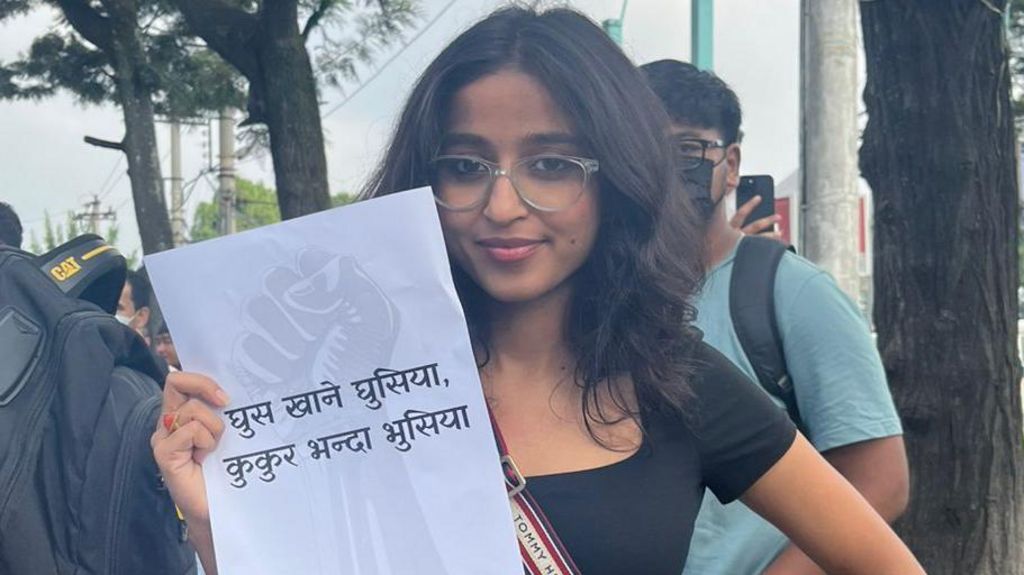
In a dramatic turn of events, Nepal’s Generation Z protesters managed to topple the government in less than 48 hours, but the triumph was marred by significant casualties and widespread destruction. The protests, which erupted last week, resulted in the deaths of 72 people, marking the deadliest unrest in the Himalayan nation in decades. Official buildings, political leaders’ residences, and luxury hotels, including the recently opened Hilton, were set ablaze, vandalized, and looted. The wife of a former prime minister is currently fighting for her life after their home was torched.
Tanuja Pandey, a 24-year-old environmental campaigner and one of the protest organizers, expressed a mix of pride and sorrow. ‘We are proud, but there is also a mixed baggage of trauma, regret, and anger,’ she said. The protests were a vehement rejection of Nepal’s political class, accused of decades of poor governance and exploitation of state resources, according to Ashish Pradhan, a senior adviser at the International Crisis Group. However, the damage to government services could parallel the toll of the 2015 earthquake, which claimed nearly 9,000 lives.
The financial losses are staggering, estimated at 3 trillion Nepalese rupees ($21.3 billion), nearly half of the country’s GDP. The Kathmandu Post, whose offices were also attacked, reported that at least 300 local government offices across the nation were damaged. The protests were fueled by deep-seated anger over inequality, with young Nepalis targeting the children of politicians, derogatorily referred to as ‘nepo babies,’ for flaunting their unexplained wealth on social media.
Ms. Pandey, who comes from a middle-class family in eastern Nepal, had previously uploaded a video highlighting the exploitation of natural resources in the Chure mountain range. She called for action against corruption and the misuse of national wealth. The protests, leaderless like many youth movements in Asia, gained momentum after the government banned 26 social media platforms, citing their failure to register locally.
The situation escalated on September 8, when thousands gathered at Maitighar Mandala in central Kathmandu. Initially peaceful, the protests turned violent as crowds moved towards the parliament building. Police responded with tear gas, water cannons, and live rounds, resulting in numerous casualties. The chaos continued the next day, with demonstrators setting fire to parliament, the prime minister’s office, and other government buildings.
In the aftermath, former Supreme Court Chief Justice Sushila Karki was appointed interim prime minister, backed by protesters. However, concerns remain about Nepal’s political future, with experts warning against the glorification of the army as a stabilizing force. The involvement of Durga Prasai, a controversial figure with a history of violent protests, in initial negotiations has also raised eyebrows.
Families of the deceased protesters are grappling with their loss. Yogendra Neupane, a 23-year-old aspiring civil servant, was shot in the back of the head near the parliament building. His family, unaware of his participation until the situation escalated, mourns his sacrifice. ‘His blood and sacrifice should be recognized so that other young people won’t have to hit the streets again in the future,’ said his great-uncle Saubhagya.
Ms. Pandey remains cautiously optimistic about Nepal’s future, viewing the protests as a political awakening for her generation. ‘We are no longer willing to stay silent or accept injustice,’ she declared. ‘This is not just a gentle nudge; it’s a bold challenge to a system that has hoarded power for decades.’