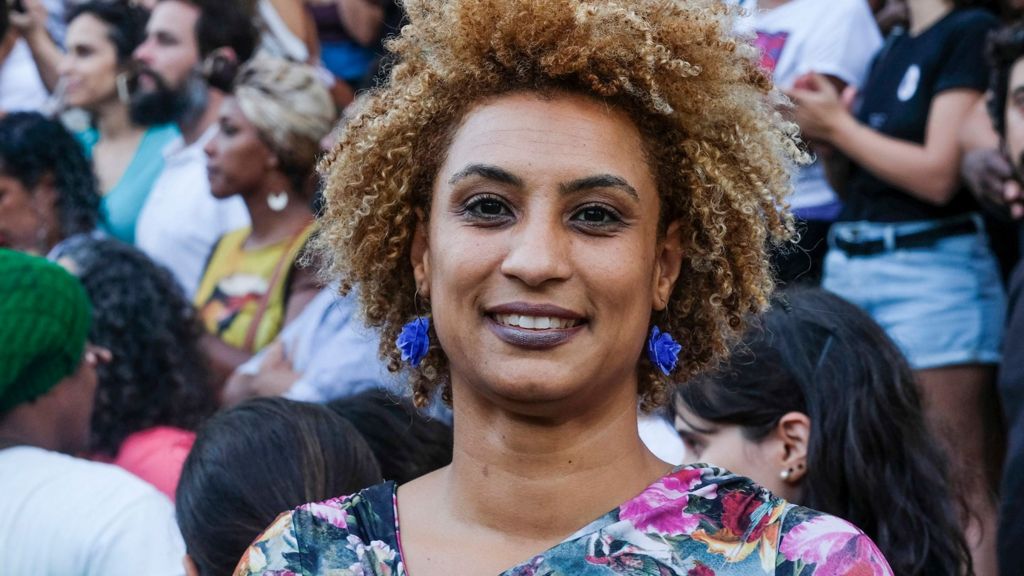
In a landmark ruling that exposes deep connections between political power and organized crime in Brazil, the nation’s Supreme Court has unanimously convicted two prominent politicians for orchestrating the 2018 assassination of Rio de Janeiro councilwoman and human rights activist Marielle Franco. Brothers Domingos Inácio Brazão and João Francisco Inácio Brazão each received sentences exceeding 76 years imprisonment for commissioning the drive-by shooting that killed Franco and her driver Anderson Gomes.
The verdict culminates an eight-year judicial battle that revealed how Franco’s activism threatened criminal enterprises operating with political protection. As an emerging leader in Brazil’s Socialist Party and a prominent voice for marginalized communities, the 38-year-old black, gay councilwoman had been opposing housing developments in impoverished neighborhoods that served as revenue sources for militia groups.
Supreme Court Justice Alexandre de Moraes delivered a scathing assessment during sentencing, declaring the Brazão brothers weren’t merely connected to paramilitary forces but essentially ‘were the militia.’ The case has exposed alarming collusion between elected officials and criminal organizations in Brazil’s political landscape.
Justice Carmen Lúcia, the court’s sole female member, expressed profound emotional distress over the proceedings, questioning how many more ‘Marielles’ Brazil would allow to be murdered. The comment underscored the case’s significance in addressing political violence targeting women and racial minorities.
The conviction follows earlier sentencing of two former police officers directly involved in the shooting. Ronnie Lessa, who confessed to firing the fatal shots, received 78 years and nine months, while Élcio de Queiroz, who drove the assault vehicle, was sentenced to 59 years and eight months. Their plea bargain agreements ultimately identified the Brazão brothers as the intellectual authors of the crime.
Anielle Franco, Marielle’s sister who now serves as Brazil’s Minister of Racial Equality, attended the verdict and subsequently praised the judicial system on social media for ‘honoring the memory of Marielle and Anderson.’ She characterized the ruling as inaugurating ‘a new historic chapter in confronting political violence based on gender and race’ and emphasized that ‘impunity cannot be part of our democracy.’
The assassination had triggered massive nationwide protests in 2018, transforming Franco into a symbol of resistance against political corruption and violence targeting human rights defenders. This verdict represents the most significant accountability measure against politically-motivated violence in Brazil’s recent history.