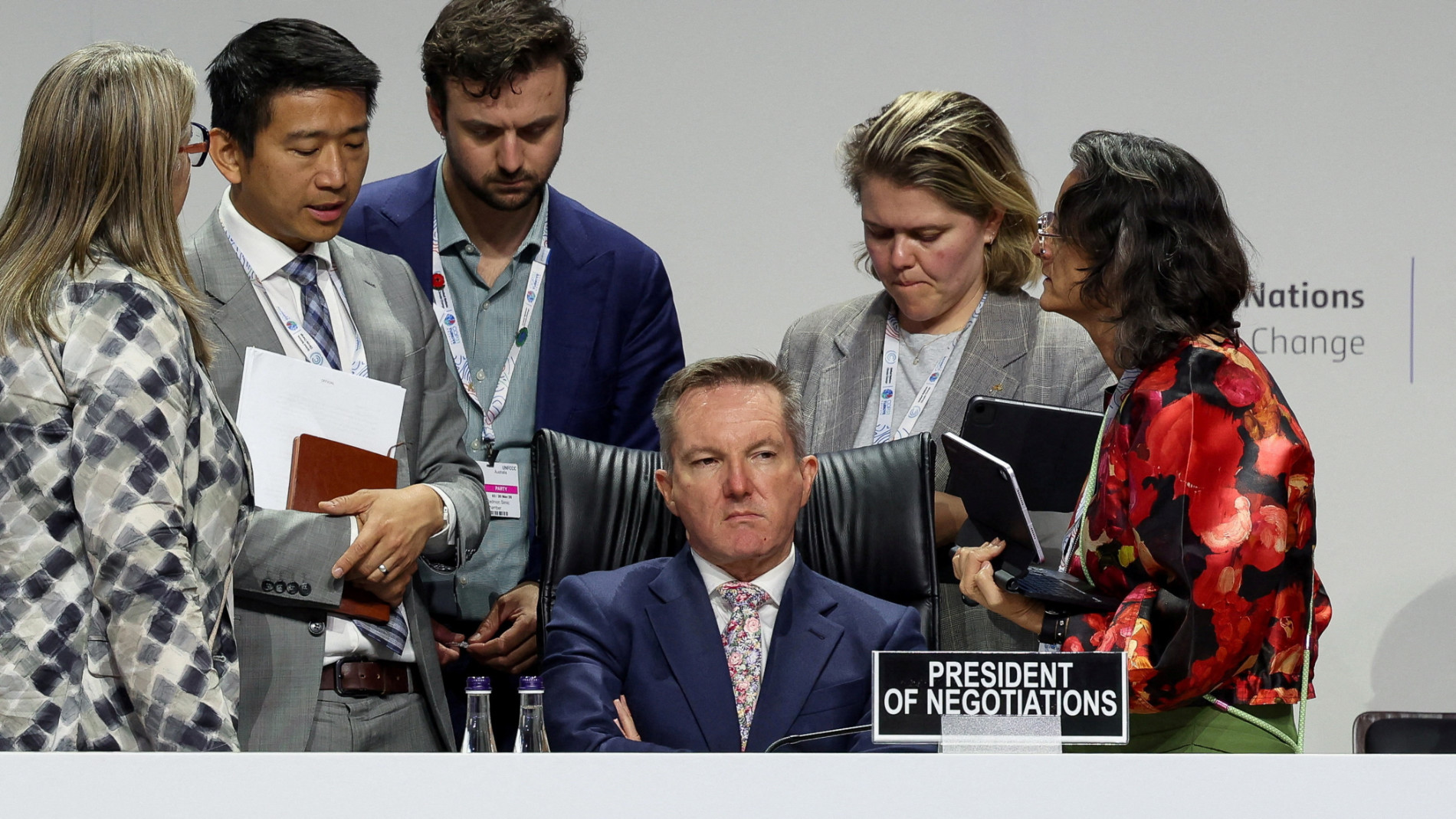
The longest United Nations Framework Convention on Climate Change (UNFCCC) Conference of the Parties (COP) in history, hosted in Turkey, collapsed abruptly on Sunday with no consensus reached between delegations after weeks of fraught, high-stakes negotiations. The European Union, United Kingdom, and their allied Western nations formally rejected the final draft negotiating text, citing a glaring omission of any explicit reference to fossil fuels, the single largest driver of global greenhouse gas emissions. Speaking on behalf of the 27-nation EU bloc at the closing plenary, Ireland’s Climate Minister Darragh O’Brien denounced the document as scientifically unmoored, warning that it would widen the already massive gap between global climate commitments and the urgent, tangible action required to keep the 1.5°C warming target within reach. His remarks drew applause from like-minded developed state delegations, but rang deeply hollow for the vast majority of low- and middle-income developing nations, who also rejected the draft for its toothless, non-binding provisions on critical climate finance support. Immediately after delivering his formal intervention, O’Brien and EU Climate Action Commissioner Wopke Hoekstra walked out of the plenary chamber to host a press huddle, right as representatives from Global South nations were taking the floor to outline their urgent demands for robust, predictable climate funding. A growing chorus of climate justice campaigners and policy observers has exposed a sharp contradiction in the EU’s public positioning: while the bloc framed fossil fuel language as its non-negotiable red line, it spent nearly the full duration of the marathon negotiations actively blocking binding, new financial commitments to support vulnerable developing countries. Harjeet Singh, strategic adviser to the Fossil Fuel Treaty Initiative and global convenor of the Fill the Fund campaign, emphasized to Middle East Eye that the EU’s fossil fuel objection was a deliberate distraction from the far more pressing, unaddressed priority of climate finance. “If you listened to what other countries said, like Panama, Ghana, the Marshall Islands, their reasons were no money for adaptation, no money for loss and damage,” Singh noted, pointing to widespread frustration across vulnerable nations. Under the 2015 Paris Agreement, wealthy developed nations are legally obligated to disburse targeted funding to help developing economies cut their emissions and adapt to worsening, unavoidable climate impacts. A recent UN report released earlier this month calculates that developing countries will require an estimated $300 billion in annual adaptation funding by 2035 to meet their resilience needs. At COP26 in 2021, developed nations pledged to at least double adaptation finance flows by 2025, using 2019’s $19 billion disbursement level as a formal baseline. Last year, parties agreed to a non-binding call to “at least triple” adaptation finance by 2035, but the final text from that summit left critical ambiguities around the reference baseline that wealthy nations have exploited to avoid concrete action. An early draft of this year’s COP negotiating text, published on November 16, explicitly laid out a mandatory target of at least $120 billion in annual adaptation funding, anchored to a $40 billion baseline year. However, those concrete financial figures were quietly erased from all subsequent revised drafts, with climate advocacy groups placing full blame on the EU and other wealthy nations who arrived at the summit with no new funding pledges, and systematically sabotaged all discussions around scaling up climate finance. During the conference’s official Contributor Dialogue, designed to shore up the chronically underfunded Loss and Damage Fund, only a small handful of developed nations came forward with pledges, totaling a mere $30 million – a 75% drop from the $120 million raised at the previous year’s summit. “So we have a fund that no one wants to fill,” Singh remarked. Even before the formal negotiations kicked off, EU Climate Commissioner Hoekstra set a confrontational, bad-faith tone by publicly declaring climate finance negotiations “dead in the water.” “They entered negotiations with that bad faith and blocked every single track which is important for developing countries,” Singh told MEE, adding that the EU and its allies refused to acknowledge the already agreed 2019 baseline for adaptation finance scaling, opting instead to create endless new bureaucratic processes and procedural loops to delay tangible action indefinitely. Singh also highlighted the rank hypocrisy of wealthy nations demanding fossil fuel phase-out language in the final text, noting that Ireland and Norway – two of the most vocal proponents of explicit fossil fuel references – are actively expanding their domestic fossil fuel production at home. The EU’s own published climate transition roadmaps have faced widespread criticism for merely restating pre-existing, unmet policies that are fully misaligned with the 1.5°C warming target. Brandon Wu, director of policy and campaigns at Action Aid USA, dismissed the EU’s public fossil fuel advocacy as a deliberate “smokescreen.” “They’re using the rhetoric around fossil fuels to make themselves look like champions,” Wu explained to reporters. For Singh, a veteran climate advocate who has attended the last 18 consecutive COP summits, the EU’s entire performance at the Turkey talks amounted to little more than empty political theatre. “Do your work. We need to move beyond these theatrics and take real action, rather than simply claiming leadership. Be a real leader. Provide the money. Take action at home in line with your fair share of the global effort,” he urged. Campaigners also pointed to severe mismanagement and lack of transparency from the COP31 joint presidency, led by Australia and Turkey, as a core contributing factor to the total collapse of the talks. No mandatory stocktaking plenary was held to allow all delegations to air their priorities publicly, and the presidency repeatedly missed self-imposed deadlines to release full negotiating drafts to all parties. Unlike standard COP procedure, where full printed copies of revised drafts are distributed to every national delegation, this year only select privileged groups were shown partial excerpts of text, leaving most developing nations completely excluded from the drafting process and “extremely disrespected and extremely badly treated,” according to one on-site observer. Hanen Keskes, a campaigner with Greenpeace Mena, confirmed that nearly all national delegations were never consulted during the revision of the second major negotiating draft, and that the updated text released late on Saturday night was nearly identical to the version published five days prior, with no meaningful progress made on core agenda items. The widespread anger over procedural disrespect boiled over when Ghana’s Environment Minister Zanetor Agyeman-Rawlings was abruptly and rudely cut off mid-speech by COP31 President and Turkish Environment Minister Murat Kurum. She issued a searing public rebuke of the presidency, stating: “This excellency is an example of the levels of disrespect we have endured and continue to express our objection to. It absolutely does not respect multilateralism.”
‘Political theatre’: Campaigners hit out at EU hypocrisy as Cop31 ends in chaos