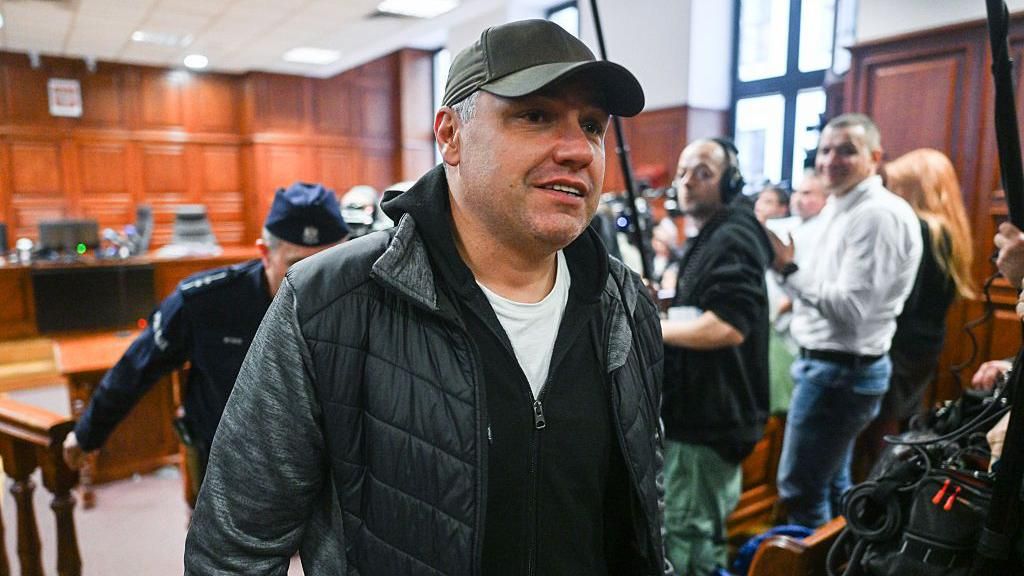
In a landmark decision, a Polish judge has refused to extradite a Ukrainian citizen, Volodymyr Zhuravlyov, who was suspected by Germany of involvement in the sabotage of the Nord Stream gas pipelines in September 2022. Judge Dariusz Lubowski of the Warsaw District Court ruled that if Ukraine was responsible for the attack, it could be considered a ‘just’ act in the context of Russia’s ongoing invasion of Ukraine. The ruling, which was met with surprise in the courtroom, led to Zhuravlyov’s immediate release and sparked a broader debate about the legal and moral implications of the case.
Zhuravlyov, a deep-sea diver by profession, was detained in Poland last month on a European arrest warrant. He is accused of planting explosives on the Nord Stream pipelines, which run from Russia to Germany through the Baltic Sea. The explosions, which occurred in September 2022, severely damaged the controversial energy supply line, initially raising suspicions of Russian involvement before evidence pointed toward Ukrainian actors. Ukrainian officials have consistently denied any role in the sabotage.
In his ruling, Judge Lubowski emphasized that the context of the war in Ukraine was critical to his decision. He described Russia’s invasion as a ‘bloody and genocidal attack’ and argued that Ukraine had the legal right to defend itself. Citing philosophical principles from Aristotle and Saint Thomas Aquinas, Lubowski stated that actions taken by Ukraine to weaken Russia’s military potential could be justified. ‘If Ukraine and its special forces organized an armed mission to destroy enemy pipelines, these actions were not unlawful. On the contrary, they were justified, rational, and just,’ he declared.
The judge also questioned Germany’s jurisdiction over the case, noting that the explosions occurred in international waters on pipelines owned primarily by the Russian state. He insisted that his decision was based on legal reasoning rather than emotional or political considerations. Following the ruling, Zhuravlyov was granted compensation from the Polish state for his detention.
Zhuravlyov’s wife, Yulianna, expressed relief at the verdict, stating that it was important for Ukrainians to feel understood. The family, who have lived in Poland since February 2022, plans to remain in the country. Meanwhile, another Ukrainian suspect, Serhiy Kuznetsov, detained in Italy in August, is also fighting extradition to Germany. His case was recently sent back to a lower court in Bologna after Italy’s top appeals court annulled an earlier extradition ruling.
The Nord Stream sabotage case has highlighted the complexities of international law and the geopolitical tensions surrounding the war in Ukraine. While Germany has expressed respect for the Polish court’s decision, the case continues to raise questions about accountability and the legal boundaries of wartime actions.