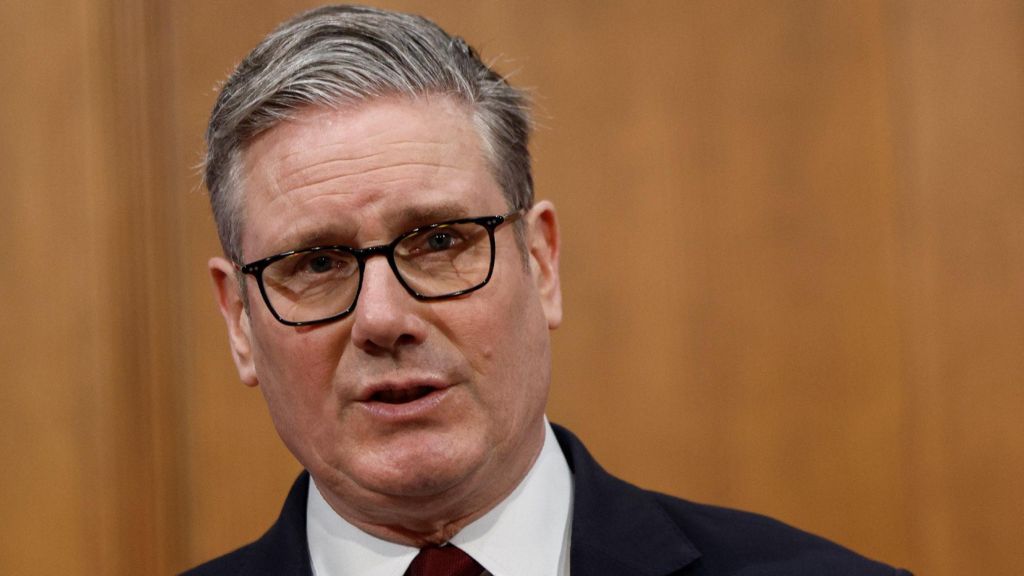
Prime Minister Sir Keir Starmer has announced the United Kingdom is collaborating with international allies to develop a comprehensive strategy for restoring safe passage through the critically important Strait of Hormuz. This declaration follows mounting pressure from former President Donald Trump urging Western nations to deploy naval assets to secure the vital shipping corridor.
Speaking at a press conference, the British leader confirmed that while Royal Navy minehunters are already positioned in the region, no definitive decisions have been made regarding additional military commitments. Sir Keir emphasized his administration’s cautious approach, stating unequivocally that Britain would not be drawn into broader conflict escalation despite external pressures.
The strategic waterway, essential for global energy transportation, has become effectively impassable for oil tankers since hostilities with Iran intensified. This closure has triggered significant volatility in global oil markets, with prices surging to multi-year highs. Iranian forces have issued threats against vessels perceived as having American affiliations, while the persistent danger of naval mines further complicates maritime security.
“Our ultimate objective remains reopening the Strait of Hormuz to stabilize energy markets,” Sir Keir stated. “This presents considerable operational challenges, necessitating coordinated international effort. We are therefore working extensively with European partners, Gulf states, and the United States to formulate a viable collective plan that restores freedom of navigation while mitigating economic consequences.”
The Prime Minister’s measured stance has generated diplomatic friction with the United States. Sir Keir initially declined American requests to utilize UK military bases for offensive operations against Iran, though he subsequently authorized their use for defensive countermeasures against missile attacks. This decision drew criticism from political opponents who characterized the response as hesitant.
Defending his position, Sir Keir asserted: “Some would have rushed Britain headlong into conflict without comprehensive situational awareness or exit strategy. My leadership prioritizes British interests above external pressure, regardless of its source.”
International reactions revealed divergent perspectives. German officials clarified that NATO constitutes a defensive alliance with no mandate for offensive operations, with Defense Minister Boris Pistorius questioning the strategic value of limited European naval deployments. These sentiments found support from former British military chief General Sir Nick Carter, who emphasized NATO’s fundamentally defensive nature.
Domestically, the government announced £53 million in support for households experiencing severe financial strain due to heating oil price increases. Unlike gas and electricity consumers protected by price caps, heating oil users face unregulated market conditions exacerbated by the Gulf crisis.
As geopolitical tensions persist, the British government maintains its dual focus on diplomatic de-escalation and multilateral solution-building, reflecting Sir Keir’s commitment to strategic caution amid complex international demands.