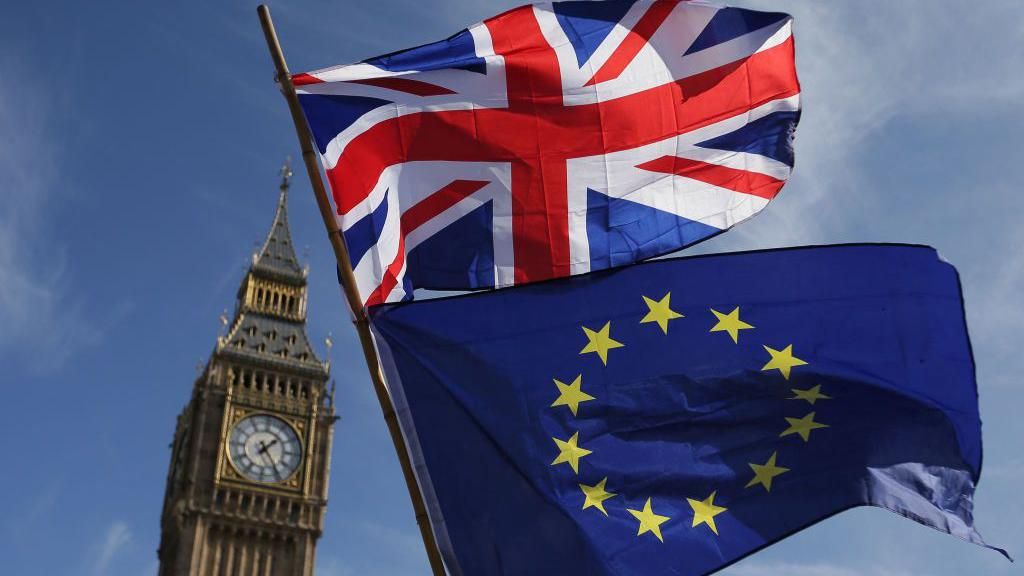
For more than a decade, the question of Britain’s relationship with the European Union has defined the fault lines of UK domestic politics. Now, a decade after the 2016 Brexit referendum, that long-simmering divide has erupted back into the open after the Keir Starmer government confirmed the parliamentary framework for its planned closer regulatory alignment with Brussels, reigniting bitter disputes over sovereignty, economic strategy, and the UK’s global standing.
It has been public knowledge since Starmer took office following the 2024 general election that the Labour prime minister has prioritized rebuilding a tighter partnership with the EU. This commitment formed a core plank of his election campaign, even if details were kept deliberately vague during the race. For 11 months, since the inaugural UK-EU summit, Whitehall has been actively negotiating new cooperative agreements with Brussels on three critical policy areas: food and beverage safety standards, carbon emission regulations, and cross-border electricity market rules.
What has not been broadly understood until recently is the government’s full intention: it plans not just to match current EU rules in these sectors, but to align with future updates to European regulatory frameworks as they evolve. When legislation to enshrine this arrangement is brought before Parliament later this year, a full up-or-down vote will be held. But subsequent adjustments to UK rules to mirror changing EU standards will in most cases be implemented through secondary legislation, a mechanism that does not require repeated new parliamentary votes.
This procedural confirmation has already sparked immediate outrage from opposition benches. The Conservative Party and the right-wing Reform UK have both slammed the plan, though analysts note the underlying disagreement runs far deeper than parliamentary procedure. At its core, the fight revolves around the same foundational questions that have split British politics since 2016: what does national sovereignty mean in a post-Brexit world, how should the UK balance economic growth and independent rule-setting, and what place should Britain claim on the global stage?
Conservative Shadow Business Secretary Andrew Griffith summed up the opposition’s core argument, arguing the arrangement would relegate Parliament to a passive observer role while Brussels dictates policy. “This is exactly what the country rejected in 2016,” Griffith said. Nigel Farage, the figurehead of the original Brexit campaign and leader of Reform UK, echoed that criticism, framing the no-vote alignment process as a direct betrayal of the 2016 referendum result. The opposition’s core objection is simple: it is wrong for the UK to abide by EU rules without retaining a seat at the table to shape those rules as a member bloc.
While Starmer has not directly addressed that framing, his government’s response is clear: accepting aligned rules in targeted sectors is a reasonable trade-off for tangible economic gains. What is most striking about Starmer’s current approach is his newfound willingness to openly lean into this debate, a sharp shift from the cautious positioning he adopted as Labour leader for years. In recent public remarks, Starmer has tied his push for closer ties to rising global instability, casting stronger alignment with European allies as a critical national interest amid widespread geopolitical uncertainty.
Speaking to BBC Radio 5 Live, Starmer emphasized, “We’re in a world where there’s massive conflict, great uncertainty, and I strongly believe the UK’s best interests are in a stronger, closer relationship with Europe.” At a press conference earlier this month addressing the economic fallout from the war in Iran, he doubled down on the stance: “our long-term national interest requires closer partnership with our allies in Europe.” He also reiterated a long-held Labour position that Brexit inflicted deep, lasting damage on the UK economy, and that the country needs to pursue more ambitious closer economic cooperation with the bloc.
This public embrace of the Brexit issue marks a dramatic reversal for Starmer, who built his early political profile in the Labour Party as Jeremy Corbyn’s shadow Brexit secretary, but avoided open confrontation on the topic after taking the party’s leadership. For years, party strategists were deeply concerned that reopening the Brexit debate would alienate Labour voters: both Leave supporters who backed the party, and Remain supporters who preferred the issue be put to rest rather than relitigated.
That political calculus has shifted dramatically in recent months. Polling has consistently shown growing public dissatisfaction with the outcomes of Brexit, shifting the electoral incentives for Labour. Additionally, the party has faced mounting pressure from its progressive flank, a threat that was underscored by the Green Party’s by-election victory in Gorton and Denton in February. The shift in Starmer’s public positioning is a direct response to these changing political dynamics.
Yet the new approach carries clear political risks. Even as progressive voters push for deeper UK-EU integration, Starmer remains committed to retaining the core framework of the post-Brexit settlement negotiated by former Conservative Prime Minister Theresa May. That means the UK will not rejoin the EU single market, which requires the free movement of people, and will not rejoin the EU customs union, which would require the UK to abandon its ability to negotiate independent free trade agreements with non-EU nations. This middle-ground stance leaves Starmer vulnerable to criticism from progressives who argue he is not going far enough to reverse the economic damage of Brexit.
Pressure for deeper integration is already building within Starmer’s own party. London Mayor Sadiq Khan, who is widely expected to run for a fourth term in 2028, has publicly called for the UK to rejoin the single market and customs union before the next general election, and to take the promise of full EU re-accession into that campaign.
Even some government officials who support closer alignment recognize another key risk: every time Starmer emphasizes how critical closer ties are to his agenda, it increases the likelihood that Brussels will drive a harder bargain in negotiations. “We know from the Tory experience that the EU drives a hard bargain, especially if we’re seen as wanting to cherrypick the best bits of the single market,” a senior anonymous government source acknowledged.
The ongoing regulatory negotiations are not even the most contentious discussion underway between London and Brussels. Talks to establish a new UK-EU youth mobility scheme have already reached an impasse, after the UK insisted on a cap on the number of young EU citizens that can relocate to the UK annually. Several EU member states have also demanded that UK universities charge European students the same tuition rates that British students pay at European higher education institutions, a demand that creates additional friction.
All outstanding negotiations are on track to be finalized at the second UK-EU summit scheduled for the coming months. One decade after the UK’s historic Brexit referendum, the issue that remade British politics has returned to center stage, shaping the current government’s agenda and reigniting the debate that will continue to define the UK’s future for years to come.