Across China’s Hebei province, technological innovations are fundamentally reshaping traditional Spring Festival celebrations, creating immersive experiences that blend cultural heritage with cutting-edge technology. In Tangshan’s Nanhu Lake Park, AI-powered Caishen lanterns representing the god of wealth have evolved beyond static displays to engage visitors in real-time conversations through artificial intelligence interfaces.
Project head Gao Yuan explained the integration of character-based dialogue systems rooted in folk traditions and auspicious sayings. The installation additionally incorporates facial recognition technology to superimpose futuristic neon makeup on visitors’ images against digital backdrops, creating instant social media content. This represents a strategic shift from traditional celebrations toward future-oriented cultural experiences, according to Xing Jianfeng, executive general manager of the cultural tourism development company behind the ‘Playful Encounter’ initiative.
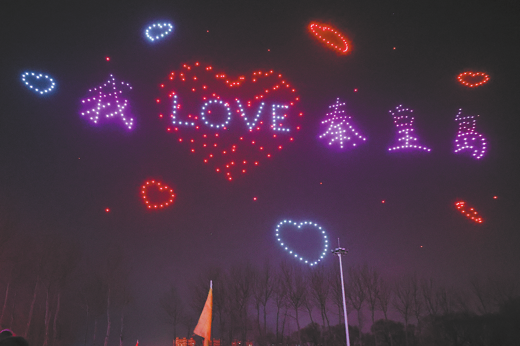
Simultaneously, Beidaihe district has elevated its nighttime displays through synchronized drone performances. Approximately 1,000 drones execute precision formations while traditional datiehua artisans create fiery sparks by striking molten iron, complemented by the release of Kongming sky lanterns. Tourism director Li Weijie described the concept as ‘tradition as the base and technology as the wings,’ delivering an immersive festival experience that honors cultural roots while embracing modernity.
The technological transformation extends to Handan’s Guangfu Ancient City, where 3D wall-mapping projections directly onto historical structures have increased nighttime visitation by 180% since their 2024 debut. The ‘Dream Back to Handan’ production incorporates local cultural elements like ‘Tai Chi Elegance,’ using light as a narrative medium to communicate historical heritage.
These innovations demonstrate tangible economic impacts. Cultural gift shop owner Yang Lin reported triple the evening foot traffic and over 200% sales increases during holiday periods. Professor Sun Zhenjie of Hebei University of Economics and Business emphasized that technologies including VR, AR, MR and AI are driving tourism quality improvements and supply model optimization, creating new experiences through digital restorations and historical reenactments that blend virtual and physical realities.