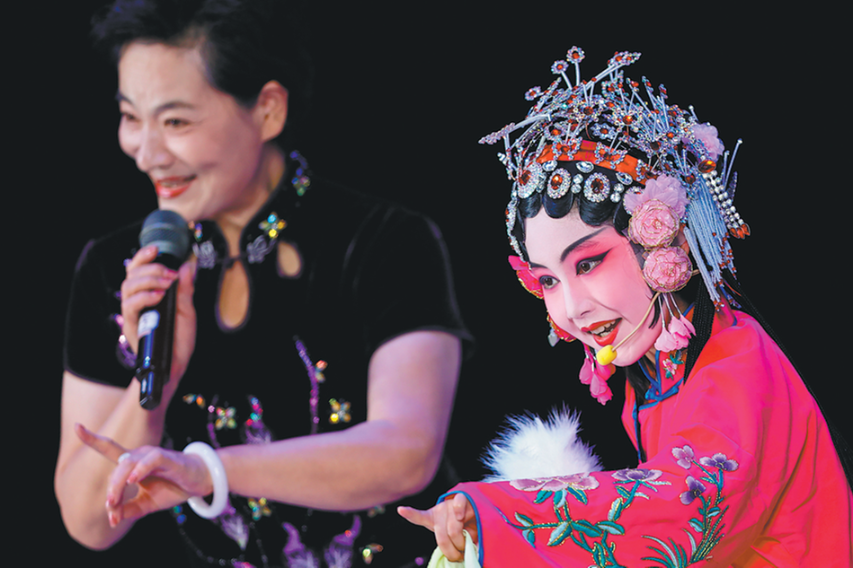
In the historic corridors of Tianjin’s Red Flag Theater, a centuries-old artistic tradition is undergoing a remarkable transformation. Pingju Opera, one of China’s five major opera genres recognized as national intangible cultural heritage, is reinventing itself for the digital age while preserving its distinctive performance techniques.
The theater, established in 1958 and alternatively known as Tianjin Pingju Opera Theater, serves as the guardian of this unique art form. Director Zeng Zhaojuan explains the demanding craftsmanship involved: “Moves such as ‘water-sleeve throwing’ and ‘handkerchief flipping’ require a grueling six-year training period.” These techniques involve sophisticated manipulation of costumes and props through precise wrist movements that create mesmerizing visual effects.
Originating in late 19th-century marketplaces of Tianjin and neighboring Tangshan, Pingju Opera distinguished itself as the first major Chinese opera performed in common vernacular. Its early performances addressed social injustices and domestic scandals relevant to working-class audiences, with pioneering artists like Li Jinshun, Liu Cuixia, and Ai Lianjun transforming the folk tradition into a national phenomenon from humble teahouse beginnings.
The contemporary iteration represents a significant evolution from its street performance origins. As young lead actor Li Xuanjie notes: “Pingju Opera has progressed from intimate one or two-actor shows to modern epics featuring 150 performers.” Productions like “The Legend of the Seal,” “Zhao Jintang,” and “Revolutionary Family” have earned China’s prestigious Splendor Award, the highest government recognition for theatrical excellence.
Facing unprecedented competition from digital media, the theater has implemented multifaceted strategies to engage younger demographics. Their “Opera Entering Campus” initiative brings Pingju to universities including Tianjin Normal University and Tianjin University of Technology. Students experience immersive workshops featuring on-stage drama classes followed by backstage explorations of makeup and costuming processes.
The theater has also embraced digital outreach through short videos and livestreams while pursuing innovative collaborations. A notable 2025 partnership with cross-talk celebrity Guo Degang merged traditional opera with contemporary comedy fan bases, creating unexpected audience crossovers.
International engagement forms another crucial dimension of the renewal strategy. Recent visits by journalists from the United States, Italy, and other countries included unprecedented backstage access, revealing narrative parallels between Pingju classics like “Du Shiniang” and Shakespeare’s “Romeo and Juliet.” These cross-cultural exchanges reposition Pingju not merely as local heritage but as a globally accessible narrative form capable of transcending cultural boundaries.
Director Zeng articulates the dual mission: “We insist on both preserving classics and creating modern works that reflect the spirit of the times.” This balanced approach aims to address the central challenge of attracting both young performers and audiences while ensuring the art form’s continuity for future generations.