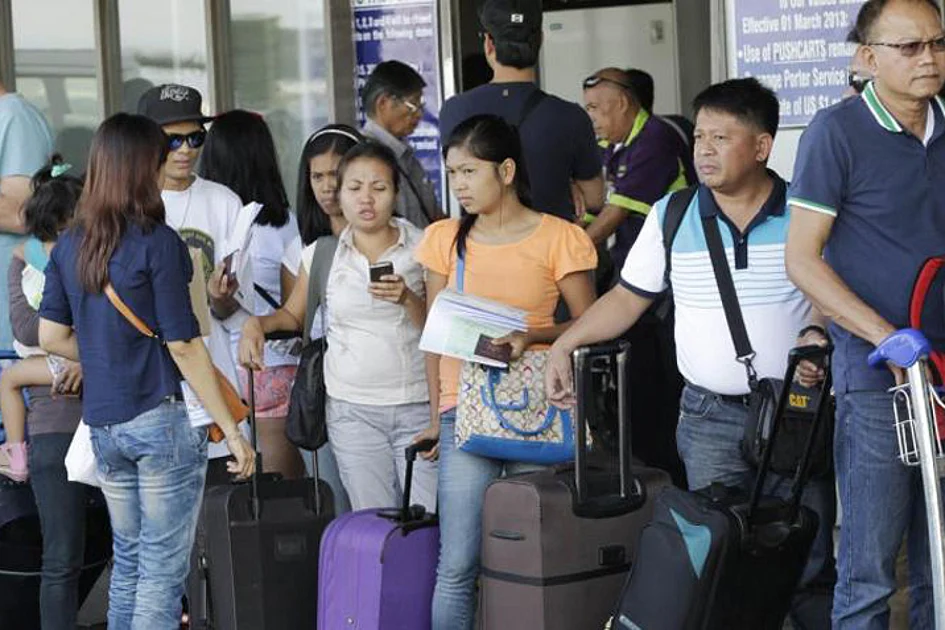
In a significant policy shift, the Philippine administration under President Ferdinand ‘Bongbong’ Marcos Jr. has formally proposed the abolition of the nation’s long-standing travel tax. This landmark initiative, included among 21 priority legislative measures endorsed by the government this week, aims to alleviate financial pressures on citizens traveling abroad for diverse purposes including employment, leisure, and urgent family matters.
Palace press officer Claire Castro emphasized the administration’s recognition that contemporary travel patterns extend beyond tourism, with many Filipinos requiring international mobility for work and emergency situations. The current tax structure imposes a levy of ₱1,620 (approximately Dh102.50) for economy class passengers and ₱2,700 (Dh170) for business and first-class travelers, creating substantial financial barriers for families. A family of four, for instance, currently faces combined travel tax and terminal fee expenses exceeding ₱10,280 (Dh650) before departure.
Historically implemented in 1977 during the presidency of Ferdinand Marcos Sr., the tax originally functioned as an economic mechanism to regulate foreign currency outflow and finance tourism infrastructure. Initially conceived as a ‘luxury tax’ during an era when international travel was predominantly accessible to affluent segments of society, the levy currently allocates 50% of revenues to tourism projects through the Tourism Infrastructure and Enterprise Zone Authority (TIEZA), with 40% supporting educational assistance programs and 10% dedicated to cultural preservation.
The proposed abolition acknowledges fundamental changes in global mobility patterns and economic conditions since the tax’s inception nearly five decades ago. Should the measure pass into law, the government has committed to securing alternative funding through the national budget to maintain support for previously tax-funded initiatives, with detailed revenue impact assessments to be conducted during legislative deliberations.