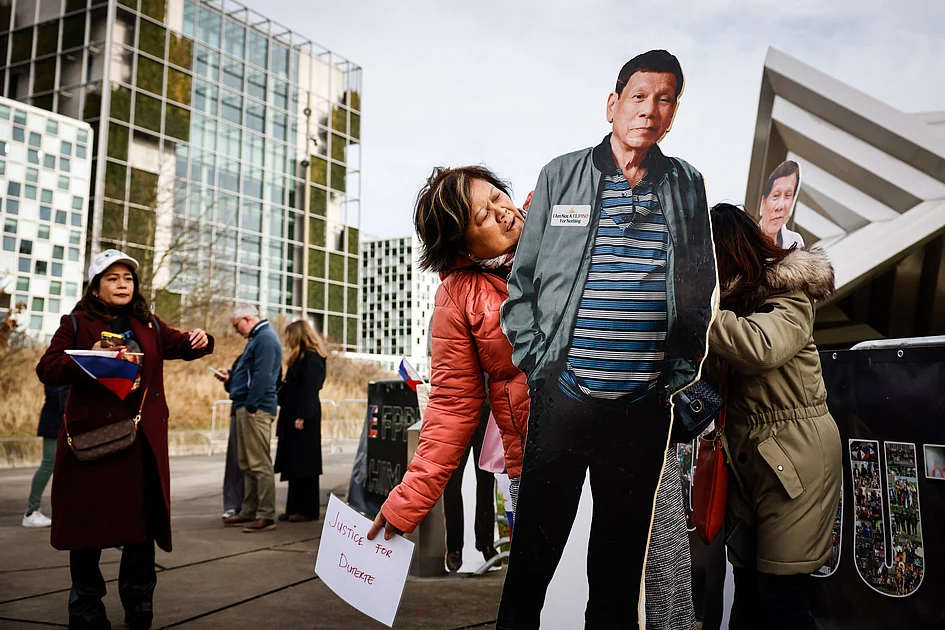
The International Criminal Court commenced landmark proceedings on Monday, hearing explosive allegations that former Philippine President Rodrigo Duterte personally authorized murders and hand-selected victims during his controversial anti-drug campaign. Despite being deemed fit to participate, the 80-year-old former leader was absent from The Hague after his defense team successfully petitioned for his non-appearance.
ICC Deputy Prosecutor Mame Mandiaye Niang opened the week-long confirmation hearings by asserting that the proceedings serve as “a reminder that those in power are not above the law.” Prosecutors presented a meticulously constructed case detailing Duterte’s alleged pivotal role in extrajudicial killings spanning his tenure as mayor of Davao City through his presidency from 2016 to 2022.
The prosecution team presented video evidence showing Duterte repeatedly threatening to eliminate criminals, with prosecutor Julian Nicholls stating emphatically: “He repeatedly promised to kill people. He said it. He did it. That is who he is.” The charges encompass three distinct counts of crimes against humanity involving at least 76 specific murders, though prosecutors emphasized this represents “merely a fraction” of the actual death toll estimated to reach thousands.
Defense attorney Nicholas Kaufman mounted a vigorous counter-argument, characterizing the charges as “grievously misplaced and politically motivated.” While acknowledging his client’s unconventional leadership style filled with “hyperbole, bluster and rhetoric,” Kaufman maintained Duterte’s complete innocence and asserted that prosecutors selectively edited his speeches while ignoring numerous instances where he emphasized legal compliance.
The proceedings attracted polarized demonstrations outside the courthouse, reflecting the deep divisions surrounding Duterte’s legacy. Victims’ families gathered at a Manila community center expressed disappointment at Duterte’s absence, with one relative speculating “maybe he does not want to own up to his sins.”
The confirmation hearings will determine whether sufficient evidence exists to proceed to a full trial, with judges required to issue their written decision within 60 days following the week’s proceedings.