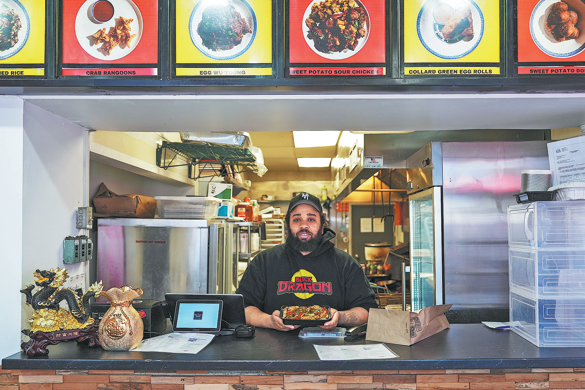
In Philadelphia’s culinary landscape, Chef Kurt Evans is pioneering a unique gastronomic movement that transcends traditional boundaries. The 40-year-old West Philadelphia native has transformed a former mom-and-pop Chinese takeout into Black Dragon, an establishment that masterfully blends American and Chinese culinary traditions with distinct African American flavors.
The restaurant’s aesthetic carefully preserves its Chinese heritage while incorporating meaningful cultural elements. Vintage wallpaper displays historical photographs with empowering messages, while an orange neon sign proclaims ‘Food is our common ground’—a philosophy that co-owner Kyle Moore describes as essential to their mission. ‘Food is where different cultures, ethnicities can come together without separation,’ Moore emphasizes.
Evans’ approach is deeply rooted in historical understanding. He explains how discriminatory policies historically channeled Chinese immigrants toward low-income neighborhoods, creating natural culinary cross-pollination. ‘Many Chinese stores may have been black Americans’ first cultural experience,’ Evans notes, highlighting how economic circumstances forged unexpected cultural connections.
The chef’s personal journey began in the 1990s when a teacher introduced him to General Tso’s chicken—a flavor that remained etched in his memory. His professional path evolved from hospital cooking to various kitchen roles before conceptualizing Black Dragon, an idea that matured over nine years before its 2024 debut.
What began as a neighborhood establishment has gained remarkable recognition, attracting visitors far beyond West Philadelphia. The restaurant’s growing prominence even captured political attention, with former Vice President Kamala Harris’s campaign team hiring Evans to cater events.
Local patron Stepheneecee Williams, who works at a nearby pharmacy, appreciates the cultural synthesis: ‘Chinese restaurants are a staple in the black community… We do live side by side.’ Evans’ culinary innovation demonstrates how food can serve as both cultural preservation and bridge-building medium, creating spaces where diverse communities find common ground through shared culinary experiences.