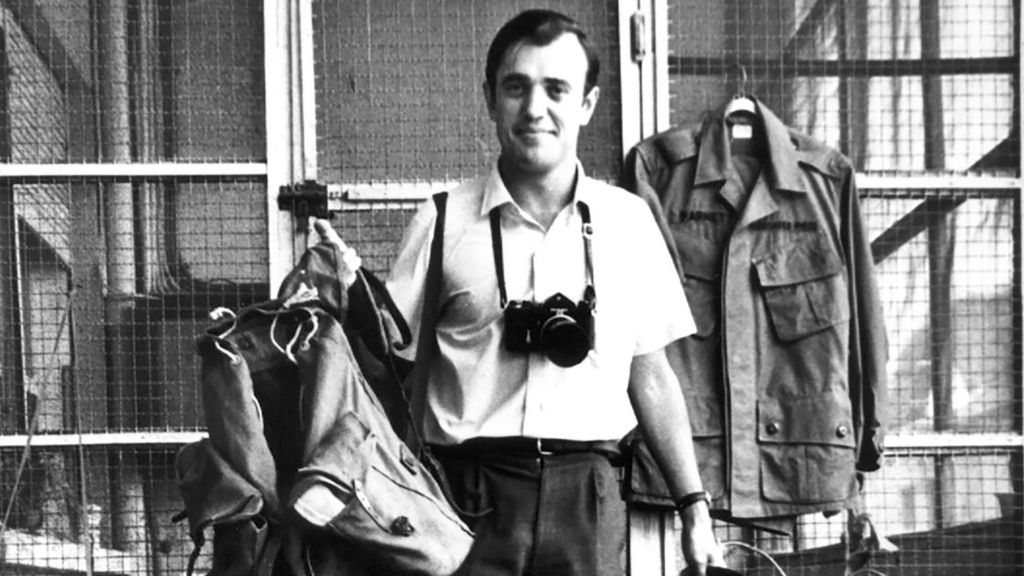
Renowned Pulitzer Prize-winning journalist Peter Arnett, whose groundbreaking frontline reporting defined modern war correspondence, has died at age 91. The New Zealand-born reporter, who naturalized as a U.S. citizen, passed away surrounded by family and friends in California while receiving hospice care for prostate cancer.
Arnett’s extraordinary career spanned over five decades, during which he provided unparalleled coverage of major global conflicts. He earned journalism’s highest honor in 1966 for his visceral Vietnam War reporting for The Associated Press, where he documented combat operations from 1962 until the conflict’s conclusion in 1975. His firsthand accounts included harrowing moments such as witnessing a colonel shot through a map just inches from his face.
In 1981, Arnett transitioned to CNN, where he achieved household recognition during the first Gulf War. He distinguished himself as one of the few Western journalists who remained in Baghdad during coalition bombing campaigns, delivering historic broadcasts punctuated by missile explosions and air-raid sirens. His fearless approach to journalism led to a memorable interview with then-Iraqi President Saddam Hussein, whom he questioned with notable determination despite the leader’s fearsome reputation.
Arnett’s groundbreaking work extended beyond the Middle East. In 1997, he secured the first Western interview with Osama Bin Laden in Afghanistan, during which the terrorist leader cryptically hinted at future attacks against the United States. His career also included significant photographic work, capturing compelling images from Vietnam, North Korea, and El Salvador.
The journalist’s commitment to uncompromising reporting occasionally sparked controversy. His dismissal from NBC following an appearance on Iraqi state television, where he offered analysis perceived as critical of U.S. military strategy, demonstrated his unwavering dedication to reporting his perception of ground truth. He was swiftly hired by the UK’s Daily Mirror, where he defended his reporting integrity.
Colleagues and contemporaries have paid tribute to Arnett’s legacy. Former AP colleague Edith Lederer described him as ‘one of the greatest war correspondents of his generation—intrepid, fearless, and a beautiful writer and storyteller.’ Retired photographer Nick Ut, who worked alongside Arnett in Vietnam, remembered him as ‘like a brother’ whose passing ‘will leave a big hole in my life.’
Arnett is survived by his wife Nina Nguyen and their children, Andrew and Elsa. His extensive body of work remains a testament to courageous conflict journalism and continues to inspire aspiring reporters worldwide.