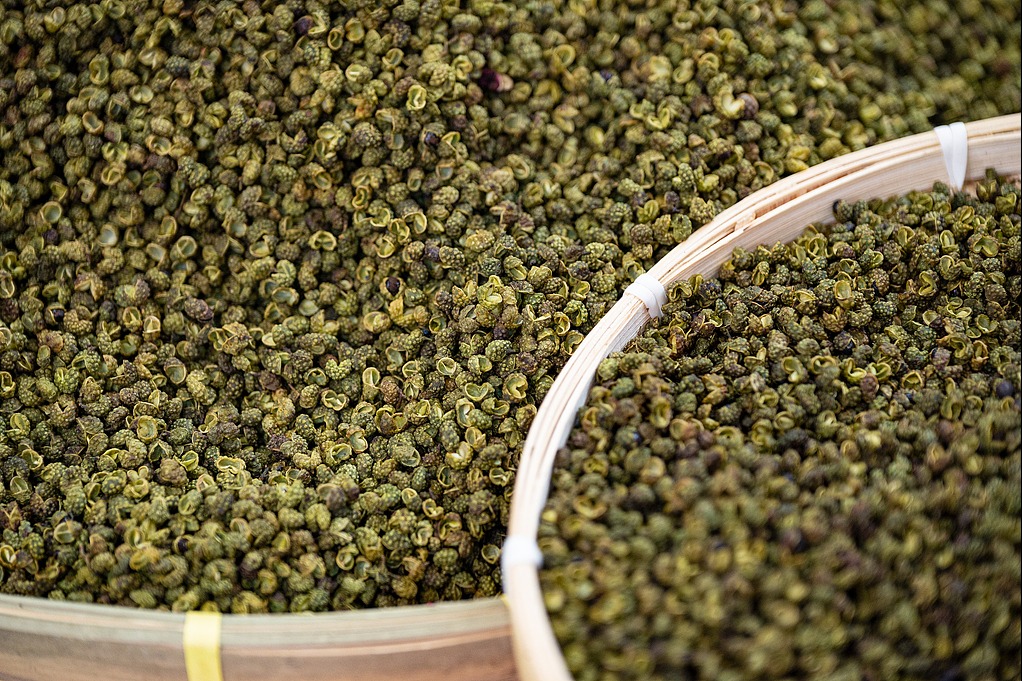
Nestled within the mountainous terrain of Jinyang county, Sichuan province, the township of Lugao has transformed its agricultural fortunes through the cultivation and international export of its signature green Sichuan peppercorns. Achieving a remarkable economic milestone in 2025, the region successfully exported 13.6 metric tons of dried peppercorns to the European Union, commanding a premium price of $18 per kilogram.
This lucrative venture has significantly boosted local incomes, with farming households seeing an average increase of 2,500 yuan annually, according to Huang Tianyin, head of Lugao township. The premium EU pricing represents a substantial markup of 5-6 yuan per kilogram compared to domestic market rates.
Jinyang county, recognized as China’s premier production hub for green Sichuan peppercorns, maintains an impressive agricultural footprint with over 68,000 hectares dedicated to cultivation. The industry generates an annual output of 17,327 tons and boasts a comprehensive output value reaching 1.2 billion yuan, as reported by Deng Min, deputy county head of Jinyang.
Lugao serves as the core production zone within this agricultural powerhouse, with peppercorns cultivated across 4,000 hectares. The crop constitutes 83.6% of the township’s total agricultural output value, while the local trading market facilitates annual transactions exceeding 5,000 tons with turnover surpassing 200 million yuan.
The success story emerges from challenging geographical conditions characterized by high mountains, steep slopes, and deep valleys. Lugao has strategically leveraged its natural advantages—ample sunshine, suitable soil composition, and the unique microclimate of the Jinsha River dry-hot valley—to develop a thriving specialized forestry economy.
Quality enhancement initiatives have been instrumental in achieving international standards. The township has implemented comprehensive infrastructure upgrades including modernized irrigation systems, standardized planting technique training programs, and the establishment of demonstration planting bases. Since 2021, five standardized demonstration bases have been established, including a dedicated 44-hectare export-oriented facility.
Meeting EU market requirements demanded rigorous adherence to agricultural standards, as explained by Li Wenchun, deputy director of Jinyang’s agriculture office. “Every production phase—from pruning and fertilizing to pest management and weeding—follows strict protocols under unified guidance,” Li noted. The cultivation process prohibits pesticides and chemical herbicides, relying exclusively on organic fertilizers and manual weeding practices.
Bolstered by their successful market entry, Jinyang county officials plan further international expansion in 2026. The strategy involves implementing a standardized full-chain management system from cultivation to export, alongside establishing an additional 67 hectares of export-oriented planting bases to deepen their presence in European markets.