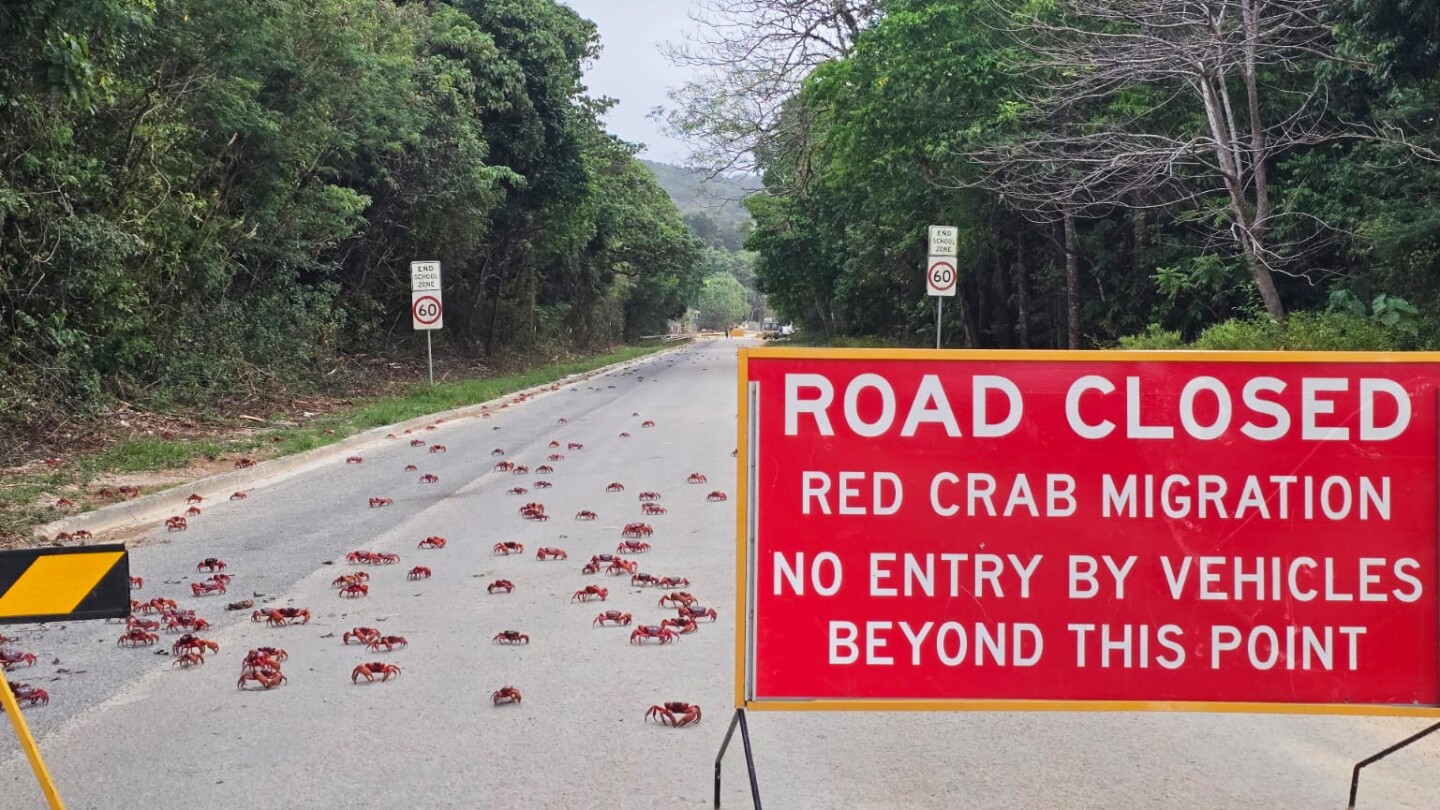
MELBOURNE, Australia (AP) — The annual migration of tens of millions of red crabs has commenced on Christmas Island, a remote Australian territory in the Indian Ocean. This natural phenomenon, triggered by the onset of the Southern Hemisphere summer rains, sees up to 100 million Gecarcoidea natalis crabs journey from their forest burrows to the shoreline for breeding. The event, which began last weekend, involves a slow, methodical march of crabs across roads and gardens, creating a vivid red carpet that captivates both locals and visitors. The island’s 1,200 human residents play a crucial role in facilitating this migration. Many use leaf blowers and garden rakes to clear paths for the crabs, ensuring their safe passage to the ocean. Alexia Jankowski, acting manager of Christmas Island National Park, emphasized the unique privilege of witnessing this event. ‘Some people might think they’re a nuisance, but most of us think they’re a bit of a privilege to experience,’ she said. The crabs’ journey is indiscriminate, often leading them into homes and driveways, where residents must carefully navigate to avoid harming them. On the shores, male crabs excavate burrows where females lay and incubate eggs. The females are expected to release their spawn into the ocean at high tide on November 14 or 15, during the last quarter of the moon. The young crabs spend a month as larvae in the ocean before returning to Christmas Island as small crabs. Jankowski noted the challenges of protecting these tiny crabs, stating, ‘When they’re little babies only about half the size of your fingernail, we can’t rake them, because you’d crush them. So instead we use leaf blowers.’ This annual event not only highlights the island’s unique biodiversity but also underscores the delicate balance between human activity and natural processes.
People use garden tools to protect millions of migrating red crabs on Christmas Island