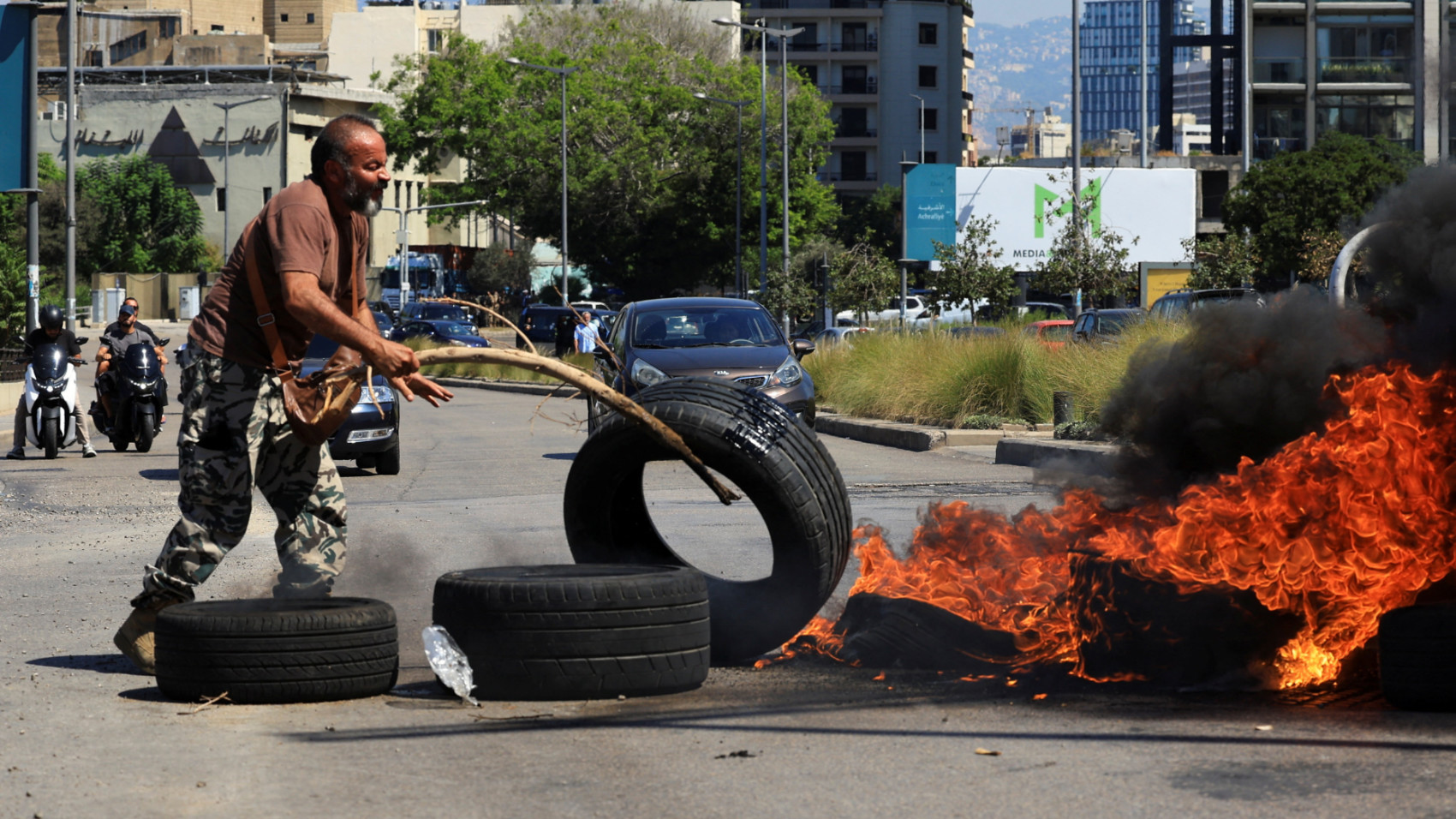
In the wake of the escalating US-Israel-Iran regional conflict, Lebanon has been hit by a crippling new shock: fuel prices have doubled in a matter of weeks, sending already catastrophic living costs soaring even higher and pushing a population worn down by decades of crisis to the edge of survival.
This week, local fuel prices jumped to nearly $1.60 per liter, a surge that aligns with a global uptick in energy costs that has already sparked mass demonstrations across neighboring Syria. For Lebanon, this new price shock does not exist in a vacuum — three years of open conflict with Israel, layered on top of ongoing regional military tensions, has already gutted an economy that was on its knees long before the latest crisis.
The Lebanese Trade Union Federation has issued an urgent ultimatum to the national government: declare a formal state of economic emergency by next week, or face an open-ended general strike across the country. While newly seated President Joseph Aoun has publicly pledged to address the unions’ demands, decades of financial collapse have left the cash-strapped state with almost no fiscal room to cushion the blow of rising prices for essential goods that Lebanese residents already struggle to afford.
Fears of widespread social unrest have been amplified by the recent wave of protests across Syria, where demonstrations erupted immediately after the government enforced sharp fuel price hikes of its own. For ordinary Lebanese citizens, the pain of the current crisis is not an abstract economic statistic — it is a daily reality of hunger and financial ruin.
Bassam, a furniture moving truck driver based in Beirut’s southern suburbs, an area that bore the full force of Israel’s intense bombardment during the most recent conflict, described the situation as unlivable. “It’s really difficult for everyone,” he told Middle East Eye. “The cost of living is so high, there are people who can’t afford to eat. There are people who seriously can’t even afford a loaf of bread anymore, especially after going through the war and being out of work, and now this petrol crisis. By God, it’s a disaster.”
The latest World Bank analysis underscores the severity of Lebanon’s economic trajectory. After a fragile, modest economic recovery followed a 2024 ceasefire between Hezbollah and Israel, renewed fighting in March shattered that progress. The bank now projects that Lebanon’s economy will contract by 6.4% in 2026.
The country’s current crisis stretches back to 2019, when a catastrophic financial collapse unfolded after Lebanese banks defaulted on their obligations, locking millions of ordinary depositors out of their life savings. Today, the domestic banking sector carries more than $72 billion in accumulated losses, and the country’s public debt has ballooned to 176.5% of GDP. Inflation has remained in double digits for five consecutive years, and since the 2019 crash, the Lebanese pound has lost more than 98% of its value against the U.S. dollar, wiping out nearly all purchasing power for ordinary households.
Ihab Abou Zeineddine, a father of two who earns $600 a month working as a private driver, said his income is barely enough to cover basic household needs. “You’re too embarrassed to go into a shop with $20, you can’t buy anything with that,” he said. “People are destitute.”
Even the most basic staple, bread, has become out of reach for many Lebanese. For years, the government subsidized and regulated wheat markets to keep bread affordable, but rising fuel-driven production costs forced the Ministry of Economy to raise bread prices for the second time this year just last week.
In response, the Federation of Bakery and Oven Trade Unions issued a warning that continuous price hikes have “placed the bakery sector and the Lebanese people, particularly the working classes, in an extremely precarious situation.”
More than five months after the most recent ceasefire with Israel went into effect, Lebanon is now bracing for widespread collective action. Transport sector unions and national labor federations have called for a nationwide mobilization next Wednesday, raising the prospect of large-scale unrest as public anger simmers. Some ordinary residents are already questioning why mass action has not erupted sooner.
Ibtissam, an aesthetician who lives roughly 20 kilometers southeast of Beirut, told reporters she has started carpooling to work appointments in the capital just to cut down on fuel costs. “People are angry. Why are they not going on strike or protesting? I don’t know. I don’t know why people are staying silent like this,” she said.