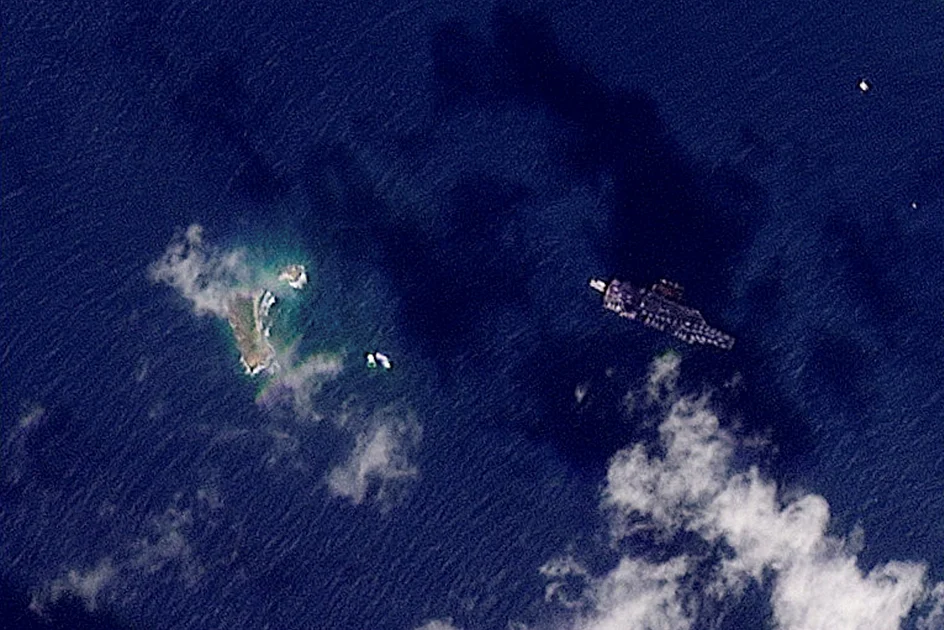
In a significant military repositioning, the Pentagon is deploying the USS Gerald R. Ford—the world’s largest and most advanced aircraft carrier—from the Caribbean to the Middle East, according to two U.S. officials speaking anonymously to Reuters on Friday. This strategic movement will place two American carrier strike groups in the region simultaneously as diplomatic tensions with Iran intensify.
The nuclear-powered Gerald R. Ford, accompanied by its escort vessels, has been operating in Caribbean waters where it participated in operations near Venezuela earlier this year. The carrier’s transition to Middle Eastern waters is expected to require at least one week of transit time.
This deployment represents a substantial commitment of military resources, particularly given that the U.S. Navy maintains only eleven aircraft carriers total, with schedules typically planned far in advance. The Ford will join the USS Abraham Lincoln carrier group, which recently arrived in the region alongside multiple guided-missile destroyers, fighter aircraft, and surveillance platforms.
The decision follows statements from President Donald Trump, who indicated earlier this week that he was considering deploying additional carrier support to the Middle East if diplomatic progress with Iran stalled. However, on Thursday, Trump suggested a potential breakthrough, noting that an agreement with Iran might be achievable within the coming month. ‘We have to make a deal, otherwise it’s going to be very traumatic,’ the president told reporters.
The Ford’s extended deployment—continuously at sea since June 2025—highlights the operational strain on naval assets. Originally slated for European operations, the carrier was unexpectedly redirected to the Caribbean in November. While standard carrier deployments typically span nine months, extensions during periods of heightened military activity are not uncommon, though Navy officials have repeatedly warned that prolonged sea duty can adversely affect crew morale.
Administration officials reportedly considered deploying the USS Bush instead, but certification requirements would have delayed its arrival by over a month. The Ford’s advanced capabilities include capacity for more than 75 military aircraft, sophisticated radar systems for air traffic control and navigation, and the escort support of cruisers and destroyers equipped with comprehensive surface-to-air, surface-to-surface, and anti-submarine warfare systems.