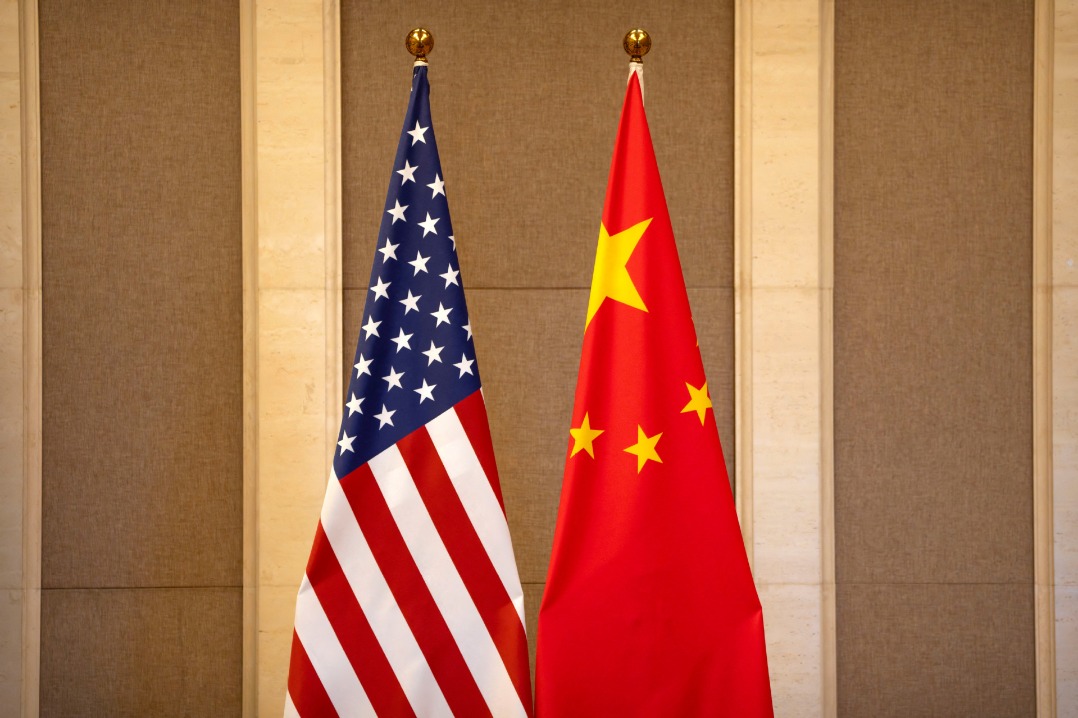
At the World Economic Forum in Davos, foreign policy experts articulated a significant evolution in US-China relations, noting both nations are transitioning toward pragmatic risk management frameworks despite persistent strategic competition. The panel discussion “US and China: Where Will They Land?” featured prominent analysts who emphasized that bilateral relations in 2026 will be characterized by mutual deterrence and stabilized through enhanced communication channels rather than seeking permanent resolution to fundamental disagreements.
Harvard Professor Graham Allison, renowned for his work on the “Thucydides Trap,” cautioned against interpreting temporary easing of tensions as permanent settlement. “A landing point, as if we had a permanent place to land, is not likely,” Allison stated, noting that mutual deterrence—where both nations recognize their capacity to inflict significant harm on each other—creates a stabilizing effect on the relationship.
Allison emphasized the critical importance of establishing multi-level technical communication networks between the two powers, citing the Sullivan-Wang diplomatic channel as a model for preventing misunderstandings from escalating into crises. He also observed that Washington increasingly acknowledges China as a “full-scale economic peer,” representing a more realistic assessment of bilateral dynamics.
Former Australian Prime Minister Kevin Rudd, now serving as Ambassador to the United States, framed the central challenge as developing practical mechanisms for “managed strategic competition” rather than seeking definitive endpoints. Rudd identified three critical arenas—tariffs, technology, and Taiwan—that will determine the trajectory of US-China relations and their impact on global stability.
University of Southern California law professor Angela Zhang Huyue expressed measured optimism, citing three factors contributing to potential stability: Washington’s recognition that containment strategies have accelerated rather than hindered China’s technological advancement, clearer understanding of mutual vulnerabilities following economic tensions, and both nations’ shared interest in avoiding instability.
US Senator Christopher Coons noted bipartisan support for “clear-eyed engagement” with China while highlighting artificial intelligence as the most pressing bilateral issue. He cautioned that military communication channels remain insufficient to prevent accidental escalation.
Chinese scholar Zhao Hai of the Chinese Academy of Social Sciences challenged the “tech war” narrative, advocating instead for cooperative AI regulation frameworks. “AI is not a zero-sum contest but a shared challenge,” Zhao asserted, warning that technological advances could threaten humanity’s collective security without bilateral governance mechanisms.