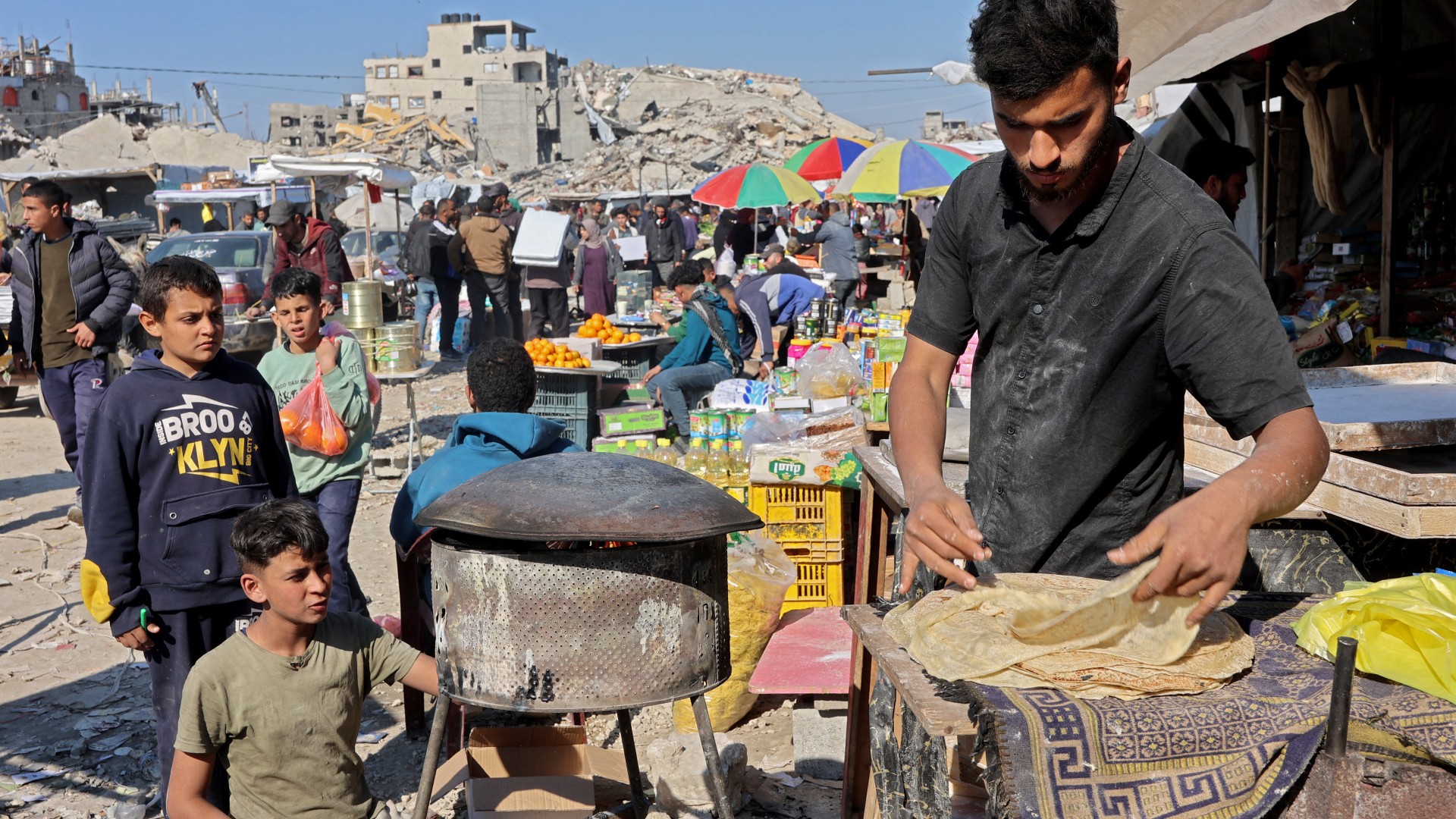
Amid the already catastrophic destruction and daily bombardment of the ongoing war in Gaza, hundreds of Palestinian residents are facing a new, crippling crisis: arbitrary freezes and closures of their bank accounts at the Bank of Palestine, cutting off access to critical salaries, humanitarian aid, and personal savings that families depend on for survival.
Gaza’s financial infrastructure has been strained for years by political instability, and the war has compounded these pressures to create a chronic liquidity shortage and widespread degradation of physical banknotes. For most Gazans, digital banking services and mobile wallets have become the only reliable way to manage, send, and receive funds – making account restrictions an immediate and devastating threat to livelihoods.
Ahmed Sardah, a Gaza resident, shared his experience with Middle East Eye (MEE), explaining he first discovered his account had been shuttered when he attempted to complete a routine transfer via the bank’s mobile app. Shortly after, he found his digital wallets on PalPay and Jawwal Pay, two of the territory’s most popular digital payment platforms, had also been suspended. Assuming the issue was a technical glitch, Sardah contacted bank staff, who only told him the account had been “reserved by management” with no further explanation. No advance warning was provided before the closure, and Sardah denies violating any bank policies, including transfer limit rules.
“Unfortunately, we are living in a war of destruction and constant bombardment, and on top of that, we are being strangled,” Sardah told MEE. “My life has completely stopped; I can’t even pay the rent, and I have monthly obligations. How am I supposed to meet them?”
Another devastating case highlights how the policy has harmed families of those killed in the conflict. Taghreed al-Daya lost her husband, four daughters, and son in an Israeli air strike on their Gaza City al-Sabra apartment in July 2024. Her eldest daughter, Raghad Banat, had received her monthly salary in an active Bank of Palestine account – but the account was closed immediately after the family submitted Banat’s death certificate.
Al-Daya completed all required legal inheritance processes and obtained all official documentation to claim the funds, but bank officials told her she would need to travel to Ramallah in the West Bank to finalize the process. For Gazans trapped in the blockaded enclave amid ongoing conflict, crossing into the West Bank is effectively impossible, leaving al-Daya with no path to access the money her daughter left behind. “I’m in Gaza. How am I supposed to get to Ramallah? This is an impossible request,” she said.
The widespread nature of the account closures sparked public pushback in mid-February, when a group of Gaza-based lawyers held a public demonstration to protest what they called illegal, unjustified freezes of their personal and professional accounts. The Palestinian Bar Association in Gaza issued a formal condemnation of the practice, labeling it “dangerous and unjustified” and warning that it pushes already vulnerable families, grappling with the catastrophic humanitarian conditions created by the war, even closer to collapse.
The association confirmed it had received dozens of complaints from lawyers who had their accounts closed without any prior notice, noting that roughly 700 Gaza-based lawyers have been impacted as part of a broader sweep that has suspended nearly 2,000 accounts total. Affected account holders have been given inconsistent, vague justifications for the actions, ranging from requests to update customer personal information to unsubstantiated claims of “unfair use” of accounts, the association added.
Rami Abdo, director of the Euro-Mediterranean Human Rights Monitor, argued the account closures are not isolated incidents, but a systematic practice tied to guidance from the Palestinian Monetary Authority and internal bank risk assessment protocols. He emphasized that the Bank of Palestine has worsened the harm by blocking account holders from appealing closure decisions, withdrawing remaining funds, or providing documentation to prove they have complied with all banking regulations. Abdo told MEE that closures happen on a rolling basis, often impacting hundreds of accounts in a single sweep. He also confirmed the pattern of closing accounts of Palestinians killed in the war immediately after death notifications are received, cutting off heirs from funds even after all legal inheritance requirements are met. “As soon as a martyr’s name is received, the bank checks if he has an account and closes it,” Abdo said.
In response to the allegations, an anonymous senior source at the Bank of Palestine dismissed claims that thousands of Gaza accounts have been frozen as “false and baseless.” The source maintained that all actions taken against customer accounts adhere to local laws, regulatory requirements, and official instructions from relevant governing bodies, and no measures are taken arbitrarily or outside of established legal frameworks.
“Since its establishment, the Bank of Palestine has been proud of its national and economic role in serving Palestinians wherever they reside, especially the residents of the Gaza Strip,” the source said. “The bank continues to play its vital role in providing banking and financial services, enabling citizens and institutions to manage their financial affairs despite the exceptional circumstances and significant challenges facing the Strip.”
The source added that the bank has continued to serve more than one million customers in Gaza throughout the war, despite unprecedented operational challenges. Responding specifically to claims about deceased account holders, the source noted that inheritance cases are processed in line with existing legal procedures and judicial rulings designed both to protect the rights of heirs and prevent unauthorized access to funds. These procedures, the source said, are applied uniformly across Gaza and the West Bank and are not connected to the current wartime context.
MEE attempted to request comment from the Palestinian Monetary Authority on the allegations, but had not received a response as of the publication of this report.