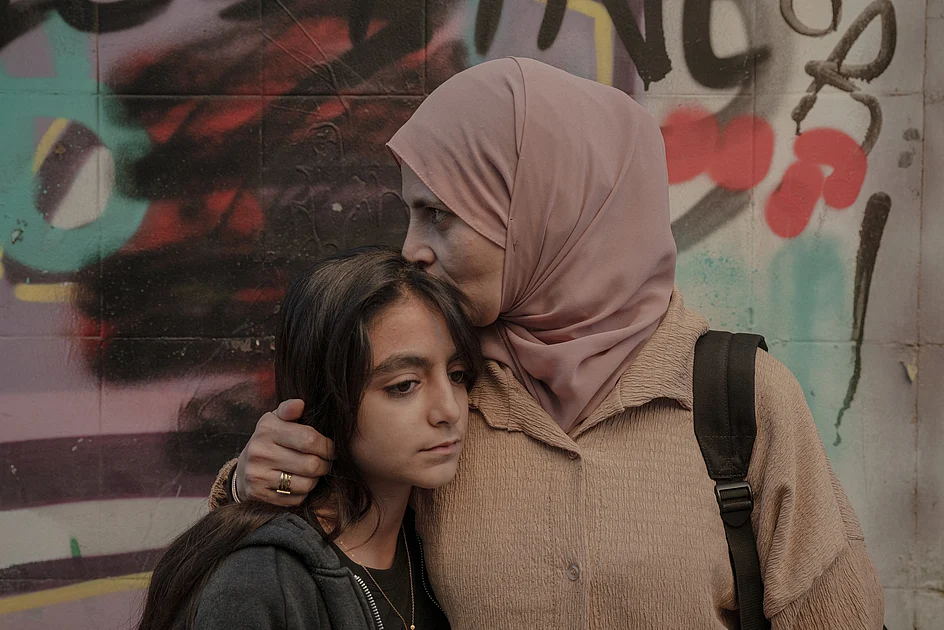
ATHENS – Palestinian adolescents evacuated from the Gaza conflict zone confront profound physical and psychological hurdles as they attempt to reconstruct their lives in Greece, where governmental support remains inconsistent despite widespread public solidarity.
Raghad Al Fara, 15, navigates her new existence in Athens on crutches, her body bearing the scars of an Israeli bombardment in Khan Younis that crushed her right leg and back beneath rubble. Evacuated with her mother and younger sister in February while the rest of her family remains in Gaza, she resides in a women’s refugee shelter, still awaiting comprehensive psychological care. “I never thought I would survive, let alone set foot on European soil,” Raghad stated.
According to Heracles Moskoff, Secretary General for Vulnerable Persons at Greece’s migration ministry, Raghad is among ten Gazan minors suffering from complex orthopedic and psychological injuries. Her mother, Shadia Al Fara, expressed frustration with the support system, noting her daughter bedwetted for months due to trauma and that families receive no financial assistance. “Greece took responsibility for us but then abandoned us,” she lamented.
Conversely, 20-year-old Sara Al Sweirki represents a more hopeful narrative. Evacuated in September, she will commence psychology studies at the private Deree American College of Greece in January, aiming to help others overcome trauma. “I want to be a girl my age like others, learn guitar and piano, and study,” Al Sweirki emphasized. “My dream was interrupted after October 7. But now I am more determined than ever to pursue my goal.”
The Greek government’s approach appears contradictory to public sentiment. A recent study by aboutpeople revealed 74% of Greeks support recognizing Palestinian statehood, reflecting heightened solidarity following Israel’s military tactics in Gaza. This public stance contrasts with the conservative government’s position, which Palestinian official Latif Darwesh states lacks “political will” to host more injured Gazans despite community requests.
Historically, Greece maintained strong ties with Palestine under socialist leader Andreas Papandreou in the 1980s, when many Palestinian students found refuge there. Today, evacuees face an uncertain future, balancing gratitude for evacuation against concerns about long-term stability and family members left behind in what Shadia Al Fara describes as “hell.”