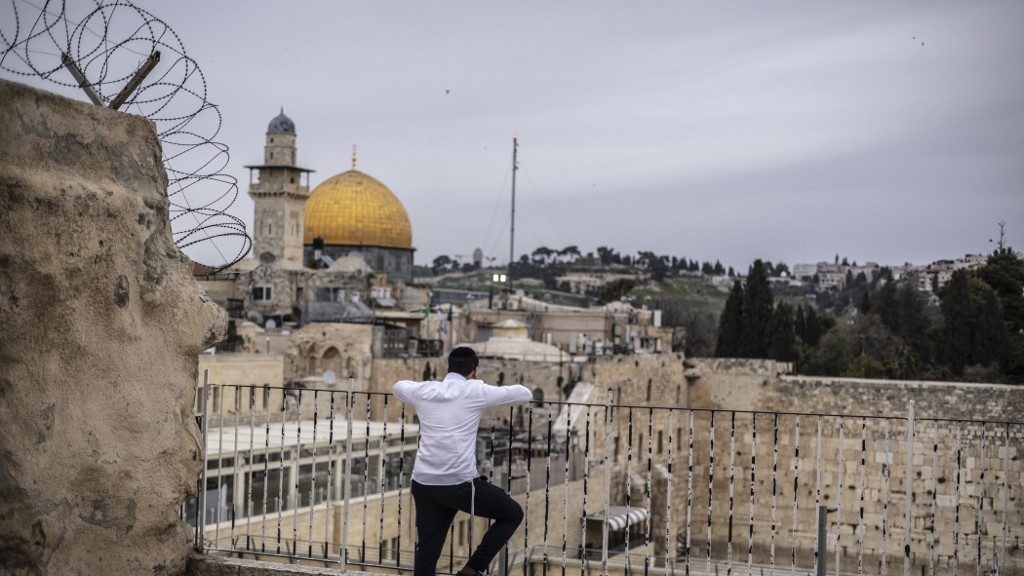
In an unprecedented religious decree, prominent Palestinian Islamic cleric Ekrima Sa’id Sabri has issued a fatwa calling for Eid al-Fitr prayers to be conducted outside Jerusalem’s Al-Aqsa Mosque complex after Israeli authorities implemented a comprehensive closure of the sacred site. The influential preacher and member of the Islamic Waqf Department urged all Muslims to gather near the mosque on Friday, emphasizing that prayers conducted in proximity to the holy site would hold equivalent religious significance to those performed within its walls.
The closure of Islam’s third holiest site marks the first time since the 1967 Six-Day War that Palestinians have been prevented from performing Ramadan Friday prayers at the mosque. Israeli authorities justified the restrictions citing security concerns during regional tensions, but Palestinian leadership condemns the move as politically motivated. Khaled Zabarqa, legal representative for Sheikh Sabri, asserted that ‘the Israeli occupation’s pretext of security reasons is a false and fabricated excuse designed to advance Judaization plans for Al-Aqsa.’
This sacred compound, known to Jews as the Temple Mount and representing Judaism’s most revered site, has long been the epicenter of Israeli-Palestinian religious tensions. While mainstream Jewish religious authorities prohibit Jewish prayer at the site pending messianic redemption, certain activist groups have increasingly demanded access for Jewish worship, fueling Palestinian concerns about potential alterations to the status quo.
The current closure has drawn international condemnation, with eight Muslim-majority nations recently denouncing the restrictions as ‘unjustified’ and asserting that Israel holds ‘no sovereignty’ over the holy site. Despite these objections, Israeli forces maintain a heavy presence throughout Jerusalem’s Old City, preventing Palestinian access while permitting limited Waqf administrative staff to enter the compound.
Middle East Eye reported that Israeli authorities formally notified the Islamic Waqf administration of their decision to close the site during Eid celebrations, a move expected to provoke widespread outrage among Muslim worshippers. Since the implementation of restrictions earlier this month, nightly attempts by Palestinians to pray near the barriers have frequently resulted in confrontations with Israeli security forces.
The issuance of this religious ruling represents a significant development in the ongoing struggle over sacred space in Jerusalem, transforming the geographical limitations into a spiritual opportunity for believers seeking divine reward during Islam’s holiest days.