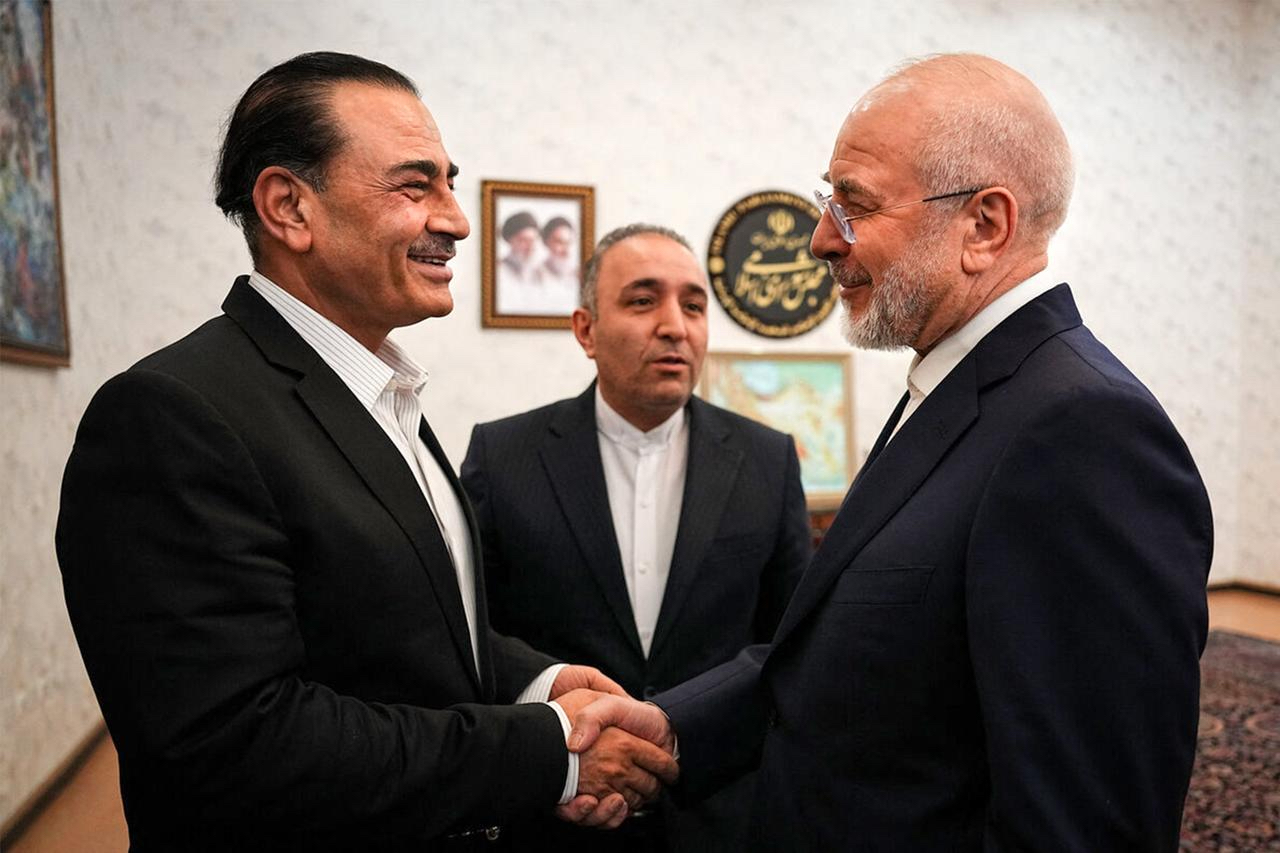
For weeks, long-simmering tensions between the United States and Iran have raised the risk of full-scale escalation, leaving regional powers scrambling to keep diplomatic channels open. Among these actors, Pakistan’s sustained diplomatic outreach has reignited a long-debated question: is Islamabad merely a passive messenger carrying demands between Washington and Tehran, or has it emerged as an independent, credible mediator with the access and standing to de-escalate tensions? Field Marshal Syed Asim Munir’s August 24 visit to Tehran, the latest step in a months-long cross-branch diplomatic effort led by Prime Minister Shehbaz Sharif, Foreign Minister Ishaq Dar, Interior Minister Mohsin Naqvi and Pakistan’s top military command, offers strong evidence for the latter.
Islamabad has maintained open, formal channels with both capitals throughout the conflict, with a core mandate to narrow ideological gaps, prevent violent escalation, and preserve a viable pathway to a negotiated ceasefire and long-term settlement. Prior to Munir’s Tehran trip, Reuters reported that former US President Donald Trump spoke with the Pakistani military chief and asked Islamabad to leverage its close ties with Iran to encourage Tehran to return to the negotiating table. But framing the visit as nothing more than a mission carried out on Washington’s behalf overlooks the broader strategic context of Pakistan’s months-long engagement. Pakistan’s Foreign Office has explicitly rejected labeling Munir as a US envoy, framing the trip as a natural continuation of Islamabad’s independent mediatory efforts.
This framing is supported by the two-way nature of Pakistan’s diplomatic work. Diplomatic sources based in Washington confirm that Islamabad does not only deliver US proposals to Iranian leadership; it also relays Tehran’s counterproposals back to Washington, paired with independent, contextual assessments from Pakistani diplomats. This level of proactive analysis and engagement goes far beyond basic message delivery, indicating a deliberate effort to bridge gaps and find common ground between the two adversarial parties.
Pakistan’s role as a mediator in the conflict predates Munir’s most recent diplomatic mission by months. The most tangible outcome of this sustained engagement came in June, when the United States and Iran signed the Islamabad Memorandum of Understanding, with Pakistan serving as the official mediator and signing witness to the deal. The agreement established a temporary cessation of military operations, guaranteed unimpeded commercial passage through the Strait of Hormuz, and laid out a formal framework for future negotiations on a broader, permanent settlement. Shortly after the MoU was signed, follow-up talks were held in Switzerland with delegates from Iran, the US, and co-mediators Pakistan and Qatar in attendance.
While the original agreement later frayed amid overlapping disputes over sanctions implementation, compliance with ceasefire terms, and navigation rules in the Strait of Hormuz, it remains the only formal negotiated framework produced since the latest round of conflict erupted. This existing diplomatic foundation gives Pakistan far more credibility than a casual informal messenger: it provides a pre-built architecture that can be revived to restart stalled talks.
Against this backdrop, Pakistan’s current diplomatic push is less about building a new negotiating process from scratch, and more about shoring up and revitalizing the existing framework established by the Islamabad MoU. Munir’s visit to Tehran fits squarely into this strategy. Accompanied by Interior Minister Mohsin Naqvi, Munir held meetings with senior political and security leaders across Iran’s government. Discussions centered on de-escalation, resuming formal negotiations, stabilizing navigation in the Strait of Hormuz, and building a path toward a permanent end to hostilities.
Iran’s presidential office described the talks as highly productive, noting that the visit delivered significant diplomatic breakthroughs whose outcomes will be made public in the coming weeks. Iranian officials have also publicly acknowledged Pakistan’s constructive efforts to facilitate dialogue and reduce tensions. This mutual recognition is critical: effective mediation requires that the mediator is seen as legitimate and unbiased by both adversarial sides, a bar Islamabad has been able to clear so far.
To be clear, Pakistan’s recent outreach has not yet delivered a comprehensive, final settlement to the US-Iran conflict, and no major breakthrough has been announced. But Tehran’s positive assessment of Pakistan’s engagement, alongside its continued willingness to treat the Islamabad MoU as a viable foundation for renewed diplomacy, has strengthened Islamabad’s position as a trusted bridge between the two sides. Tehran’s willingness to restart talks remains conditional: Iranian officials insist that Washington must address what Tehran characterizes as violations of the original June agreement before the framework can be fully restored. Even so, the ongoing relevance of the MoU confirms that Pakistan began its mediatory work long before Washington’s most recent request for assistance, and its efforts are rooted in independent strategic priorities.
Munir’s unique access to Iran’s top security establishment further underscores Pakistan’s unique value as a mediator. One of his key meetings during the Tehran visit was with General Mohsen Rezaei, the Supreme Leader’s representative on Iran’s Supreme National Security Council. This level of access to Iran’s core security decision-makers gives Islamabad a rare ability to assess whether both Iran’s civilian leadership and security establishment are prepared to support renewed diplomatic talks.
Pakistan also has clear, self-interested strategic reasons to prevent a prolonged full-scale conflict between the US and Iran. Instability around the Strait of Hormuz, one of the world’s most critical energy chokepoints, threatens global energy markets and Pakistani maritime commerce. Open conflict along Iran’s border with Pakistan would create severe domestic security pressures for Islamabad, while a sustained US-Iran confrontation would complicate Pakistan’s diplomatic and economic relationships across the Gulf region. For Pakistan, mediation is therefore not just a goodwill gesture: it is a direct investment in its own national security and economic stability. While Washington clearly benefits from Pakistan’s access to Tehran, passing proposals between two adversarial parties that lack direct diplomatic ties is a core function of any legitimate mediation. The more important test of Pakistan’s credibility is whether it maintains independent access to both sides and helps shape a negotiating process, rather than simply parroting one party’s demands. Islamabad’s recent diplomatic track record indicates that it is meeting this test.
The Strait of Hormuz offers the clearest immediate opportunity to test whether renewed diplomacy can deliver tangible results. Any disruption to shipping through the strait impacts Gulf oil producers, major Asian energy importers, and the entire global economy. Even if the broader political dispute between the US and Iran remains unresolved, progress on stabilizing commercial navigation through the waterway could serve as a critical early confidence-building measure to reset relations.
Recent diplomatic efforts by Oman have already yielded incremental progress on this file. Omani Foreign Minister Badr Al-Busaidi’s recent visit to Tehran produced an agreement on a phased approach to de-escalation, including a temporary safe navigation corridor, mine clearance operations, real-time information sharing between parties, and improved maritime traffic management, with ongoing technical talks working toward a permanent arrangement. Omani and Pakistani diplomatic initiatives are not competing tracks for negotiation: Oman can lead work on practical on-the-ground arrangements for Hormuz navigation, while Pakistan’s unique access to both Washington and Tehran can support the broader political agreements needed to make those practical arrangements permanent. A localized maritime agreement can reduce an immediate source of military confrontation, while a revived Islamabad framework can address broader sticking points including sanctions relief, mutual military restraint, and reciprocal compliance with deal terms. Together, these parallel tracks offer a viable path away from military pressure and toward incremental, sustainable de-escalation.
Fundamental disagreements between the US and Iran remain unresolved. Tehran has not publicly committed to making unilateral concessions to restart talks, while Washington continues to rely on harsh economic sanctions and military posturing as leverage against the Iranian government. Unconfirmed reports of a potential US proposal offering limited sanctions relief in exchange for Iranian concessions on Hormuz navigation and regional security have not yet resulted in a publicly confirmed agreement, meaning incremental progress should not be misinterpreted as a final breakthrough.
Pakistan cannot force Washington or Tehran to accept a deal, nor can Munir resolve the deep structural disagreements that have kept the two countries in conflict for decades. The ultimate success of any mediation effort depends on both sides concluding that a negotiated settlement delivers greater benefits than continued military and economic coercion. Instead, Pakistan’s unique diplomatic value lies in its ability to keep communication lines open when direct engagement between the two parties becomes impossible due to mutual distrust. Islamabad remained engaged in quiet diplomacy even after the original June MoU fell apart, and has maintained consistent contacts with both sides as tensions escalated over recent months.
That consistent, sustained engagement is what makes Munir’s latest Tehran visit so significant. Far from being a one-off mission carried out on Washington’s behalf, it is part of a broader, independent Pakistani strategy to preserve open communication, revive the Islamabad framework, reduce tensions around the Strait of Hormuz, and create the conditions for a lasting negotiated settlement. In doing so, Pakistan has preserved a strategically critical asset: a functioning, trusted communication channel between two adversaries whose deep mutual distrust repeatedly pushes them toward open conflict.
If the latest round of talks delivers tangible progress toward de-escalation, Pakistan’s legacy will not be that it sided with either Washington or Tehran. Instead, it will have proven that it can speak credibly to both, and help turn early signs of willingness to compromise into a sustainable, long-term diplomatic process that delivers regional stability.