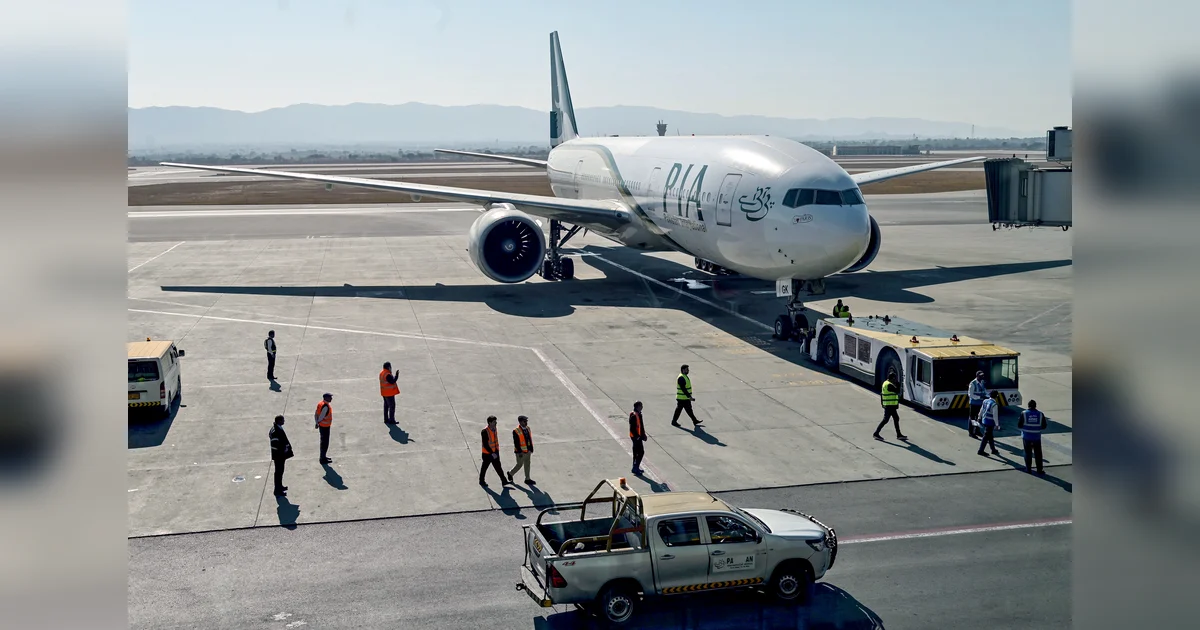
In a landmark transaction for Pakistan’s privatization efforts, the Arif Habib investment consortium has prevailed in a competitive auction to acquire a controlling 75% stake in Pakistan International Airlines (PIA) with a bid of 135 billion rupees ($482 million). The high-stakes bidding process, broadcast live on state television on Tuesday, featured three domestic contenders vying for the national carrier.
The transparent auction procedure saw the Arif Habib group outperform rival bids from a Lucky Cement-led consortium offering 134 billion rupees and private carrier Air Blue’s substantially lower 26.5 billion rupee proposal. The successful bidder retains an option to purchase the remaining 25% government stake within coming months.
Prime Minister Shehbaz Sharif characterized the event as historically significant, emphasizing the government’s commitment to transparency in what represents Pakistan’s largest corporate transaction to date. The acquisition marks a critical turning point for the financially troubled airline, which reported a $437 million net loss on $854 million revenue in 2022 before being delisted from the stock exchange.
This successful divestiture follows last year’s failed privatization attempt when a solitary $36 million bid fell dramatically short of the government’s $300 million valuation expectations. PIA’s operational challenges have included substantial financial losses, safety concerns that resulted in extended flight bans to Western destinations, and ongoing management issues that required repeated government bailouts.
The transaction serves as a crucial test case for Pakistan’s broader commitment to privatizing dozens of state-owned enterprises across multiple sectors by 2029, a key condition of the nation’s $7 billion International Monetary Fund loan program. Founded in 1955 as a symbol of national prestige with designer uniforms by Pierre Cardin, PIA’s decline exemplifies the challenges facing many government-owned entities struggling with inefficiency and financial sustainability.