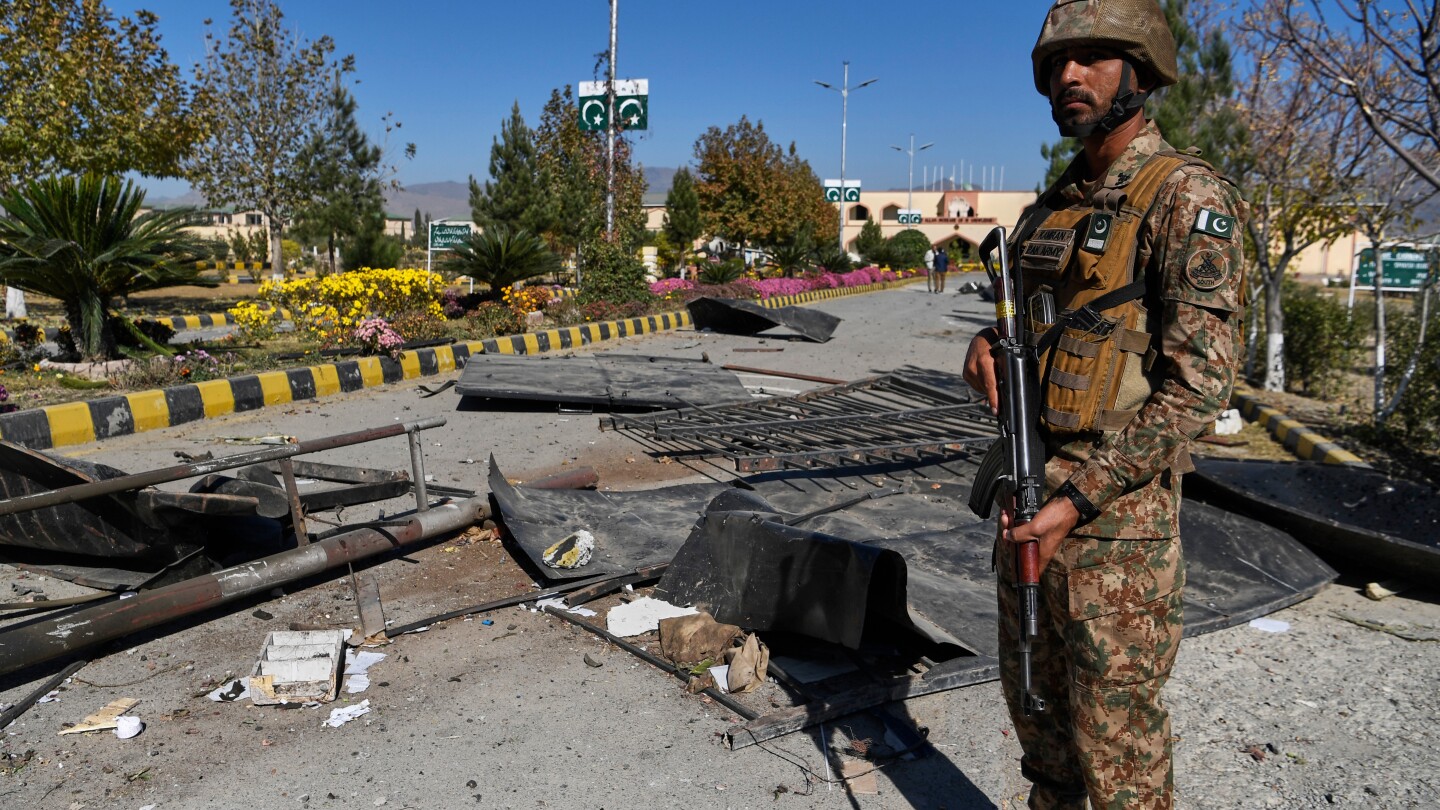
Pakistan’s Interior Minister Mohsin Naqvi revealed on Thursday that Afghan nationals were responsible for two devastating suicide attacks this week. The first targeted a cadet college near the Afghan border, while the second occurred outside a district court in Islamabad. The attacks, which claimed multiple lives and left dozens injured, have heightened concerns over Pakistan’s deteriorating security situation. Naqvi emphasized that Afghan citizens orchestrated both bombings, though Kabul has yet to respond to these allegations. The Islamabad court bombing on Tuesday resulted in 12 fatalities and 27 injuries, while Monday’s assault on Cadet College Wana in Khyber Pakhtunkhwa province killed three soldiers during a fierce gunbattle. These incidents underscore the escalating militancy in Pakistan, strained relations with Afghanistan, and the fragility of the border truce. Prime Minister Shehbaz Sharif extended an olive branch to Afghanistan’s Taliban government on Wednesday, proposing renewed peace talks following the collapse of negotiations in Istanbul last week. However, fears persist that the ceasefire brokered by Qatar and Turkey could unravel, potentially reigniting border clashes. Pakistan has long accused the Afghan Taliban of harboring Tehrik-e-Taliban Pakistan (TTP) leaders, a claim Kabul denies. While a TTP breakaway faction initially claimed responsibility for the Islamabad bombing, it later retracted the statement. Pakistani authorities have arrested suspects linked to the attacks, with investigations pointing to Afghan involvement in planning and executing the assaults. The Pakistan Army escorted journalists to the cadet college, revealing the extent of the damage. Information Minister Attaullah Tarar confirmed that all five attackers were neutralized, and over 600 individuals, including cadets and staff, were safely rescued. The ministry highlighted that the attackers used American-made weapons sourced from Afghanistan, further exacerbating tensions. The situation remains volatile as both nations grapple with the fallout from these attacks and the broader implications for regional stability.