Just hours before a self-imposed deadline for massive military action against Iran, Pakistan tabled a last-minute diplomatic proposal Tuesday aimed at pulling the Middle East back from the brink of catastrophic full-scale war, after more than five weeks of escalating US-Israeli strikes across Iranian territory. The initiative comes after US President Donald Trump issued an unprecedented, chilling warning that a “whole civilization will die tonight” if his demands were not met, leaving the global community reeling from the scale of the threat.
The White House confirmed it had received the Pakistani proposal and would issue a formal response in due course. Pakistan stepped into the mediator role as regional tensions hit a boiling point, with daily strikes crippling key Iranian infrastructure and violence spilling across neighboring borders. In a post on the social platform X, Pakistani Prime Minister Shehbaz Sharif affirmed that diplomatic efforts to resolve the ongoing conflict were moving forward with tangible momentum, adding that substantive progress could be reached in the near term if both sides agreed to the compromise.
Under the terms of Pakistan’s proposal, Sharif appealed directly to Trump to extend his 8:00 PM Washington time deadline by 14 days. In exchange, the plan calls for Iran to commit to reopening the Strait of Hormuz for a two-week period – the non-negotiable core demand Trump has laid out since Tehran shut down the critical global oil chokepoint in retaliation for the initial US-Israeli attacks on February 28.
Trump’s latest threats have drawn widespread international condemnation, with even observers familiar with his history of provocative rhetoric expressing shock at the escalation. Critics have warned that the planned attacks amount to a call for genocide, and could open the door to future war crimes charges for any US service members who carry out the orders. The apocalyptic warning marked a sharp escalation from a profanity-laden post Trump shared on his Truth Social platform two days earlier, on Easter Sunday, where he threatened to destroy every bridge and power plant across Iran, a country home to 90 million people. International law defines deliberate attacks on civilian infrastructure as a war crime unless the sites serve an overwhelming military purpose, a condition the US has not publicly established.
Pope Leo XIV issued a blunt rebuke of the threat, stating that any attack targeting the entire population of Iran is “truly unacceptable.”
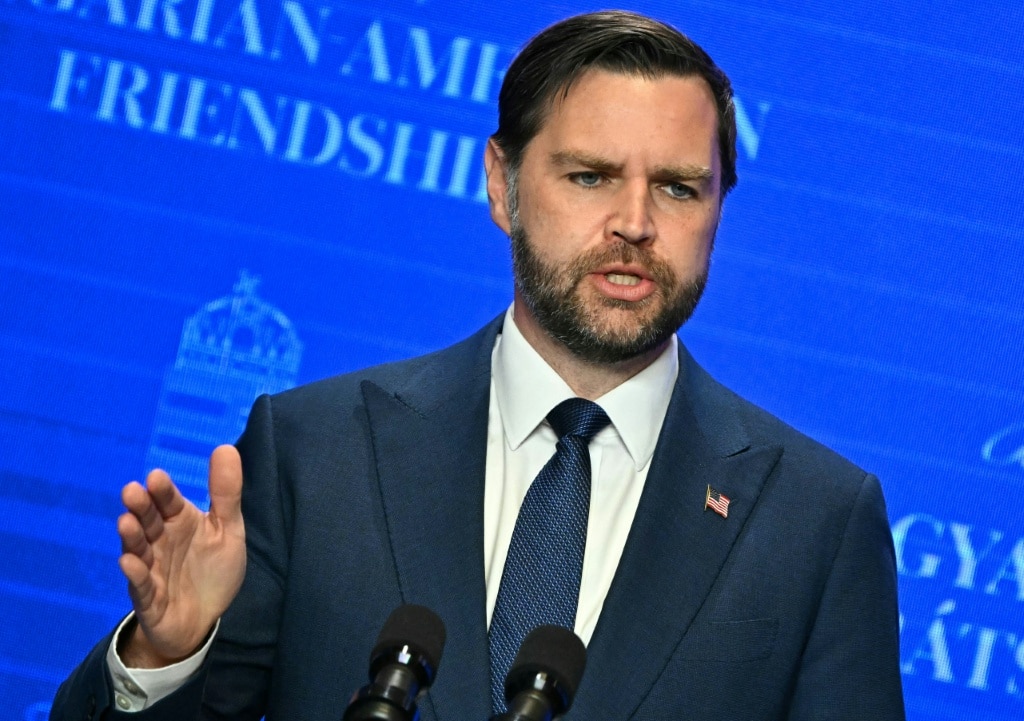
While Trump prepared for a potential major strike, US Vice President JD Vance fueled speculation about unconventional military action during a speaking appearance in Budapest, noting that the US held military tools “that we so far haven’t decided to use” against Iran. The White House quickly issued a clarification to AFP, denying that Vance’s comments were a reference to nuclear weapons.
Even ahead of Trump’s deadline, the US and Israel had ramped up daily strikes on Iranian infrastructure. Israeli Prime Minister Benjamin Netanyahu confirmed that recent attacks targeted railways and bridges, which he claimed were being used by Iran’s Islamic Revolutionary Guard Corps. In a rare acknowledgment of error, the Israeli military issued a statement of regret after confirming that an overnight strike damaged the Rafi-Nia Synagogue in central Tehran during an operation targeting a senior Iranian commander. Iran, which is governed by Shia Muslim clerics, is home to a centuries-old Jewish community that maintains roughly 100 active synagogues across the country.
Iranian senior officials have made clear that the country is prepared for every possible outcome of the current standoff. “No threat is beyond our preparedness and intelligence,” First Vice President Mohammad Reza Aref told state media Tuesday.
On-the-ground reporting confirms that the strikes have already killed civilians and disrupted critical transport links across Iran. Iranian authorities reported Tuesday that a US-Israeli strike on a bridge near the holy city of Qom and a second attack on a rail bridge in central Iran left two people dead. Regional officials added that a key highway connecting Tabriz in northern Iran to the capital Tehran has been completely shut down by a strike, while the Iranian Mizan news agency reported fresh damage to railway lines in Karaj, a city just outside Tehran. Early Tuesday, multiple explosions were reported across Tehran, and Iranian state media confirmed that 18 people – including two children – were killed in strikes in neighboring Alborz Province. Iran’s Mehr news agency also reported strikes on Kharg Island, the central hub of Iran’s oil export industry, though US media outlets claimed the strikes targeted only military infrastructure on the island.
As the deadline approached, ordinary Iranians expressed a mix of fear, resignation, and defiance in interviews with AFP. University student Metanat, 27, who lost a classmate to an earlier strike, said “I feel terrified and so should everyone else in the country. Some people dismiss Trump’s ultimatums as a joke, but death is not a joke.” 62-year-old pensioner Morteza Hamidi said he felt “gloomy for the future of the country after the war,” adding that repeated threats from Trump have left many Iranians desensitized: “We are now numb to his threats.”
In a show of public unity as the deadline neared, Iranian state media published images of thousands of Iranians forming human chains around critical power plants to shield the facilities from potential attack. The display of patriotism comes just months after Iran’s clerical leadership violently cracked down on widespread mass anti-government protests, with international human rights groups documenting over a thousand deaths in the crackdown.
The conflict has already spilled far beyond Iran’s borders, raising fears of a full regional war. Overnight Tuesday, a strike hit a petrochemical complex in the Saudi industrial city of Jubail, a witness confirmed to AFP, just hours after similar energy infrastructure targets were hit in Iran. Loud explosions were also reported late Tuesday in central Baghdad, just kilometers from the US embassy compound in the heavily fortified Green Zone.
Iran has responded to the US-Israeli attacks by targeting Gulf Arab states that host US military bases, while Israel has launched a full-scale ground invasion of southern Lebanon, vowing to seize territory controlled by Iranian-backed Hezbollah, which has launched thousands of rockets into Israel since the conflict began. Lebanese authorities report that the Israeli invasion has killed more than 1,500 people to date. On Tuesday, the Israeli military issued a new warning ordering all vessels in the maritime zone off southern Lebanon to move immediately north of the city of Tyre, announcing new military operations would be carried out in the area in the coming hours.
As regional governments prepared for the worst, Israel warned its citizens of a sharply increased risk of retaliatory Iranian attacks ahead of the deadline. Kuwait urged all of its citizens to remain indoors from midnight GMT until 7 AM Wednesday, while Bahrain’s main commercial port announced it would suspend all operations starting early Wednesday over security concerns.
The standoff centers on the closure of the Strait of Hormuz, the strategic waterway that carries roughly one-fifth of all globally traded oil. After the initial February 28 attacks, Tehran seized control of the strait to force a response from the international community, a move that has sent global oil prices soaring and put intense domestic political pressure on Trump, who has made reopening the strait his top priority in the conflict. Trump has justified the attacks by claiming Iran is months away from building a nuclear weapon, a claim that has not been corroborated by the United Nations’ nuclear watchdog or independent nuclear analysts.
At the United Nations Security Council last week, Russia and China vetoed a Western-backed resolution calling for the Strait of Hormuz to be reopened. The draft resolution had already been watered down to remove a provision that would have given Gulf states authorization to use military force to secure the waterway, but Beijing and Moscow still rejected the text.
US and Israeli officials maintain that all strikes are aimed at degrading Iran’s military capabilities, and that civilian casualties are unintended consequences of the military campaign.