博客

  • UK’s Prince George chooses Eton for next big step in his education

    UK’s Prince George chooses Eton for next big step in his education

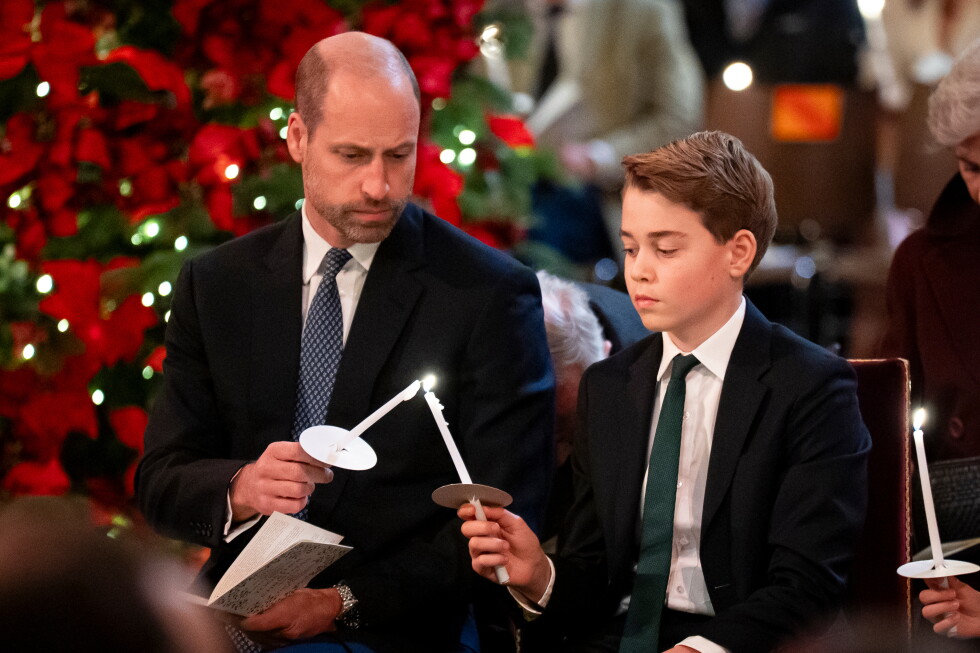
    After months of widespread public speculation over where the 12-year-old second-in-line to the British throne would continue his secondary education, Kensington Palace officially announced Tuesday that Prince George will enroll at Eton College when the new academic term begins this coming September.

    For weeks, royal watchers and education analysts had debated the prospective choice, with many pundits floating Marlborough College — the boarding school that Prince George’s mother, Princess Catherine, attended during her youth — as the likely favorite. But the palace put all conjecture to rest with a brief, clear confirmation: “Kensington Palace can confirm that Prince George will attend Eton College from this September.”

    Founded all the way back in 1440 by King Henry VI, Eton College is one of the United Kingdom’s most prestigious all-boys boarding schools, with a centuries-long reputation for grooming the nation’s future leaders. Its alumni roll includes multiple former British prime ministers, ranging from Britain’s first prime minister Robert Walpole to 21st-century officeholders David Cameron and Boris Johnson.

    The choice of Eton also places Prince George in a long line of close royal family members who attended the institution. His father, Prince William, heir to the British throne, studied at Eton, as did George’s uncle Prince Harry and his great-uncle, Earl Charles Spencer. Even today, the school retains many of its historic traditions, including requiring all students to wear its iconic formal uniform: tailored tailcoats, stiff white collars, and pinstriped trousers.

    At present, Prince George is a student at Lambrook, a private preparatory school located in Berkshire. The school, which sits close to the royal family’s Windsor residence west of London, also counts George’s two younger siblings — 11-year-old Princess Charlotte and 8-year-old Prince Louis — among its current students.

  • Struggling Pizza Hut restaurant chain will be sold for $2.7 billion

    Struggling Pizza Hut restaurant chain will be sold for $2.7 billion

    After months of strategic review and years of underperformance, global restaurant conglomerate Yum Brands has finalized a $2.7 billion deal to sell its iconic pizza chain Pizza Hut, splitting the brand between a private equity firm and its former spin-off Yum China Holdings. The agreement, announced Tuesday, carves out Pizza Hut’s global operations excluding mainland China for a $1.5 billion purchase by private equity group LongRange Capital, while Yum China will acquire the China market Pizza Hut business for roughly $1.2 billion.

    The sale caps a years-long stretch of struggle for the 66-year-old pizza brand, which has faced mounting pressure from industry competitors and held back by a large footprint of outdated, underinvested locations. Yum Brands first signaled it was exploring a sale of the chain back in February, after confirming it would shutter 250 underperforming U.S. locations to stem losses. At that time, the chain had already reported sustained declines in same-store sales that pushed the brand to become the lowest-performing holding in Yum’s brand portfolio.

    Founded in 1958 in Wichita, Kansas, Pizza Hut has changed corporate hands several times over its history. Food and beverage giant PepsiCo purchased the chain in 1977, before spinning off its entire restaurant division in 1997 to form the independent Yum Brands, which also counted KFC and Taco Bell among its core holdings. For more than a decade, Pizza Hut lagged behind its sister brands in growth, as new competitors in the fast-casual and delivery pizza space eroded its market share.

    Industry analysts have broadly framed the sale as a logical move for Yum Brands, which will now be able to redirect capital and leadership focus to its faster-growing portfolio brands. “Pizza Hut has long been the weak link in Yum’s portfolio,” explained Neil Saunders, managing director of industry research firm GlobalData. “Despite efforts to revitalize the brand and shut underperforming locations, it has become increasingly clear that pushing the division back into growth will require a level of investment and patience that Yum is just not prepared to commit to.” Saunders added that the divestiture will allow Yum to prioritize its higher-performing concepts with stronger sales trajectories.

    Yum Brands CEO Chris Turner expressed confidence in the new owners’ ability to turn around the brand’s performance. “Under LongRange and Yum China, Pizza Hut will be well positioned for future growth with ownership that brings deep expertise in the restaurant industry,” Turner said in an official statement announcing the deal.

    Yum China, which already operates KFC and Pizza Hut locations across mainland China as an independent franchisee, is well positioned to leverage local market knowledge to expand the brand’s footprint in the world’s second largest economy, while LongRange Capital brings specialized restaurant industry investment experience to the global operations. Both transactions are on track to close in the third quarter of the current year, per Yum Brands’ timeline. Ahead of the deal’s announcement, Yum Brands’ stock registered a small decline in pre-market trading.

  • US-Iran agreement is more pause than peace

    US-Iran agreement is more pause than peace

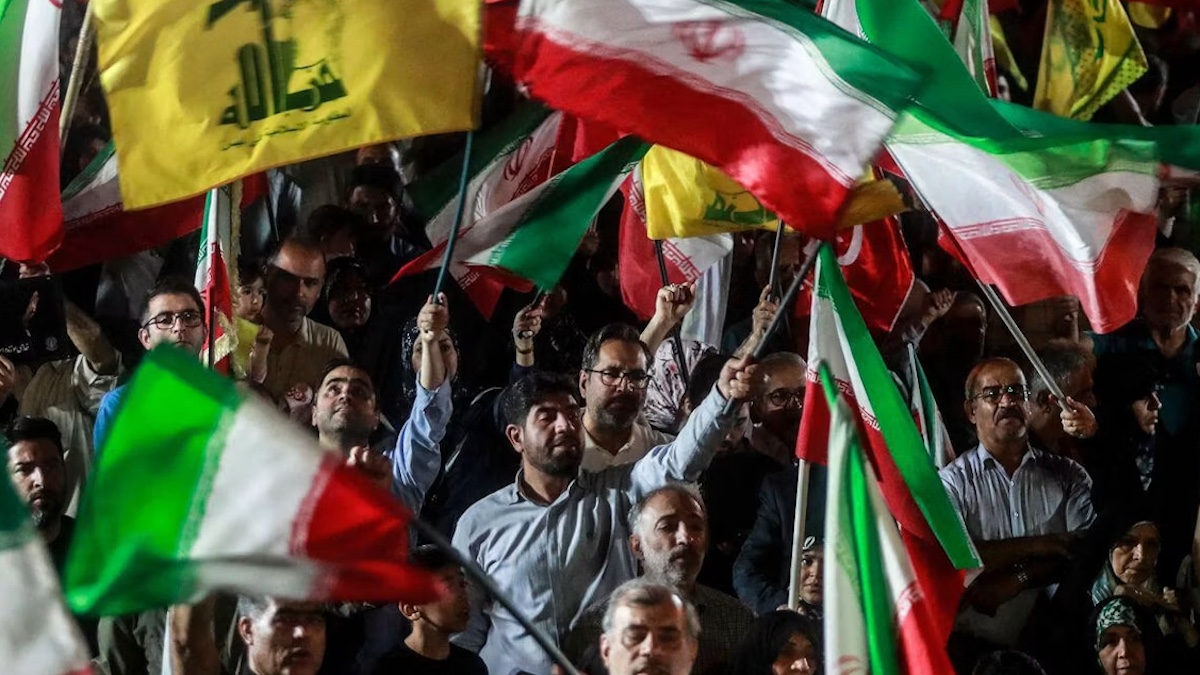
    Global financial markets have breathed a collective sigh of relief following the announcement of a new tentative agreement between the United States and Iran. Oil prices have pulled back from elevated levels, maritime insurers have loosened restrictive pricing policies, and political leaders across the globe have quickly lauded the development as a landmark diplomatic breakthrough. The memorandum of understanding, set to be formally signed in Switzerland on June 19, has already been labeled by some observers as a peace deal that will formally end the long-running standoff between the two nations. But this framing risks drastically overstating the actual progress that has been secured.

    According to details of the agreement that have emerged, what both sides have signed off on is nothing more than a guiding diplomatic framework for future negotiations, not a binding peace treaty or a comprehensive resolution of the deep-rooted disputes that pushed the two countries to the edge of a wider regional conflict. All of the most contentious sticking points – from Iran’s controversial nuclear program and the future of US-led economic sanctions to broader regional security questions, including Israel’s ongoing military campaign and occupation in Lebanon – remain completely unresolved, with all discussions deferred to future negotiating rounds.

    This distinction is not merely a semantic technicality. International diplomacy operates along a clear spectrum: a ceasefire pauses active hostilities, while a full peace agreement addresses and resolves the underlying disputes that sparked conflict in the first place. The new US-Iran arrangement falls somewhere in the middle of these two endpoints. Core disagreements have been set aside for later talks, and the long-running pattern of so-called “gray-zone” confrontation – including proxy operations, economic coercion, and limited military escalation that stops short of full-scale open war – remains largely unchanged.

    There is a second critical reason to approach claims of a “peace deal” with caution. The recent open hostilities only interrupted diplomatic talks that were already ongoing before escalation. This agreement largely just restores the negotiating process that existed prior to the recent conflict, rather than building a new, permanent political settlement. If the central disputes that sparked escalation remain unaddressed, it is fair to question what meaningful “peace” has actually been achieved.

    A clear indication of the agreement’s inherent limitations can be found in statements from Washington itself. Even while announcing the tentative “peace deal,” US President Donald Trump has repeatedly refused to rule out future military action against Iran. That is not the rhetoric that typically accompanies a definitive, final peace settlement.

    Nor does the framework address the full scope of regional dimensions of the US-Iran standoff. Israel, one of the main actors in the confrontation with Iran, is not a signatory or participant in the arrangement. The deal also fails to resolve ongoing simmering tensions along Israel’s northern border with Lebanon, which remains one of the most unstable flashpoints in the Middle East. With Israeli Prime Minister Benjamin Netanyahu maintaining a hardline stance on Lebanon and retaining the right to take unilateral military action, the agreement reads less as a broad regional peace settlement and more as a narrow, bilateral de-escalation mechanism limited to US-Iran relations.

    Perhaps the clearest proof that the scope of the deal is being exaggerated is found in what it actually delivers. Strip away the diplomatic fanfare and limited economic concessions offered to Iran, and the agreement primarily just restores the status quo that existed before the most recent conflict escalated – most notably, the full reopening of the Strait of Hormuz, the world’s most critical oil chokepoint.

    This context helps explain the overwhelmingly positive market reaction to the announcement. While markets are often said to rally on the prospect of peace, in reality they respond most strongly to the return of stability. Oil traders, shipping firms, and maritime insurers do not prioritize whether decades-long political disputes have been permanently resolved. What matters to them is the free flow of oil through strategic chokepoints, affordable coverage for tanker voyages, and the uninterrupted operation of global supply chains.

    The risk of prolonged disruption to the Strait of Hormuz – which carries roughly one-fifth of all globally traded oil – was never trivial. A extended closure would have triggered catastrophic ripple effects across the entire global economy. While oil prices never spiked to the $200 per barrel peak some analysts warned of, that does not mean markets were unbothered by the instability. A large part of why prices remained contained was that governments and private businesses drew down emergency buffer stockpiles that had been built specifically for this kind of crisis. Strategic petroleum reserves were released, existing commercial stockpiles were tapped, and many nations cut back on new imports to rely on stored supplies.

    These temporary measures bought critical time for diplomacy, but they could not have been sustained indefinitely. Global strategic oil reserves were already being depleted at a rapid pace amid the ongoing standoff. If Gulf instability had dragged on for just a few more months, governments around the world would have been forced to make increasingly unpalatable trade-offs between taming inflation, sustaining economic growth, and protecting national energy security. Viewed through this lens, the urgency behind reaching this preliminary agreement becomes much easier to understand.

    For the United States, prolonged disruption to global energy markets risked reigniting inflationary pressures that remain a major political liability ahead of upcoming elections. For Europe and major Asian economies, higher shipping and energy costs threatened to derail already fragile post-crisis economic recoveries. For dozens of low-income developing nations, another major energy shock would have inflicted severe, widespread economic hardship. As a result, the agreement reflects not just diplomatic strategic calculation, but urgent global economic necessity.

    In this context, the biggest winners from the deal may not be Washington or Tehran at all. Instead, they are ordinary consumers, businesses, and central banks across the globe that have narrowly avoided another potentially devastating energy market shock that could have destabilized the world economy.

    None of this is to dismiss the real value of what has been achieved. Preventing further escalation into full-scale war is a meaningful accomplishment. Reopening critical global maritime trade routes delivers immediate, widespread benefits to the global economy. And replacing open military confrontation with renewed diplomatic dialogue is unquestionably a better outcome than continued conflict.

    If the framework holds, Iran will enter the next round of negotiations in a strong position: it stands to gain near-term sanctions relief, has put diplomacy back on track, and can count on growing US reluctance to consider renewed military action as November’s US midterm elections approach. But accurate framing of the agreement is critical to avoid false expectations. Historically, durable peace agreements resolve core disputes, build shared governance institutions, and establish lasting frameworks for peaceful coexistence. This new arrangement does none of those things – at least not yet.

    The underlying disagreements that sparked the recent conflict remain completely unresolved. Iran’s long-term nuclear future is still uncertain. The future of economic sanctions remains a heavily contested issue. Deep-seated regional rivalries between all major actors persist. The risk of renewed confrontation has not been eliminated.

    What the two sides have achieved is not comprehensive, lasting peace. It is a tentative ceasefire framework, a short-term mechanism for economic stabilization, and a holding pattern to keep diplomatic talks moving forward. That may well prove to be an important first step toward a broader settlement down the line. But for now, it is not a full peace deal. The most accurate takeaway from the announcement is not that Washington and Tehran have resolved their decades-long differences. It is that both sides faced overwhelming, compelling incentives to step back from the brink of open war – for now.
  • Musk’s SpaceX buys AI coding start-up for $60bn days after IPO

    Musk’s SpaceX buys AI coding start-up for $60bn days after IPO

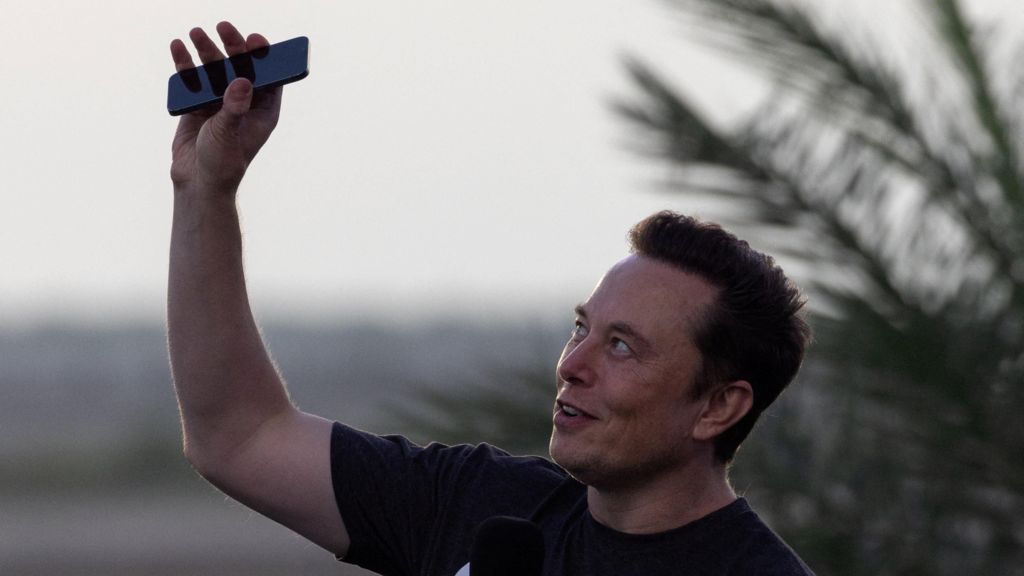
    In a blockbuster deal that underscores the booming demand for generative artificial intelligence tools across tech and aerospace industries, Elon Musk’s SpaceX has entered into a definitive agreement to acquire AI coding startup Anysphere – creator of the popular AI coding agent Cursor – for $60 billion, just four trading days after the rocket firm closed its historic initial public offering.

    The acquisition, which is set to close by the end of the third quarter of 2026, was pre-negotiated under a partnership deal first struck between the two companies in April 2025. Under that earlier agreement, SpaceX secured an option to either purchase the startup outright for $60 billion or pay $10 billion for the joint development work the teams had completed together. Cursor shareholders will receive the full purchase price in newly issued SpaceX public stock, under the terms of the deal.

    The move comes on the heels of SpaceX’s landmark listing on the New York Nasdaq stock exchange, which went down as the largest initial public offering in global history. The IPO valued the company at more than $2 trillion, and raised a staggering $85.7 billion in fresh capital for the firm. Since its debut, SpaceX shares have surged nearly 50% from the $135 per share IPO offer price, pushing up the net worth of majority owner Elon Musk past the $1 trillion mark, making him the first person ever to reach that personal wealth milestone.

    Cursor has emerged as one of the fastest-growing players in the red-hot AI coding space, a segment where firms like OpenAI and Anthropic have also built popular tools that automate core parts of the software development workflow. The startup’s product is already in use at major technology firms including Stripe, Adobe and Nvidia, where Nvidia CEO Jensen Huang has publicly hailed Cursor as his “favourite enterprise AI service”.

    For SpaceX, the acquisition is a strategic move to accelerate the growth of its in-house artificial intelligence division, xAI – the firm behind the controversial chatbot Grok, which Musk brought into SpaceX following an acquisition earlier this year. When the partnership was first announced in April 2025, SpaceX framed the combination of Cursor’s strengths and its own computing infrastructure as a path to building industry-leading AI models. “The combination of Cursor’s leading product and distribution to expert software engineers with SpaceX’s million H100 equivalent Colossus training supercomputer will allow us to build the world’s most useful models,” the company said in its original April statement.

    But the blockbuster deal and SpaceX’s record valuation have also sparked ongoing debate about market exuberance and wealth inequality. Unlike mature public companies, SpaceX’s $2 trillion valuation is almost entirely tied to investor optimism about its future earnings potential, rather than proven consistent profitability. Financial filings show SpaceX has remained unprofitable, racking up more than $9 billion in operating losses across 2025 and the first half of 2026, driven by massive capital outlays for AI infrastructure and rocket development programs.

    Founded as a commercial rocket firm focused on developing reusable launch vehicles, SpaceX has expanded its footprint over the past decade to include the Starlink satellite internet constellation, which now serves millions of customers globally. Its entry into the artificial intelligence race via the xAI acquisition, followed by the Cursor purchase, marks the company’s most aggressive push yet to diversify beyond its core aerospace operations and compete with top AI players that have commanded sky-high valuations in public markets.

  • US-Iran accord may crumble faster than the ink can dry

    US-Iran accord may crumble faster than the ink can dry

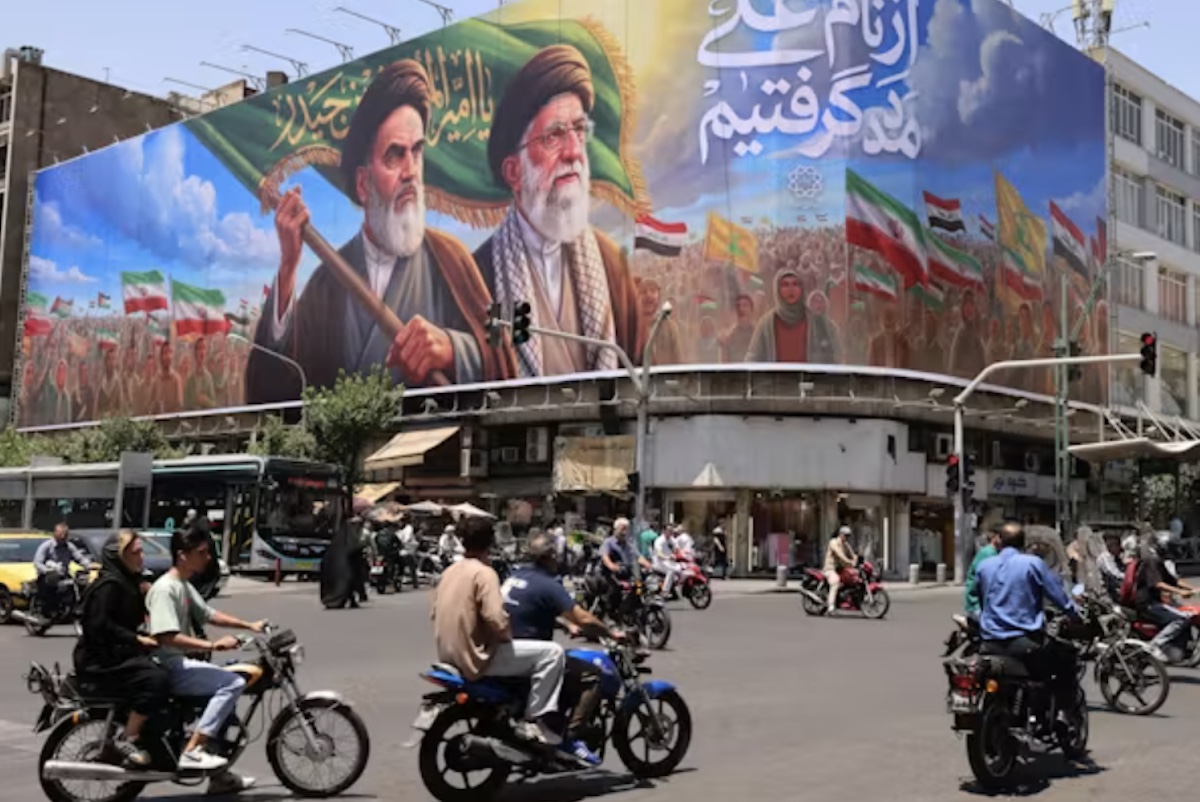
    On June 14, 2026, Pakistan Prime Minister Shehbaz Sharif, who acted as the lead mediator between Washington and Tehran, announced that the two long-warring adversaries had reached a tentative agreement to end open hostilities, with a formal signing ceremony scheduled for June 19 in Switzerland. US President Donald Trump quickly hailed the deal as a major diplomatic and national security triumph on his Truth Social platform, highlighting that the Strait of Hormuz—one of the world’s most critical global oil chokepoints—would reopen to all commercial traffic, the crippling US blockade on Iranian oil exports would be lifted, and global energy markets would see a resumption of Iranian crude flows. What Trump omitted from his celebratory announcement was any mention of Iran’s nuclear program and the size of its enriched uranium stockpile—the core casus belli cited by the US to launch the war in the first place. All of these contentious issues, along with other longstanding points of contention including Iran’s ballistic missile program and its regional allied proxies, have been pushed to future negotiations scheduled to unfold over a 60-day window. As an expert in international and nuclear security, I argue that this agreement delivers no meaningful resolution to the issues that sparked the war, and has left the United States with significantly eroded credibility as a reliable negotiating partner on the global stage.

    To understand why the nuclear dispute remains the most intractable barrier to a lasting peace, we can turn to James Fearon’s foundational 1995 rationalist theory of war, which outlines three core barriers that push nations to armed conflict even when both sides would prefer a negotiated settlement: incomplete information about each side’s willingness to commit force and absorb damage, the inability to deliver credible, binding commitments to uphold a deal, and the “indivisibility problem” — when the disputed issue cannot be split or compromised to create a mutually acceptable middle ground.

    This recent war has resolved only the first of these three barriers. Both sides have now seen the full scope of each other’s capabilities: how much military force the US was willing to deploy, and how much damage Iran could endure while remaining in active conflict. What even months of war could not fix is the long-running problem of broken commitments between the two nations, a rift that dates back decades.

    Iran strictly abided by the terms of the 2015 Joint Comprehensive Plan of Action (JCPOA), the landmark international nuclear deal that placed strict limits on Tehran’s nuclear activities. The International Atomic Energy Agency repeatedly verified that Iran held its uranium enrichment level to 3.67% — a purity suitable only for civilian power reactor use, far below the threshold required for a nuclear weapon — and kept its total enriched uranium stockpile below 300 kilograms, in full compliance with the agreement. Yet in 2018, the Trump administration unilaterally withdrew from the JCPOA, dismissing the pact as “the worst deal ever negotiated” over its sunset provisions and its failure to address Iran’s ballistic missile program from the start.

    When Iran returned to the negotiating table in 2025, the US and Israel launched airstrikes against Iranian targets while talks were still ongoing. Then, in February 2026, as negotiators were closing in on a tentative agreement, another joint US-Israeli strike killed Iranian Supreme Leader Ali Khamenei and lead nuclear negotiator Ali Larijani mid-negotiation. This pattern of reneging on diplomatic commitments and breaking off talks with military force is why Iran now demands concrete, enforceable guarantees and immediate sanctions relief before it will sign any final deal, rather than relying on unfulfilled promises of good faith. A nation that honored its nuclear commitments for years only to be attacked has little reason to trust future American promises of concessions. For that reason, the 60-day delay is best understood as a window for Tehran to observe whether the US and Israel will uphold the ceasefire across all regional fronts, including Lebanon.

    The indivisibility problem is what makes the nuclear dispute fundamentally unresolvable in the short term. Most international diplomatic disputes can be split into incremental compromises: sanctions can be lifted in phases, for example. Even nuclear programs can be partially restricted, as the JCPOA proved: the deal counted operational centrifuges, capped enrichment levels, and strictly monitored stockpile sizes. What cannot be split is the core disagreement at hand: the US demands that Iran eliminate all uranium enrichment entirely, while Tehran insists uranium enrichment for civilian purposes is an inalienable sovereign right that it will not surrender.

    The 2015 JCPOA centered entirely on the nuclear question, arranging for strict, verified limits in exchange for sanctions relief. But during 2025 and early 2026 talks, the US reversed its JCPOA position entirely. Instead of placing limits on an existing program, Washington demanded the full, permanent elimination of Iran’s entire nuclear enrichment infrastructure. US envoy Steve Witkoff insisted on zero enrichment and the permanent dismantling of Iran’s three core nuclear sites: Natanz, Fordow, and Isfahan. Iran rejected the demand outright, reaffirming that enrichment is a non-negotiable sovereign right. Both rounds of talks ended in US-Israeli airstrikes.

    The upcoming June 19 agreement does not place any cap on Iran’s enrichment activities, nor does it require the elimination of Iran’s nuclear program. It only ends active fighting, reopens the Strait of Hormuz, and pushes all core disputes including enrichment, stockpiles, ballistic missiles, and regional proxies to 60 days of follow-up talks. In a recent interview with The New York Times, Trump claimed he faced no rush to remove Iran’s near-weapons-grade fuel stockpiles stored in facilities damaged by bombing, and asserted that Iran would voluntarily suspend enrichment for 15 to 20 years and only enrich for civilian purposes. This stands in stark contrast to the JCPOA, negotiated under the Obama administration, which physically removed 97% of Iran’s existing enriched stockpile from the country and enforced verified, binding limits on enrichment. Because it fails to address any of the core nuclear issues that sparked the war, the Trump-brokered deal is nothing more than a ceasefire, not a lasting nuclear agreement.

    Returning to the rationalist theory of war, we see that the conflict resolved only the information problem, revealing what each side was willing to endure. The commitment problem remains entirely unsolved. Neither side can yet deliver a promise that the other will trust, particularly Iran after its lead negotiators and top leadership were killed mid-negotiation. Worse, the indivisibility problem has only grown more intractable since the war began. The standoff between zero enrichment and Iranian sovereign rights remains as uncompromising as ever, and the 60-day delay is not a step toward resolution—it is just the same unsolved problem with a deadline attached.

    The only potential path forward relies on American restraint. If Washington can rein in Israeli strikes against Iran and Hezbollah in Lebanon, it can slowly begin to rebuild the credibility it lost through two rounds of broken negotiations and unprovoked attacks. This is an enormous test for the second Trump administration. Even as the current ceasefire deal was being finalized, Israel launched a strike on Beirut, an attack that could easily derail the upcoming talks. In my view, the 60-day window is not a path to a lasting settlement, but just a temporary pause before the next round of negotiations fails. I argued back in April that this conflict would never end in a clean, final settlement, and would instead unfold as a series of fragile, contested pauses. The June 19 deal is just the first of these pauses.

    Iran has emerged from the war with its nuclear enrichment expertise fully intact, its existing stockpile secured, and a strengthened belief that only a fully operational nuclear weapon would deter future US-Israeli attacks. At the same time, Iran proved it could hold its ground against a superior military force, successfully strike US bases and regional allies, and discovered new strategic leverage it did not fully appreciate before the war: control over the Strait of Hormuz has proven to be a far more effective deterrent than a nuclear program ever could be.

    Today, the strait is open, oil is flowing, and the core question that the war was fought to resolve remains exactly where it started. Thousands of lives were lost only to bring both sides back to square one. No one has won a meaningful victory, even though both sides will inevitably claim triumph.

  • German president says Europe is worried over tensions in the disputed South China Sea

    German president says Europe is worried over tensions in the disputed South China Sea

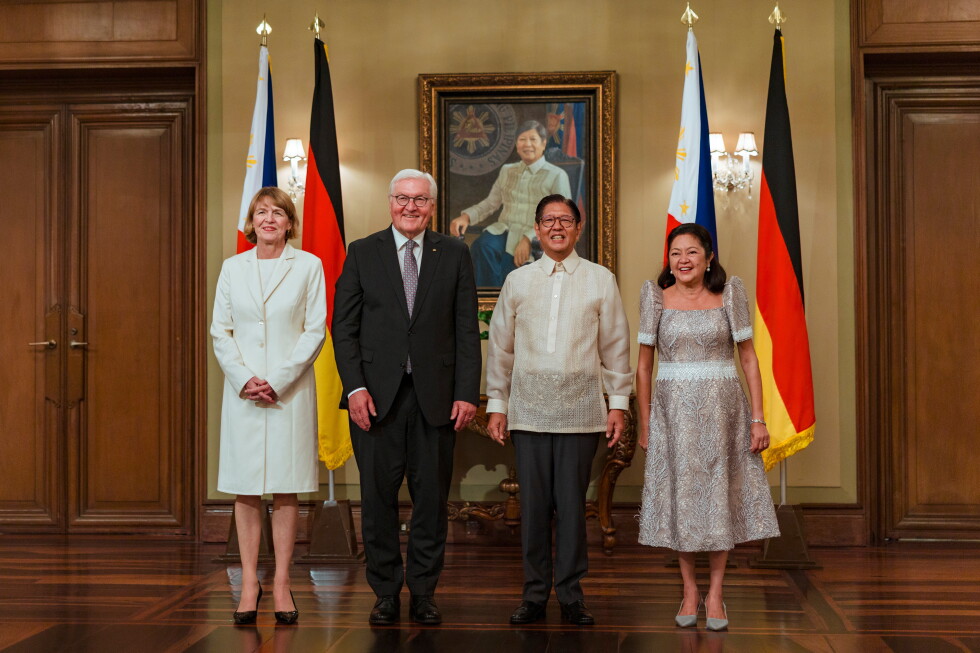
    During an official state visit to the Philippines on Tuesday, German President Frank-Walter Steinmeier has publicly articulated Europe’s deep anxiety over rising frictions in the disputed South China Sea, warning that a major escalation in the critical waterway could threaten global freedom of navigation, echoing disruptive disruptions seen in the Strait of Hormuz.

    Speaking alongside Philippine President Ferdinand Marcos Jr. at a joint press briefing in Manila, Steinmeier drew a parallel between the South China Sea situation and past blockades of the Strait of Hormuz amid the Iran conflict, noting that European leaders are particularly focused on ongoing territorial standoffs between Manila and Beijing. He emphasized that the Indo-Pacific, and Southeast Asia in particular, stands as one of the most economically dynamic regions on the planet, making any instability here a pressing concern for European economies and security.

    “If any disruptive incident occurs in that part of the world, it will trigger profound alarm across Europe,” Steinmeier stated, speaking through a professional interpreter. “Breaches of international maritime law endanger unimpeded navigation, a lesson the recent Hormuz blockade drove home to us in the most dramatic way possible.”

    The closed-door bilateral meeting between the two leaders covered multiple topics of mutual concern, including the fallout of potential Strait of Hormuz disruptions, which have previously driven sharp global spikes in fuel and fertilizer prices.

    While Steinmeier stopped short of directly naming any single party as responsible for the ongoing South China Sea tensions, Germany’s long-held position reaffirms that China’s activities in the disputed waters violate the sovereign and economic rights of coastal states including the Philippines, while jeopardizing open navigation for all countries. This stance aligns with comments made by then-German Foreign Minister Annalena Baerbock during her 2024 visit to Manila, when she highlighted that high-risk maneuvers by Chinese vessels that have led to minor collisions with Philippine craft threaten the economic development prospects of the Philippines and other regional coastal states. Baerbock also explicitly stated that China’s expansive territorial claims in the South China Sea have no basis under international law, and called for a peaceful negotiated resolution to the disputes. During that 2024 visit, Baerbock toured the Philippine Coast Guard headquarters and inspected a German-donated surveillance drone aboard a Philippine patrol vessel.

    On his visit, Steinmeier doubled down on Germany’s commitment to supporting the Philippine Coast Guard, which has operated as Manila’s front-line agency safeguarding the country’s territorial claims and has been involved in multiple direct encounters with Chinese maritime forces in the disputed waters.

    In his response, Marcos expressed his gratitude to Germany for its consistent public backing of the Philippines’ efforts to uphold the rule of law in the South China Sea, including its repeated calls for all parties to honor the 2016 binding South China Sea Arbitral Award. The 2016 ruling, issued under the framework of the 1982 United Nations Convention on the Law of the Sea, formally invalidated China’s sweeping historic claims to nearly the entire South China Sea. Beijing refused to participate in the arbitration process initiated by Manila, has rejected the ruling outright, and continues to disregard its provisions.

    The South China Sea dispute involves multiple claimant parties beyond China and the Philippines: Vietnam, Malaysia, Brunei, and Taiwan also hold overlapping territorial and maritime claims in the region. The United States, which maintains no territorial claims of its own in the waterway, has repeatedly reaffirmed its mutual defense treaty obligation to the Philippines — its longest-standing Asian ally — stating it will come to the Philippines’ defense if Philippine forces, vessels, or aircraft come under armed attack. China has consistently issued warnings opposing any U.S. intervention in the regional disputes.

  • Authorities say at least 9 dead, 25 hurt after a train and bus collide in Zimbabwe

    Authorities say at least 9 dead, 25 hurt after a train and bus collide in Zimbabwe

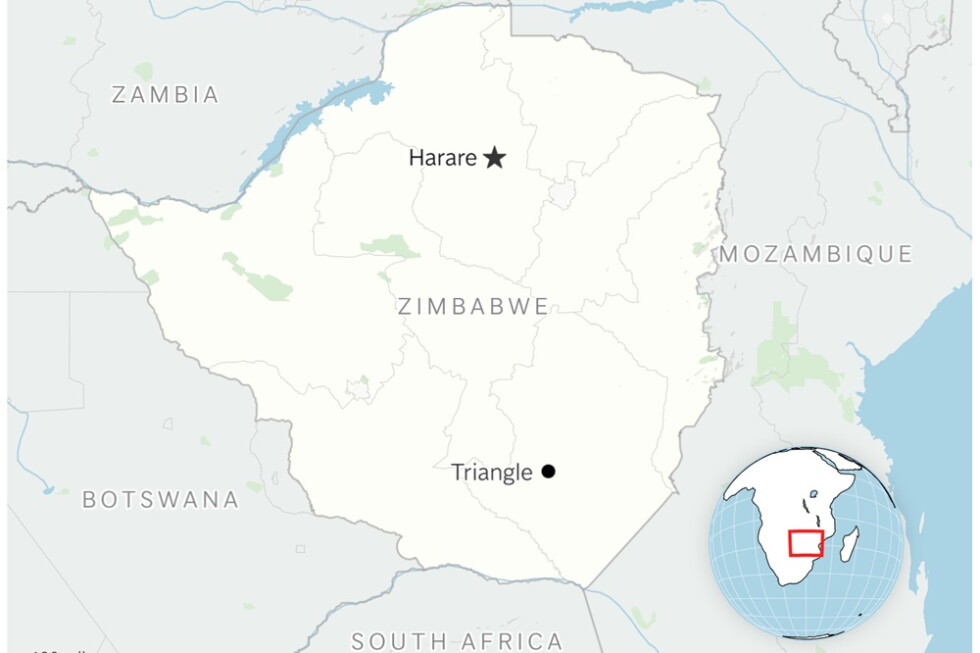
    A devastating collision between a freight train and a passenger bus at an unguarded level crossing in southern Zimbabwe has left at least nine people dead, among them two children, and left more than two dozen others injured, according to official statements from Zimbabwean police and national railway officials.

    The fatal crash unfolded on Tuesday in Triangle, a small agrarian town best known as the heart of Zimbabwe’s sugar production industry. National Railways of Zimbabwe spokesperson Andrew Kanambura confirmed in an official briefing that the collision was entirely preventable, caused by clear human error. The bus driver failed to follow mandatory railway safety protocols, he said, neglecting to come to a full stop and scan for oncoming trains before attempting to cross the active tracks.

    Emergency response teams rushed to the crash site immediately after the incident, extricating survivors from the mangled wreckage and transporting all 25 injured victims to local medical facilities for urgent care. Visual documentation of the scene published by local Zimbabwean media outlets underscores the violence of the impact: the bus is left crumpled alongside the rail line, its entire side sheared away by the force of the train. Twisted metal shards, broken glass and personal debris are scattered across the ground surrounding the site, leaving a clear picture of the tragedy.

    This latest fatal transportation disaster comes amid a disturbing string of deadly incidents across Zimbabwe in recent weeks. Less than seven days before this collision, a minibus carrying schoolchildren caught fire in the central region of the country, killing seven students. Just one month prior, a head-on collision between a passenger bus and a heavy haulage truck claimed 10 lives.

    Deadly road and level crossing accidents are not an isolated problem in Zimbabwe: data from the country’s own road safety agency shows that a traffic collision occurs every 15 minutes on average across the nation. That pace translates to a daily toll of five deaths and 38 injuries, with officials confirming that 94% of all road-related accidents in the southern African nation stem from human error, including noncompliance with traffic and rail crossing safety rules.

    The crisis extends far beyond Zimbabwe’s borders, too. Data from the United Nations Economic Commission for Africa shows that the African continent holds the unenviable title of the highest road traffic fatality rate in the world, even though the region is home to just 3% of the world’s total registered motor vehicles. The UN body’s analysis also notes that buses and other public transit vehicles are disproportionately represented in fatal mass casualty crashes across the region.

  • Cuba tourism collapses as US pressure campaign bites

    Cuba tourism collapses as US pressure campaign bites

    In the first five months of 2026, Cuba has faced an unprecedented collapse in its core tourism industry and a deepening humanitarian crisis, driven by sweeping new sanctions imposed by the Trump administration against the Caribbean island’s communist government.

    New data published by Cuba’s National Office of Statistics and Information (Onei) confirms that international visitor arrivals have dropped by a staggering 58.4% year-over-year, falling to fewer than 360,000 for the January-to-May period. This sharp decline is no accident: the Trump administration has deliberately targeted Cuba’s tourism sector, the largest source of critical foreign revenue for the island’s cash-strapped government, as a central pillar of its pressure campaign against Havana’s leadership.

    The sanctions have triggered a cascading exodus of international businesses from the island. Multiple major foreign airlines and global hospitality operators have suspended all operations in Cuba, creating a vicious cycle that pushes visitor numbers even lower. Most recently, Canada’s flag carrier Air Canada announced an indefinite suspension of all Cuban routes earlier this month, a decision that deals an outsized blow to the local tourism industry. Canada has long been the top source of tourists for Cuba, according to Onei’s 2026 data, and Air Canada had already paused service in February due to acute shortages of aviation fuel on the island. The airline explicitly cited ongoing political and economic uncertainty on the island as the core reason for making the suspension permanent.

    Leading Spanish hospitality groups Meliá and Iberostar have also pulled out of dozens of Cuban hotel properties, complying with a June 5 US deadline that requires all foreign companies to end all business ties with Grupo de Administración Empresarial S.A. (Gaesa), the Cuban state-run conglomerate controlled by the country’s armed forces. US Secretary of State Marco Rubio has publicly labeled Gaesa a “state within a state,” claiming in a Spanish-language address directed at the Cuban people that the group hoards business profits for a small ruling elite and brutally represses any Cubans who voice dissent against the government.

    Beyond the collapse of tourism, the combination of sweeping US sanctions and a de facto oil blockade has dramatically worsened long-running shortages of basic goods across Cuba, including fuel, prescription medications, and staple food supplies. On Monday, Cuban state news outlet Cubadebate reported a devastating drop in pediatric cancer survival rates: since January, when President Donald Trump threatened to impose secondary sanctions on any nation or company that supplies oil to Cuba, the survival rate for children with cancer has fallen from 85% to just 65%.

    Widespread fuel scarcity has paralyzed critical sectors of the domestic economy, including municipal waste management. Piles of uncollected garbage now line the streets of Cuban cities, creating public health risks. Frequent, prolonged, and island-wide power outages have also sparked rare public protests across the country, where public dissent has historically been punished with lengthy prison sentences.

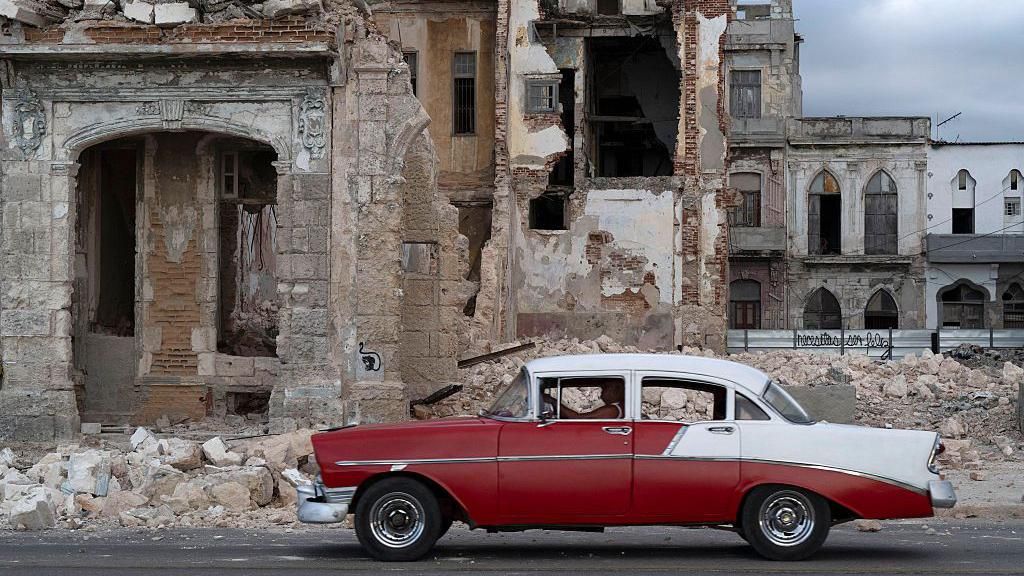
    Even basic religious activities have been disrupted by the growing crisis. Agence France-Presse reported Sunday that communion wafers, a core sacramental item for Catholic Mass, have joined the growing list of scarce goods on the island. Multiple Catholic priests told AFP that church leaders have been forced to ration distribution of the wafers to worshippers. The wafers are traditionally produced at a Havana monastery, where nuns now face daily power outages that restrict electricity access to just two hours a day, making it impossible to maintain normal production levels of the unleavened bread. Photos from the island already show far fewer vehicles on Havana’s streets than before sanctions were tightened, a visible indicator of how deeply the fuel crisis has reshaped daily life for ordinary Cubans.

  • Russian artist and Putin critic shot dead in Poland

    Russian artist and Putin critic shot dead in Poland

    A chilling execution-style killing has rocked eastern Poland, where a 44-year-old Russian artist and outspoken critic of Vladimir Putin’s Kremlin regime was gunned down in broad daylight just hundreds of meters from a Belarusian diplomatic mission. Local law enforcement officials have launched a wide-ranging investigation into the murder, which has sent shockwaves across European security circles given the victim’s high-profile public opposition to authoritarian leaders in Moscow and Minsk.

    The victim, Robert Kuzovkov, who publicly worked under the pseudonym Semyon Skrepetsky, was killed on a Monday morning in a public car park in Biała Podlaska, a Polish city roughly 25 miles from the Belarusian border and just 600 meters from the local Belarusian consulate. According to official statements from Marcin Kozak, spokesperson for the District Prosecutor’s Office in Lublin, an unidentified attacker approached Skrepetsky and opened fire, striking the artist twice before moving closer once he fell to the ground to fire three additional lethal shots.

    “When the victim fell to the ground, the perpetrator approached, fired three more shots and then quickly fled the scene. Robert K died at the scene,” Kozak confirmed to reporters. Forensic teams responding to the attack recovered five 9mm shell casings and one Geco 9mm Luger bullet from the car park crime scene, and a formal autopsy to confirm cause of death and gather additional forensic evidence is scheduled for Wednesday.

    Skrepetsky built a public reputation for his sharp satirical caricatures that targeted authoritarian leaders across the former Soviet bloc, including Russian President Vladimir Putin, Belarusian strongman Alexander Lukashenko, and Chechen leader Ramzan Kadyrov. Kozak noted that the artist had been open about his condemnation of the Kremlin’s current political agenda, a stance that put him in the crosshairs of critics of the Russian government even before he relocated to Poland.

    Public records show Skrepetsky moved to Biała Podlaska from Russia in 2021, as political crackdowns on anti-Kremlin critics intensified inside the country. Just days before his killing, the artist appeared at an anti-Kremlin protest marking Russia Day outside the Russian embassy in Berlin on June 12. Video footage posted to social media from the event shows Skrepetsky carrying a satirical painting caricaturing both Putin and former Soviet leader Joseph Stalin, with a Russian flag tied to his trousers that dragged along the pavement as he marched.

    In the immediate aftermath of the shooting, Polish law enforcement detained two Belarusian men, aged 33 and 37, near the Belarusian consulate in Biała Podlaska. Investigators have not yet confirmed what connection the two men may have to the killing, and Kozak said their possible roles in the incident remain under active investigation. Police have not yet named or publicly identified the suspected gunman, who remains at large after fleeing the scene of the shooting.

  • Williams sisters receive Wimbledon doubles wildcard

    Williams sisters receive Wimbledon doubles wildcard

    One of the most iconic sibling pairs in tennis history is set to return to the sport’s most famous grass court, as Venus and Serena Williams have received a wildcard entry to compete in the 2025 Wimbledon women’s doubles draw. The surprise announcement has sent ripples of excitement through the global tennis community, marking Serena Williams’ first Grand Slam appearance since her widely assumed retirement after the 2022 US Open.

    Now 44 years old, Serena, a 23-time Grand Slam singles champion with seven Wimbledon singles titles to her name, launched her competitive comeback last week at the Queen’s Club Championship, and is currently competing in doubles in Berlin alongside top-ranked Karolina Muchova. Her reunion with older sister Venus at the All England Club will be the pair’s first Grand Slam appearance together since that 2022 US Open run.

    At 45, five-time Wimbledon singles champion Venus Williams has maintained limited competitive play in recent seasons. Though she has dropped all seven of her singles matches in 2025, she notched a doubles win at the Madrid Open in April alongside Britain’s Katie Boulter, and previously made history in 2024 as the second-oldest woman to claim a WTA Tour-level singles match win at the Washington Open. Speaking ahead of Serena’s comeback, Venus expressed nothing but confidence in her sister’s form, telling reporters: “The quality of her stroke is obviously there. She is a natural — she is very tenacious.”

    The Williams sisters’ legacy at Wimbledon is unmatched by any active pair. Between them, they have claimed 12 Wimbledon singles titles, and partnered together to take home six women’s doubles crowns at the tournament — their first coming in 2000, and their most recent in 2016. Three decades after they first burst onto the professional tennis scene as teenage prodigies, revolutionizing the women’s game with their power, athleticism and aggressive style, their return has become one of the most anticipated storylines of the 2025 grass court season.

    Notably, neither sister was selected for a singles wildcard, though one women’s singles spot remains unassigned. The wildcard announcement also brought disappointment for several high-profile players heading into the tournament, which kicks off on June 29.

    Former British number one Dan Evans, who announced that 2025 will be the final season of his professional career, was not awarded a wildcard into the men’s singles main draw. Unless he claims one of the two remaining wildcard spots to be allocated over the next two weeks, he will need to navigate the qualifying draw to secure a spot in his final Wimbledon singles appearance. The 36-year-old, who helped Britain claim its first Davis Cup title in 79 years in 2015 and has reached the Wimbledon third round three times, voiced his frustration after being overlooked for a Queen’s Club wildcard earlier this month, saying he feels he has not been taken seriously as a competitor. He did receive a consolation doubles wildcard, however, paired with 2023 Wimbledon boys’ champion Henry Searle for that draw.

    In contrast, three-time Grand Slam champion Stan Wawrinka, who is also retiring at the end of the 2025 season, received a men’s singles wildcard, alongside Bulgaria’s Grigor Dimitrov, a 2014 Wimbledon semi-finalist who was forced to retire from a 2024 fourth-round match against eventual champion Jannik Sinner while holding a two-set lead.

    Other notable players who missed out on men’s singles wildcards include 2021 runner-up Matteo Berrettini, 2022 finalist Nick Kyrgios, and retiring French veteran Gael Monfils. Berrettini is heavily favored to claim a main draw spot as the first alternate if a player withdraws before the tournament, while Kyrgios did receive a doubles wildcard, paired with Kazakhstan’s Alexander Bublik.

    In the women’s singles draw, recently crowned French Open runner-up Maja Chwalinska earned a wildcard following her breakthrough run at Roland Garros, alongside six British players who received wildcard entries. Six British players, including 2021 US Open champion Emma Raducanu, earned direct entry to the singles draws based on their ranking, alongside four British men who received wildcard entries on Tuesday. Wildcards for the tournament are selected at the discretion of the Wimbledon committee, which notes selections are typically based “on the basis of past performance at Wimbledon or to increase British interest.”