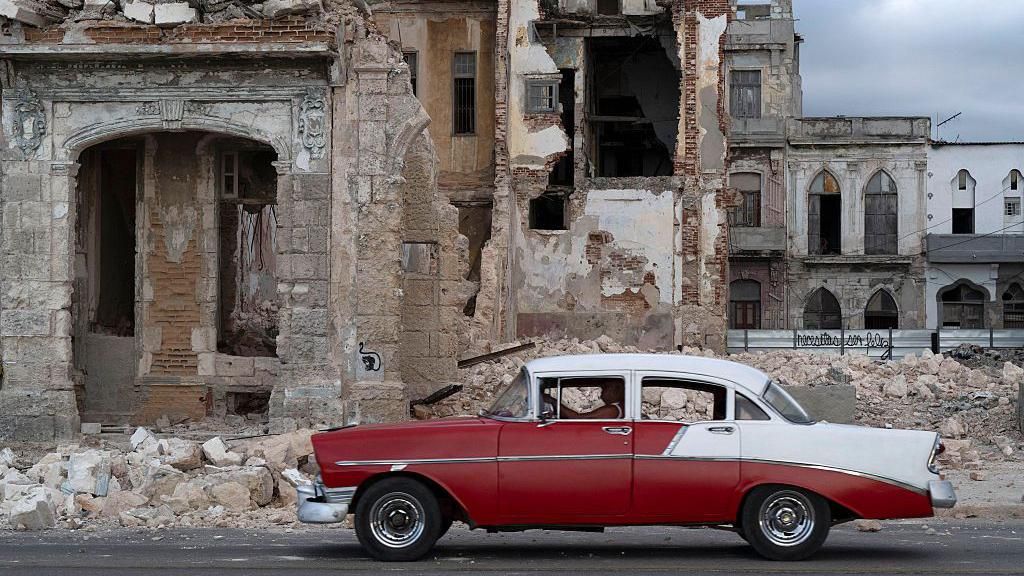
In the first five months of 2026, Cuba has faced an unprecedented collapse in its core tourism industry and a deepening humanitarian crisis, driven by sweeping new sanctions imposed by the Trump administration against the Caribbean island’s communist government.
New data published by Cuba’s National Office of Statistics and Information (Onei) confirms that international visitor arrivals have dropped by a staggering 58.4% year-over-year, falling to fewer than 360,000 for the January-to-May period. This sharp decline is no accident: the Trump administration has deliberately targeted Cuba’s tourism sector, the largest source of critical foreign revenue for the island’s cash-strapped government, as a central pillar of its pressure campaign against Havana’s leadership.
The sanctions have triggered a cascading exodus of international businesses from the island. Multiple major foreign airlines and global hospitality operators have suspended all operations in Cuba, creating a vicious cycle that pushes visitor numbers even lower. Most recently, Canada’s flag carrier Air Canada announced an indefinite suspension of all Cuban routes earlier this month, a decision that deals an outsized blow to the local tourism industry. Canada has long been the top source of tourists for Cuba, according to Onei’s 2026 data, and Air Canada had already paused service in February due to acute shortages of aviation fuel on the island. The airline explicitly cited ongoing political and economic uncertainty on the island as the core reason for making the suspension permanent.
Leading Spanish hospitality groups Meliá and Iberostar have also pulled out of dozens of Cuban hotel properties, complying with a June 5 US deadline that requires all foreign companies to end all business ties with Grupo de Administración Empresarial S.A. (Gaesa), the Cuban state-run conglomerate controlled by the country’s armed forces. US Secretary of State Marco Rubio has publicly labeled Gaesa a “state within a state,” claiming in a Spanish-language address directed at the Cuban people that the group hoards business profits for a small ruling elite and brutally represses any Cubans who voice dissent against the government.
Beyond the collapse of tourism, the combination of sweeping US sanctions and a de facto oil blockade has dramatically worsened long-running shortages of basic goods across Cuba, including fuel, prescription medications, and staple food supplies. On Monday, Cuban state news outlet Cubadebate reported a devastating drop in pediatric cancer survival rates: since January, when President Donald Trump threatened to impose secondary sanctions on any nation or company that supplies oil to Cuba, the survival rate for children with cancer has fallen from 85% to just 65%.
Widespread fuel scarcity has paralyzed critical sectors of the domestic economy, including municipal waste management. Piles of uncollected garbage now line the streets of Cuban cities, creating public health risks. Frequent, prolonged, and island-wide power outages have also sparked rare public protests across the country, where public dissent has historically been punished with lengthy prison sentences.
Even basic religious activities have been disrupted by the growing crisis. Agence France-Presse reported Sunday that communion wafers, a core sacramental item for Catholic Mass, have joined the growing list of scarce goods on the island. Multiple Catholic priests told AFP that church leaders have been forced to ration distribution of the wafers to worshippers. The wafers are traditionally produced at a Havana monastery, where nuns now face daily power outages that restrict electricity access to just two hours a day, making it impossible to maintain normal production levels of the unleavened bread. Photos from the island already show far fewer vehicles on Havana’s streets than before sanctions were tightened, a visible indicator of how deeply the fuel crisis has reshaped daily life for ordinary Cubans.