博客

  • Christian schools in Jerusalem suspend classes to protest at Israeli restrictions

    Christian schools in Jerusalem suspend classes to protest at Israeli restrictions

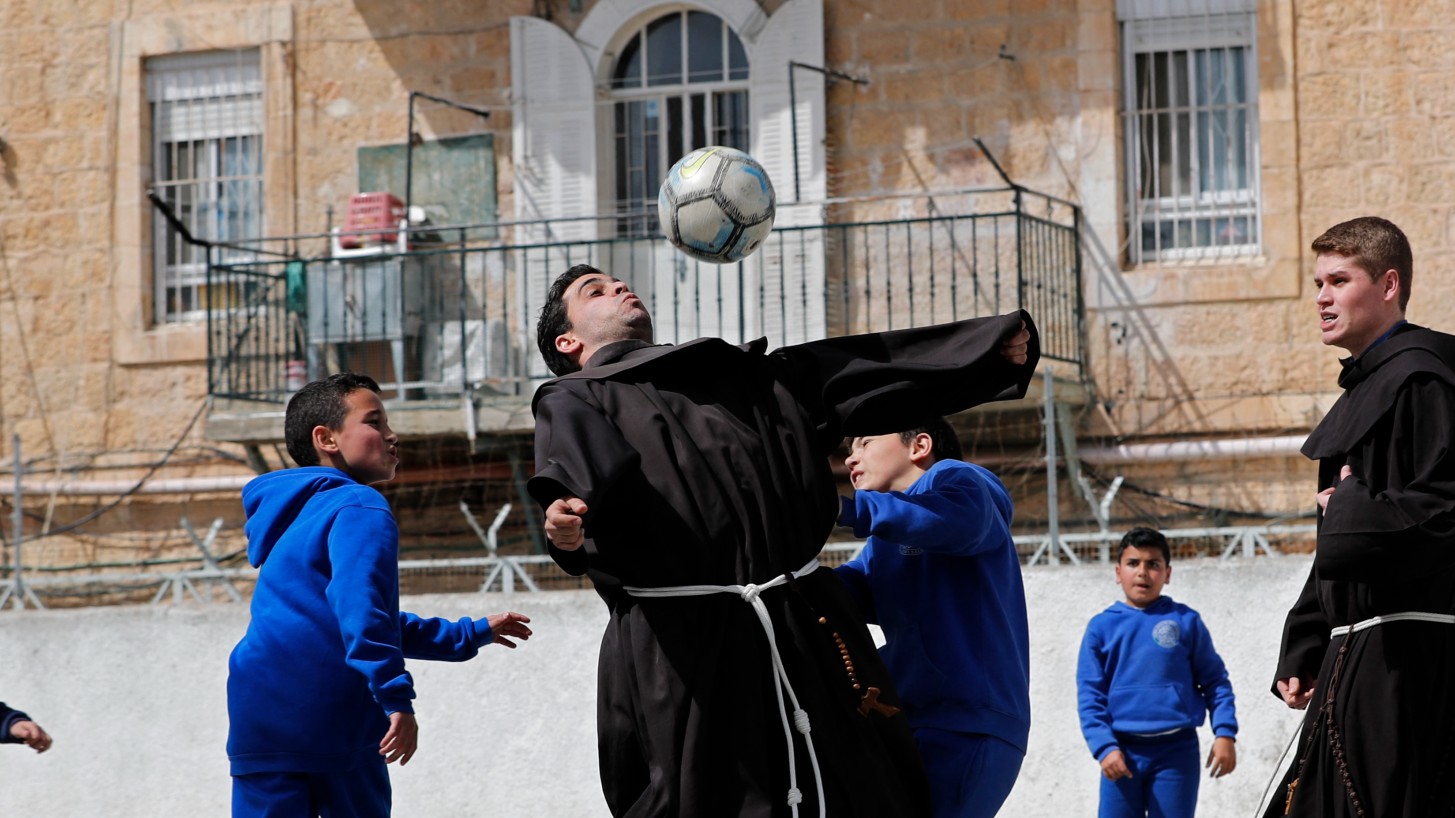
    Christian educational institutions in Jerusalem have initiated a significant escalation of protest measures, including widespread class suspensions and a comprehensive strike. This decisive action represents a forceful rejection of Israeli administrative policies that school administrators characterize as arbitrary and disruptive to their educational operations.

    The catalyst for this educational crisis emerged when Israeli authorities implemented stringent restrictions on work permit renewals for educators residing in the West Bank. This bureaucratic intervention has created substantial staffing shortages, directly compromising the educational experience for thousands of students across Jerusalem’s Christian school system.

    According to institutional data, these 15 Christian schools collectively educate more than 12,000 students while employing 820 educational professionals. Among these, 235 teachers holding West Bank identification cards issued by the Palestinian Authority have been particularly affected. These educators traditionally secured access through entry permits renewed at each academic term’s commencement.

    At the beginning of the current term, the Israeli Civil Administration implemented a new permit protocol: outright denial for some educators, placement under administrative review for others, and issuance of restricted third-category permits valid only for specific weekdays for the remainder.

    Ibrahim Faltas, Principal of Terra Sancta School in Jerusalem, revealed to Middle East Eye that the majority of West Bank teachers now lack comprehensive permits, specifically prohibiting their entry into Jerusalem on Saturdays—a regular school day within the Christian educational calendar. Faltas emphasized this represents an unprecedented administrative approach, noting that despite official assurances of resolution, numerous educators continue facing permit denials.

    “The operational challenge is profound,” Faltas explained. “These West Bank teachers bring over two decades of invaluable classroom experience that cannot be readily replaced. Furthermore, we are confronting the potential economic devastation of 235 families whose livelihoods are now imperiled.”

    Beyond their educational excellence, Jerusalem’s Christian schools maintain historical significance as among the city’s most prestigious institutions, maintaining affiliations with all Christian denominations in Jerusalem without exception.

    Reverend Munther Ishaq, Pastor of the Evangelical Lutheran Church in Bethlehem, characterized the timing as revealing governmental hypocrisy. “While presenting themselves as protectors of Christian communities, they simultaneously undermine Christian education through permit restrictions,” he stated. Ishaq condemned the permit system as fundamentally unacceptable, arguing it perpetuates occupation dynamics and systemic injustice.

    “The suggestion that military-issued permits constitute some form of generosity is offensive,” Ishaq continued. “We are indigenous people with two millennia of continuous worship in this land. Now we must secure military authorization to teach in schools that predate the Israeli state itself.”

    Reverend Ishaq interpreted these developments as evidence of systematic targeting of Christian presence in Jerusalem, part of broader efforts to reshape the city’s religious character through Judaization policies.

    Education analysts note this crisis occurs within a context of systematic challenges facing Jerusalem’s educational sector. These include forced curriculum changes, financial pressures through funding mechanisms, operational licensing complications, and infrastructure neglect resulting in severe classroom shortages.

    According to the Faisal Husseini Foundation, which specializes in Jerusalem education statistics, the city requires approximately 80 new classrooms annually to accommodate population growth. Israeli authorities typically provide fewer than half this number, creating a cumulative deficit exceeding 10,000 school places.

    Fakhri Abu Diab, a Jerusalem affairs researcher, argues Israel pursues a coordinated strategy to control educational content and institutional administration. “The ultimate objective appears to be reshaping student mentality and cultural awareness,” Abu Diab suggested. “This constitutes a comprehensive campaign against Arab educational culture throughout Jerusalem.”

  • Technocratic committee overseeing Gaza transition revealed

    Technocratic committee overseeing Gaza transition revealed

    A newly formed technocratic committee tasked with overseeing Gaza’s transitional governance has been revealed, marking a significant development in the implementation of the ceasefire agreement to end hostilities in the region. The 15-member Palestinian committee will be led by Ali Shaath, former Palestinian deputy minister for planning, with oversight provided by Bulgarian diplomat Nickolay Mladenov, the former UN Middle East peace coordinator.

    The committee’s formation follows Egypt’s Wednesday announcement that most Palestinian factions had reached consensus to support this technocratic governance structure, facilitating the second phase of the Gaza ceasefire plan. Mladenov is reportedly positioned to serve as high representative of a Donald Trump-led ‘Board of Peace’ responsible for monitoring the agreement’s implementation.

    The committee features specialized appointments including Omar Shamali (Communications), Abdul Karim Ashour (Agriculture), Aed Yaghi (Health), and Aed Abu Ramadan (Industry and Economy). Additional appointments encompass Jabr al-Daour (Education), Bashir Al-Rayes (Finance), Ali Barhoum (Water and Municipalities), Hanaa Tarzi (Relief and Solidarity), and Adnan Salem Abu Warda (Judiciary). Completing the roster are Rami Tawfiq Helles (Endowments and Religious Affairs), Osama Hassan Al-Saadawi (Housing and Public Works), and Samira Helles (Energy and Transportation).

    Notably, Hamas and Islamic Jihad have expressed agreement ‘to support the mediators’ efforts in forming the Palestinian National Transitional Committee to administer the Gaza Strip.’ Committee members were instructed to maintain confidentiality about their appointments to allow former President Trump to formally announce the initiative, according to Al-Araby Al-Jadeed reports.

    The committee is expected to comprise Gaza-based figures with no political faction affiliations. Egypt is likely to host the committee’s inaugural meeting, with sources indicating coordination with Israeli authorities to facilitate travel for Gaza-based members. At least four prospective members have remained in Egypt since the conflict began.

    The ceasefire agreement, which took effect in October, has faced implementation challenges due to continued hostilities. Palestinian health authorities report over 71,400 fatalities and 171,000 injuries since the conflict’s onset, with nearly 450 additional Palestinians killed since October amid ongoing restrictions on humanitarian aid access.

  • Actor Timothy Busfield charged with sexually abusing boys on set of TV series

    Actor Timothy Busfield charged with sexually abusing boys on set of TV series

    Emmy Award-winning actor Timothy Busfield, renowned for his roles in ‘Thirtysomething’ and ‘The West Wing,’ has been formally charged with multiple counts of child sexual abuse following his surrender to authorities in Albuquerque, New Mexico. The 68-year-old actor faces two counts of criminal sexual contact with a minor and one count of child abuse allegedly occurring on the set of Fox’s crime drama ‘The Cleaning Lady,’ where Busfield serves as both director and executive producer.

    According to court documents filed by the Bernalillo County District Attorney’s Office, two young male actors allege sustained inappropriate touching and grooming behavior by Busfield, whom they referred to as ‘Uncle Tim’ on set. The prosecution claims the abuse occurred over several years, with one victim reporting incidents beginning at age seven. Medical records cited in the affidavit indicate one boy has been diagnosed with post-traumatic stress disorder and anxiety following the alleged encounters.

    Busfield’s legal representative, Stanton ‘Larry’ Stein, vehemently denies all allegations, characterizing them as fabricated revenge tactics by a mother whose children were dismissed from the television production. ‘The claims against Tim are completely false, and we will demonstrate this through rigorous legal challenge,’ Stein stated, noting that an internal investigation by Warner Bros found no corroborating evidence of misconduct.

    The case has expanded with the emergence of additional allegations from California, where a now-16-year-old girl claims Busfield engaged in inappropriate sexual contact during theater auditions ‘several years ago.’ Prosecutors referenced these new claims in a motion to deny bail, alleging a ‘documented pattern of sexual misconduct and abuse of authority.’

    Following his initial court appearance on Wednesday, Busfield remains in custody pending a January 20th bail determination hearing. District Attorney Sam Bregman emphasized the priority of protecting all involved parties while encouraging potential witnesses to contact law enforcement.

    Production companies Warner Bros Television and Fox acknowledged awareness of the charges, affirming their cooperation with authorities and commitment to cast and crew safety. Busfield’s wife, actress Melissa Gilbert, has declined public comment per legal counsel while focusing on family support during the judicial process.

  • Denmark rebuts Trump’s Greenland security claims

    Denmark rebuts Trump’s Greenland security claims

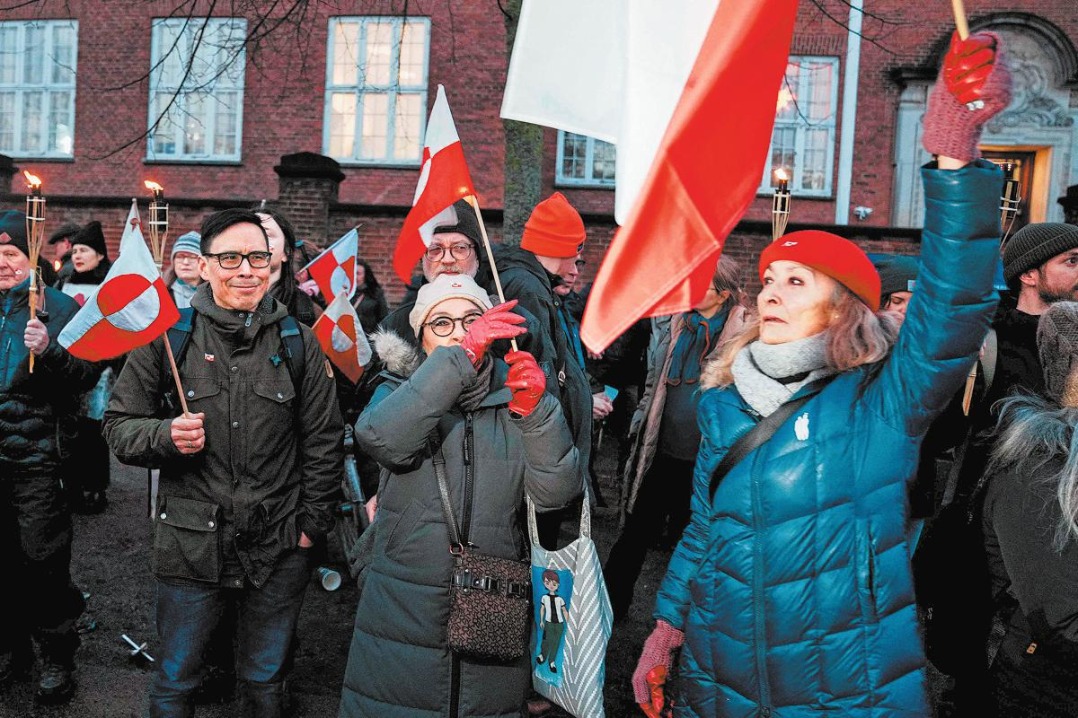
    In a significant diplomatic confrontation, Danish Foreign Minister Lars Lokke Rasmussen has categorically refuted United States security claims regarding Chinese military presence in Greenland, directly challenging the Trump administration’s justification for potential seizure of the Arctic territory.

    During an hour-long meeting at the White House on Wednesday, Rasmussen and Greenland’s Foreign Minister Vivian Motzfeldt confronted Vice-President JD Vance and Secretary of State Marco Rubio with counter-intelligence findings. The high-level talks marked the first face-to-face engagement since Washington’s renewed interest in acquiring Greenland sparked diplomatic tensions.

    ‘We seized the opportunity to confront this false narrative head-on,’ Rasmussen stated in a post-meeting press conference. ‘The assertion that Chinese warships operate extensively around Greenland is simply not supported by factual evidence.’

    The Danish minister presented detailed intelligence indicating no Chinese naval vessels have been detected in Greenlandic waters for approximately a decade. Rasmussen further emphasized that contrary to US claims, there are no substantial Chinese investments or infrastructure projects currently operating in the autonomous Danish territory.

    Despite characterizing the discussions as ‘frank and constructive,’ Rasmussen acknowledged a fundamental diplomatic impasse remains unresolved. ‘The president maintains this ambition of acquiring Greenland,’ he noted. ‘We have unequivocally communicated that such a proposition contradicts the interests and sovereignty of the Danish Kingdom.’

    Greenland’s Foreign Minister Motzfeldt described the meeting as an opportunity to establish clear boundaries while expressing optimism about future diplomatic engagement. The Arctic island, which maintains self-governing status within the Kingdom of Denmark, has become increasingly strategically significant due to melting polar ice caps and emerging shipping routes.

    The Trump administration has repeatedly cited expanding Chinese and Russian influence in the Arctic as primary justification for potential US acquisition of Greenland, though Danish and Greenlandic officials maintain these security concerns are substantially exaggerated.

  • New Oceania soccer competition has a 2029 Club World Cup spot as the winner’s reward

    New Oceania soccer competition has a 2029 Club World Cup spot as the winner’s reward

    A groundbreaking chapter in Pacific football commences this Sunday as Vanuatu United clashes with Fiji’s Bula FC in Auckland, marking the inaugural match of the Oceania Football Confederation Pro League. This revolutionary competition brings together eight elite clubs from seven Pacific nations—New Zealand, Tahiti, Papua New Guinea, Solomon Islands, Australia, Fiji, and Vanuatu—committing to an intensive schedule of至少 17 matches over three months.

    The league addresses a critical void in Oceania’s football infrastructure, where individual nations have historically struggled to sustain professional domestic competitions. Stuart Larman, the league’s project manager, emphasized to Associated Press that this development eliminates the OFC’s distinction as the only FIFA confederation without a professional league among its members. ‘Players will now experience a substantial increase in highly competitive matches annually,’ Larman noted, ‘creating a professional environment that will accelerate career progression.’

    The competition structure unfolds in two distinct phases: an initial round-robin stage where each team plays seven opponents twice across five host nations, followed by a grouping phase in New Zealand where the top eight teams split into two brackets. The ultimate prize includes qualification for the 2029 FIFA Club World Cup, offering both prestige and significant financial incentives.

    Beyond competitive implications, the league promises to elevate technical standards across Oceania. Rob Sherman, head coach of Auckland-based South Island United, observes that ‘while New Zealand players are technically gifted, exposure to higher competitive standards will undoubtedly accelerate talent development.’

    The venture also represents an economic innovation, pooling broadcasting and sponsorship resources across small markets. League organizers acknowledge expansion possibilities, contingent upon establishing strong organizational foundations at existing clubs. This model has already inspired similar cross-border discussions in the Baltic region and Southeast Asia, demonstrating how smaller football nations might leverage collective resources to compete on global stages.

  • 16 Indian ship crew members detained in Iran; family appeals to PM Modi

    16 Indian ship crew members detained in Iran; family appeals to PM Modi

    The United States has intensified its diplomatic and economic pressure on Iran by imposing sanctions on key security officials implicated in the violent suppression of domestic protests. Concurrently, escalating tensions along Israel’s northern border culminated in the Israeli military executing targeted strikes against Hezbollah positions within Lebanese territory.

    The U.S. Treasury Department’s Office of Foreign Assets Control (OFAC) designated multiple Iranian leaders for their roles in the government’s crackdown on widespread civil unrest. These sanctions specifically target commanders within the Islamic Revolutionary Guard Corps (IRGC) and Iran’s Law Enforcement Forces (LEF), effectively freezing any U.S.-based assets and prohibiting American entities from conducting business with them. This action represents a direct response to allegations of severe human rights abuses against demonstrators.

    In a separate but regionally linked development, the Israeli Defense Forces (IDF) launched aerial and artillery assaults on what they identified as Hezbollah military infrastructure across several areas in southern Lebanon. Israeli authorities stated the operation was a retaliatory measure against repeated cross-border attacks and was aimed at neutralizing imminent threats. The strikes targeted launch sites, observation posts, and other assets belonging to the Iranian-backed militant group.

    Analysts observe that these simultaneous events highlight the volatile and interconnected nature of security dynamics in the Middle East. The U.S. sanctions underscore a continued strategy of confronting Iranian aggression both domestically and through its proxy networks, while Israel’s military actions demonstrate a low tolerance for threats on its borders. The situation continues to develop with potential implications for regional stability.

  • Trump threatens to invoke Insurrection Act in Minnesota after another ICE shooting

    Trump threatens to invoke Insurrection Act in Minnesota after another ICE shooting

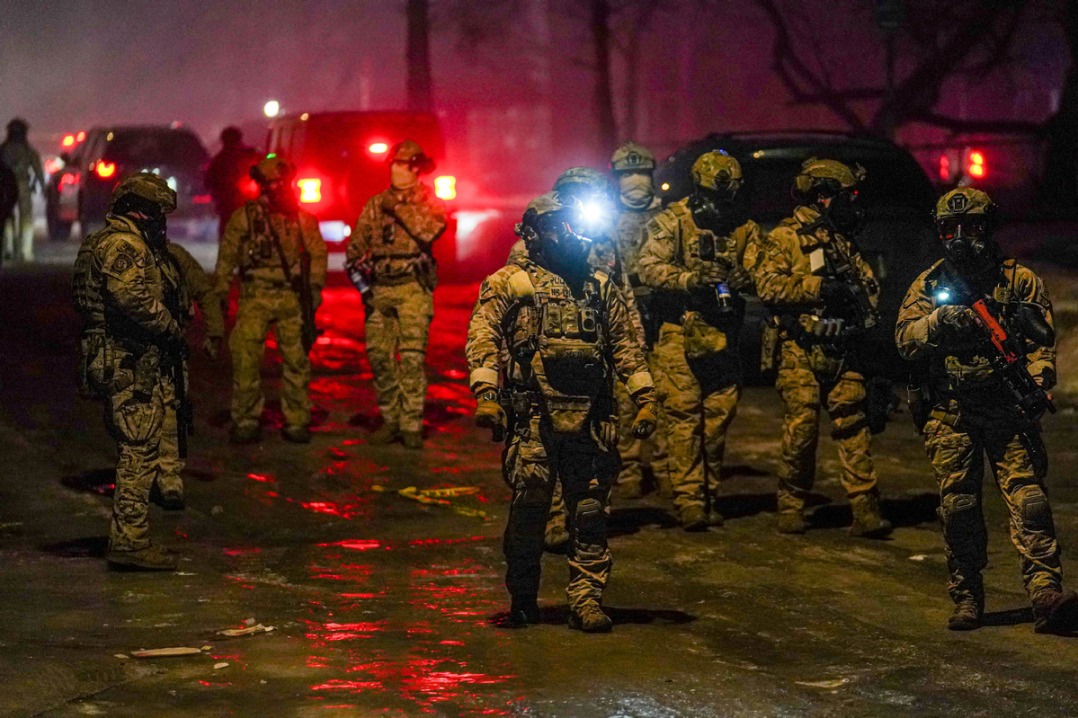
    President Donald Trump has issued a stark warning to Minnesota officials, threatening to deploy military forces under the Insurrection Act following a second controversial shooting involving Immigration and Customs Enforcement (ICE) agents within a week. The unprecedented threat escalates tensions in a state already grappling with civil unrest and allegations of federal law enforcement misconduct.

    In a provocative post on his Truth Social platform, Trump declared: “If the corrupt politicians of Minnesota don’t obey the law and stop the professional agitators and insurrectionists from attacking the Patriots of I.C.E., who are only trying to do their job, I will institute the INSURRECTION ACT.” The president asserted that invoking this centuries-old law would “quickly put an end to the travesty” unfolding in the state.

    The crisis stems from two separate incidents that have ignited national outrage. On January 7, ICE agents fatally shot 37-year-old mother Renee Nicole Good under disputed circumstances. While federal authorities claim Good attempted to run over officers with her vehicle, local officials counter that video evidence shows she posed no legitimate threat and that agents acted recklessly.

    The situation deteriorated further on Wednesday evening when ICE agents shot a Venezuelan immigrant in the leg during what the Department of Homeland Security described as an ambush attack by two assailants and the immigrant they were attempting to apprehend. This second shooting has intensified protests across Minneapolis, with police declaring recent gatherings “unlawful assemblies” after participants allegedly threw fireworks and rocks at officers.

    Minneapolis Mayor Jacob Frey characterized the deteriorating situation as “not sustainable,” reflecting growing concerns about the escalating conflict between federal agents and local communities. The 1807 Insurrection Act, which Trump has repeatedly signaled willingness to invoke, provides presidents extraordinary authority to deploy military forces domestically under extreme circumstances—a power historically reserved for actual insurrections or widespread civil disorder that overwhelms local authorities.

  • Tragic death of Adichie’s young son highlights poor state of Nigeria’s health sector

    Tragic death of Adichie’s young son highlights poor state of Nigeria’s health sector

    Nigeria’s healthcare system faces intense scrutiny following a series of devastating medical negligence cases that have exposed systemic failures and sparked nationwide demands for reform.

    The crisis gained international attention when acclaimed author Chimamanda Ngozi Adichie lost her 21-month-old son at a private Lagos hospital. The family alleges the toddler was denied oxygen and excessively sedated, resulting in cardiac arrest. While the hospital extended condolences and maintained its treatment met international standards, the Lagos State Government has launched an official investigation.

    Simultaneously, another tragedy unfolded in Kano where Aisha Umar, a mother of five, died after surgical scissors were allegedly left inside her abdomen during a September operation at a state-run facility. Her family endured four months of her severe pain before scans revealed the retained instrument. The Kano State Hospitals Management Board has suspended three medical personnel pending disciplinary proceedings.

    These high-profile cases have given voice to widespread, often-unreported grievances. Josephine Obi from Lagos recounted how her father died during a routine goitre procedure due to a surgical error in 2021. Similarly, prison officer Abdullahi Umar lost his 27-year-old wife during childbirth after prolonged labor without timely intervention at a teaching hospital.

    The underlying crisis reflects deeper structural problems. Nigeria suffers from catastrophic doctor-patient ratios, with approximately one doctor serving 8,000 patients—dramatically worse than the recommended 1:600 standard. This imbalance results from massive brain drain, with 15,000 doctors emigrating over five years seeking better conditions abroad.

    Chronic underfunding exacerbates the situation, with only 5% of the federal budget allocated to healthcare—far below the African Union’s 15% target. Remaining medical professionals face overwhelming workloads, frequent strikes over poor compensation, and inadequate equipment.

    As public outrage grows, analysts emphasize that blaming individual practitioners without addressing systemic deficiencies proves futile. The nation now confronts an urgent choice: fundamentally reform its healthcare infrastructure or continue risking preventable tragedies.

  • UAE calls for more international efforts to achieve peace, stability in Yemen

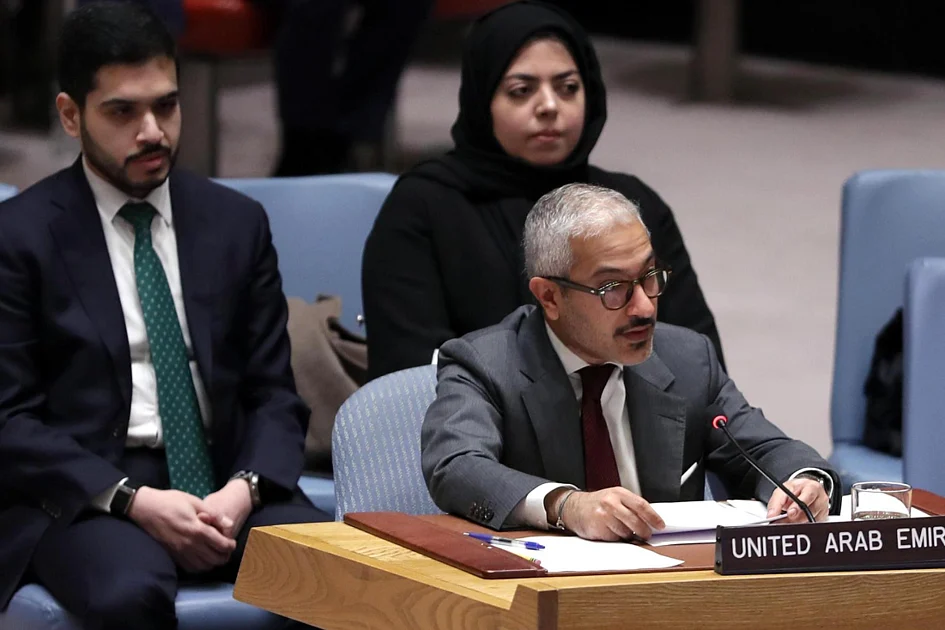
    UAE calls for more international efforts to achieve peace, stability in Yemen

    In a significant escalation of international pressure, the United States has imposed targeted sanctions on senior Iranian leadership figures directly implicated in the violent suppression of domestic protests. The measures are designed to freeze U.S.-based assets and prohibit any financial transactions with the designated individuals, representing a clear condemnation of their roles in human rights abuses.

    Concurrently, the Israeli Defense Forces (IDF) launched precision military strikes against multiple Hezbollah operational sites and infrastructure across southern Lebanon. The IDF characterized the operation as a ‘response to imminent threats’ and a direct retaliation for recent attacks originating from Lebanese territory. The strikes targeted what were described as Hezbollah military compounds and launch positions.

    These parallel developments underscore the volatile and interconnected nature of security dynamics in the Middle East. The U.S. action reflects a continued policy of confronting the Iranian regime’s internal and external activities, while Israel’s military response highlights the ongoing, low-intensity conflict along its northern border with the Iranian-backed Hezbollah militia. Both events signal a potential hardening of positions and a likely continuation of regional tensions.

  • Pakistan hopes immigrant visas will resume soon as US announces suspension

    Pakistan hopes immigrant visas will resume soon as US announces suspension

    The United States has implemented targeted sanctions against senior Iranian leadership figures directly implicated in the violent suppression of domestic protests, according to an official announcement from the Treasury Department. The sanctions specifically name multiple Iranian officials connected to the Islamic Revolutionary Guard Corps and law enforcement agencies, freezing any U.S.-based assets and prohibiting American entities from conducting business with them.

    Concurrently, the Israeli Defense Forces conducted precision airstrikes against Hezbollah operational positions across multiple regions of southern Lebanon. Military officials confirmed the strikes targeted weapons storage facilities and command centers in response to recent cross-border attacks. The escalation marks one of the most significant military exchanges between Israel and Hezbollah since the 2006 Lebanon War, raising concerns about broader regional instability.

    The coordinated international pressure on Iran’s leadership and the heightened military activity along the Israel-Lebanon border represent escalating tensions in the Middle East. Regional analysts note that these developments occur amid stalled nuclear negotiations and increasing Iranian military cooperation with Russia, creating a complex geopolitical landscape that threatens to further destabilize the region.