博客

  • Sharks are famous for fearsome teeth, but ocean acidification could make them weaker

    Sharks are famous for fearsome teeth, but ocean acidification could make them weaker

    PORTLAND, Maine (AP) — The formidable dental arsenal that has secured sharks’ position as apex ocean predators for millions of years faces an unexpected threat from changing marine chemistry. A groundbreaking study conducted by German marine researchers reveals that ocean acidification—directly linked to human fossil fuel consumption—is progressively weakening shark tooth structure, potentially compromising their hunting efficiency and ecological dominance.

    The research team from Heinrich Heine University Düsseldorf, led by marine biologist Maximilian Baum, discovered that increasingly acidic ocean conditions cause significant corrosion damage to shark teeth, including structural cracks, root deterioration, and surface pitting. Their findings, published in Frontiers in Marine Science, demonstrate that teeth exposed to water with acidity levels projected for year 2300 (nearly ten times current acidity) showed substantially more damage compared to those in present-day conditions.

    This dental degradation represents an additional environmental pressure for sharks already confronting overfishing, habitat pollution, and climate change impacts. While sharks won’t become toothless overnight, the cumulative effect could gradually diminish their predatory effectiveness. Baum emphasized that ‘their whole ecological success in the ocean as rulers of other populations could be in danger’ if tooth integrity continues to decline.

    The study examined over 600 discarded teeth from blacktip reef sharks (Carcharhinus melanopterus), a species inhabiting Pacific and Indian Ocean regions. Scientists note that shark teeth—highly specialized tools evolved for slicing flesh rather than resisting chemical corrosion—undergo constant replacement throughout a shark’s lifetime.

    Independent experts including Nick Whitney of New England Aquarium’s Anderson Cabot Center acknowledge the study’s scientific validity while noting sharks’ evolutionary resilience. ‘They’ve been around for 400 million years and have adapted to changing conditions,’ Whitney observed, suggesting that protective mouth tissue might temporarily shield developing teeth from acidification effects.

    However, Gavin Naylor of the Florida Program for Shark Research cautions that ocean acidification’s impacts extend beyond sharks, particularly affecting shell-forming organisms and fish scale integrity. While overfishing remains the most immediate threat to shark populations, acidification introduces complex ecological changes that could ultimately reshape marine food webs and predator-prey relationships across ocean ecosystems.

  • Hundreds of firefighters tackle blaze in slum area of South Korea’s Gangnam district

    Hundreds of firefighters tackle blaze in slum area of South Korea’s Gangnam district

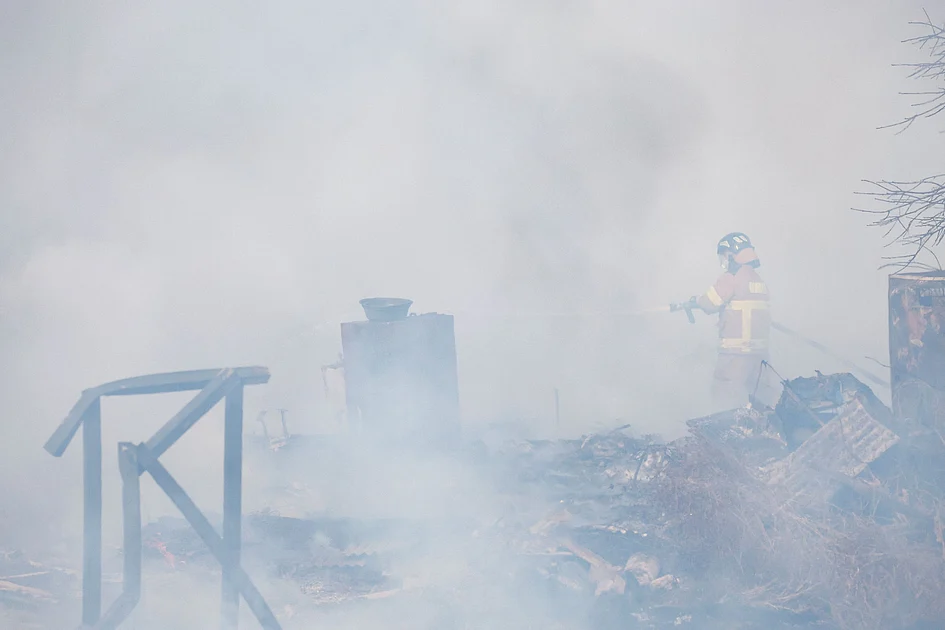
    A significant fire engulfed Guryong Village, an impoverished enclave within Seoul’s affluent Gangnam district, early Friday morning, prompting a massive emergency response. Approximately 300 firefighters mobilized to combat the blaze that broke out around 5:10 AM local time (2010 GMT Thursday), with authorities subsequently elevating the fire alert to the second-highest level amid concerns the flames could spread to adjacent mountainous terrain.

    Fire and disaster officials confirmed the evacuation of 47 residents from the affected area, with no immediate reports of casualties. Yonhap News Agency indicated approximately 110 individuals were residing in the fire-impacted zone. Emergency efforts faced substantial challenges as dense haze and fine dust pollution prevented the deployment of firefighting helicopters, forcing crews to rely solely on ground operations with 85 fire trucks.

    Elderly residents, many wearing protective masks, were witnessed fleeing their homes as thick black smoke billowed over the neighborhood. Kim Ok-im, a 69-year-old longtime resident, described waking to a neighbor’s alert and discovering rapidly spreading flames. ‘A few years ago, a flood swept everything away, and now it feels like fire will take the rest,’ she expressed, voicing concerns about potential homelessness.

    South Korean Safety Minister Yun Ho-jung directed officials to deploy all available personnel and equipment prioritizing life rescue and fire containment operations. The incident highlights the persistent vulnerabilities of Guryong Village, often described as Seoul’s largest remaining shantytown. This informal settlement emerged decades ago when families displaced by public works projects—including preparations for the 1986 Asian Games and 1988 Seoul Olympics—established unauthorized dwellings on Gangnam’s periphery.

    The area’s structural characteristics contribute significantly to fire risks, with makeshift homes densely packed and constructed from highly combustible materials including vinyl sheets, plywood, and Styrofoam. These vulnerabilities were previously documented in fire department assessments following a 2023 blaze. While most residents have relocated ahead of planned redevelopment into high-rise residential complexes, approximately 336 households remained in the village according to Gangnam District urban planning authorities.

  • US experts warn of economic and social fallout from Trump’s immigration policies

    US experts warn of economic and social fallout from Trump’s immigration policies

    WASHINGTON—A comprehensive analysis presented at a Brookings Institution seminar has revealed profound economic and social consequences stemming from the Trump administration’s aggressive immigration policies. Experts from multiple research institutions detailed how sweeping restrictions implemented throughout 2025 have triggered the first net migration decline in over half a century, with far-reaching implications for the nation’s labor market and community stability.

    According to David Bier, Director of Immigration Studies at the Cato Institute, the administration’s approach has paradoxically created more undocumented immigrants by terminating legal statuses at a rate exceeding actual deportations. “The cancellation of parole programs, near-complete termination of refugee admissions, and the exclusion of approximately 20% of legal immigrants from abroad represent unprecedented restrictions,” Bier explained, noting that administrative backlogs and frequent policy changes have further crippled processing systems.

    The economic impact has been particularly severe. Wendy Edelberg, Senior Fellow in Economic Studies at Brookings, projected that the swing from strong positive net migration in 2024 to negative figures in 2025 represents a dramatic contraction in labor supply. This reversal has forced downward revisions in employment growth projections to approximately 30,000 jobs monthly by year’s end 2025, with potential negative growth looming in 2026 despite low unemployment rates.

    Consumer spending has suffered significantly, with Edelberg estimating reductions between $40-$60 billion in 2025 alone, plus an additional $10-$40 billion through 2026, attributing substantial portions of retail revenue declines to diminished immigrant spending power.

    The statistical evidence underscores these concerns. Pew Research Center data indicates the U.S. foreign-born population dropped from 53.3 million to 51.9 million between January and June 2025—a 2.6% decline representing the most significant reduction in decades.

    Policy implementation has been remarkably aggressive, with Kristie De Pena of the Niskanen Center noting the administration took over 500 immigration actions in its first year, including 38 executive orders comprising 17% of all orders signed. This executive dominance has occurred alongside minimal congressional involvement, creating what experts describe as an unusually unilateral approach to immigration overhaul.

    The latest development came Wednesday with the indefinite suspension of immigrant visa processing for applicants from 75 countries, effective January 21. The State Department cited concerns about potential welfare dependency among migrants from targeted nations including Brazil, Iran, Russia, Somalia, and Haiti.

    Enforcement measures have provoked substantial local resistance. Los Angeles County unanimously established “ICE-free zones” prohibiting federal agents from using county property for raids without permits. This response follows reports of escalating ICE operations, with daily arrests rising from 350 in January 2025 to over 500 by August—many involving non-criminal individuals.

    Meanwhile, Minneapolis continues to experience escalating protests triggered by recent ICE raids that residents perceive as excessively aggressive, reflecting growing national tension over immigration enforcement methodologies.

  • US accuses South Africa military of ‘cosying up to Iran’

    US accuses South Africa military of ‘cosying up to Iran’

    A significant diplomatic rift has emerged between the United States and South Africa following allegations that the South African defense establishment disregarded direct governmental instructions to expel Iranian warships participating in naval exercises in its territorial waters. The U.S. Embassy in Pretoria issued a sharply critical statement, asserting that South Africa’s military leadership had defied orders from President Cyril Ramaphosa’s administration to request the departure of the Iranian vessels. The statement condemned South Africa’s engagement with Iran, particularly during a period of severe internal repression within the Middle Eastern nation, labeling the partnership ‘unconscionable’ and a threat to regional maritime security.

    The week-long ‘Peace Resolve’ naval drills, orchestrated by China and involving members of the expanded BRICS+ alliance—including Russia, Iran, and other nations—commenced last Friday. This military exercise represents a strategic initiative by the coalition of major developing economies to counterbalance Western geopolitical and economic dominance. The controversy erupted when reports indicated that Iranian ships had already docked in Cape Town as the purported order for their turnaround was issued.

    In response to the U.S. accusations, South Africa’s Defense Ministry announced it would launch a formal inquiry to investigate these ‘serious allegations.’ Defense Minister Angie Motshekga’s office, however, stated that the president’s directives had been ‘clearly communicated to all parties concerned, agreed upon, and to be implemented.’

    Analysts like University of Witwatersrand Associate Professor William Gumede highlighted the perceived hypocrisy, noting the African National Congress (ANC) government’s silence on Iran’s human rights abuses despite its frequent critiques of other regimes. The U.S. statement further drew parallels between Iran’s suppression of protests and the democratic freedoms for which South Africans historically fought, intensifying the diplomatic friction.

  • Man accused of murdering woman and toddler in Munich car attack goes on trial

    Man accused of murdering woman and toddler in Munich car attack goes on trial

    A high-profile trial commenced in Munich on Friday against Farhad N, a 25-year-old Afghan national accused of deliberately driving his car into a trade union demonstration in February 2025, resulting in two fatalities and dozens of injuries. The defendant, identified only by first name and initial in compliance with German privacy statutes, faces charges for what prosecutors describe as a religiously motivated attack.

    Federal prosecutors presented evidence indicating Farhad N acted out of “excessive religious motivation,” believing himself obligated to target randomly selected Germans in retaliation for perceived Muslim suffering in Islamic nations. According to investigative reports, the defendant shouted “Allahu Akbar” (God is greatest) and engaged in prayer immediately following the incident.

    The victims included 37-year-old Amel, an engineer of Algerian descent who had resided in Germany since childhood, and her two-year-old daughter Hafsa. Both succumbed to their injuries shortly after being struck by the defendant’s BMW Mini. Among the 44 additional casualties, several sustained critical wounds requiring extensive medical treatment.

    The demonstration involved approximately 1,400 municipal workers—including hospital staff and daycare employees—advocating for improved wage conditions. The trial location sits merely hundreds of meters from the actual attack site, creating a somber atmosphere throughout proceedings.

    Despite evidence of Farhad N consuming online extremist content, authorities confirm no established connections to formal jihadist organizations like Islamic State. The defendant arrived in Germany as an unaccompanied minor in 2016 during the peak of Europe’s migrant crisis, which saw over one million asylum seekers enter the country. Although his asylum application was ultimately rejected, deportation measures were not implemented, granting him temporary residency status in Munich.

    Records indicate Farhad N maintained legal employment as a security guard under valid work permits and had no prior criminal convictions. His Instagram activity revealed interests in bodybuilding alongside religious themes. The trial is projected to extend through June, with the defendant’s legal counsel declining to comment on either the allegations or personal circumstances.

  • ‘Greatest ever assembled’: Trump announces ‘board of peace’ formed for Gaza

    ‘Greatest ever assembled’: Trump announces ‘board of peace’ formed for Gaza

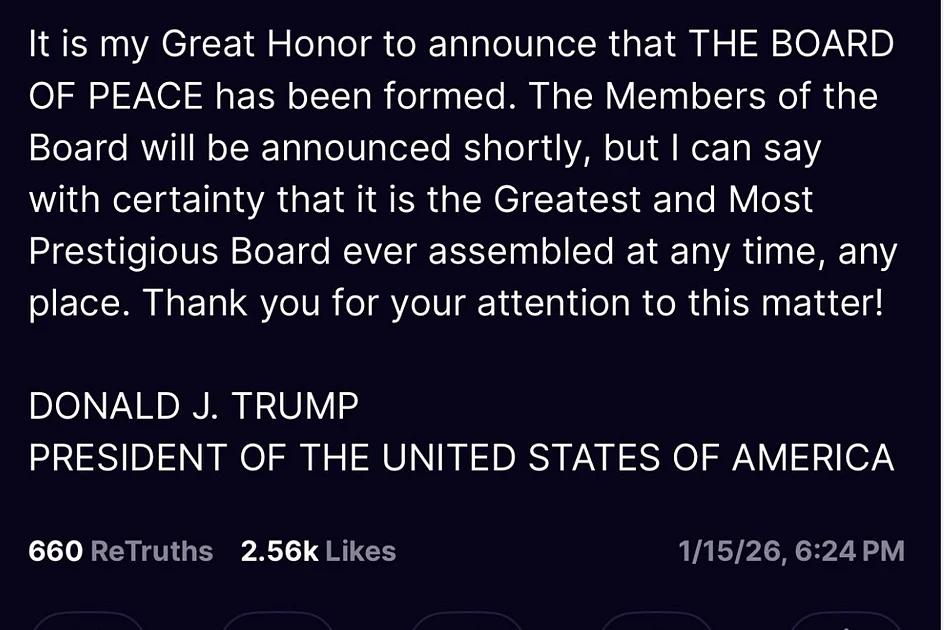
    In a significant development toward implementing the US-backed Gaza peace initiative, former President Donald Trump has proclaimed the establishment of a high-level “Board of Peace” to oversee post-conflict governance in the Palestinian territory. The announcement came via Trump’s Truth Social platform on Thursday, where he characterized the newly formed body as “the greatest and most prestigious board ever assembled at any time, any place.”

    This diplomatic move follows the recent creation of a 15-member Palestinian technocratic committee tasked with managing Gaza’s daily administrative functions following the recent cessation of hostilities. The committee will operate under the direct supervision of the Peace Board, which Trump revealed he will personally chair.

    The comprehensive peace framework, which initially took effect on October 10, 2025, previously facilitated the release of all Hamas-held hostages and established a ceasefire between the militant organization and Israeli forces. The current second phase involves deploying an International Stabilization Force to provide security assistance and train vetted Palestinian police units.

    However, the transition remains fraught with challenges. Gaza’s Hamas-run health ministry reports ongoing casualties, alleging Israeli forces have killed 451 people since the ceasefire nominally began. Palestinian leadership continues to emphasize the critical need for complete Israeli military withdrawal from Gaza—a stipulated but not yet scheduled component of the agreement.

    Meanwhile, Hamas has conspicuously avoided committing to full disarmament, which Israel considers non-negotiable. Trump’s special envoy, Steve Witkoff, emphasized Washington’s expectation that Hamas must “comply fully with its obligations” in a social media post that Trump subsequently endorsed.

    In a parallel development, Hamas is preparing internal elections to reconstitute its leadership structure, significantly diminished by Israeli operations during the conflict. These elections are anticipated in early 2026, according to statements from Hamas officials.

    Trump expressed confidence in achieving comprehensive demilitarization agreements with Hamas through multilateral cooperation with Egypt, Turkey, and Qatar, specifically mentioning the surrender of all weapons and dismantling of tunnel networks.

  • Global tech partnerships highlighted at major tech show

    Global tech partnerships highlighted at major tech show

    The 2026 Consumer Electronics Show in Las Vegas became the stage for a significant demonstration of global technological unity, as leading Chinese and American tech corporations announced groundbreaking partnerships in artificial intelligence development. Presided over by Lenovo Chairman Yang Yuanqing, an unprecedented gathering of semiconductor industry titans—including NVIDIA’s Jensen Huang, AMD’s Lisa Su, Qualcomm’s Cristiano Amon, and Intel’s Lip-Bu Tan—highlighted the growing consensus that cross-border cooperation is essential for advancing AI innovation.

    The collaborative spirit culminated in several major announcements, most notably the revelation of a gigawatt-scale AI factory initiative between Lenovo and NVIDIA. This ambitious project aims to accelerate the deployment of next-generation AI workloads, enabling cloud providers to transition from conceptual development to full-scale production with unprecedented efficiency. Huang emphasized the strategic importance of this alliance, noting that ‘Lenovo builds most of the world’s supercomputers,’ with the company responsible for approximately one-third of the world’s Top 500 supercomputing systems.

    Beyond semiconductor partnerships, the event showcased how Chinese technology firms are leveraging international collaborations to enhance their global footprint. Hisense’s Americas public relations head Kenneth Hong emphasized the company’s strategic partnerships with Google, Amazon, and French audio technology specialists, noting that such alliances are essential for strengthening international brand recognition. Similarly, Beijing-based iSoftStone revealed its dual approach of utilizing NVIDIA’s hardware and software for enterprise solutions in China while collaborating with the chipmaker in Middle Eastern and Southeast Asian markets.

    Industry executives uniformly emphasized that the complexity of AI development necessitates ecosystem-driven approaches rather than isolated technological breakthroughs. Lenovo’s Germany executive director Oliver Rootsey captured the prevailing sentiment: ‘AI is an ecosystem. No single company can develop everything at the speed customers expect.’ This perspective was echoed throughout CES, where discussions consistently highlighted that the next phase of AI advancement will depend on coordinated execution across the entire technology value chain, from advanced chip development to practical consumer applications.

    The collaborations extend beyond infrastructure to consumer products, with Qualcomm’s Snapdragon platform being deeply integrated into Lenovo’s AI PCs and Intel partnering with Lenovo to develop the Aura Edition intelligent PC. These partnerships demonstrate how cross-industry collaboration is driving tangible innovation while creating value for both global partners and end consumers who stand to benefit from more advanced and accessible AI experiences.

  • Venezuela not afraid of diplomacy with US, says acting president

    Venezuela not afraid of diplomacy with US, says acting president

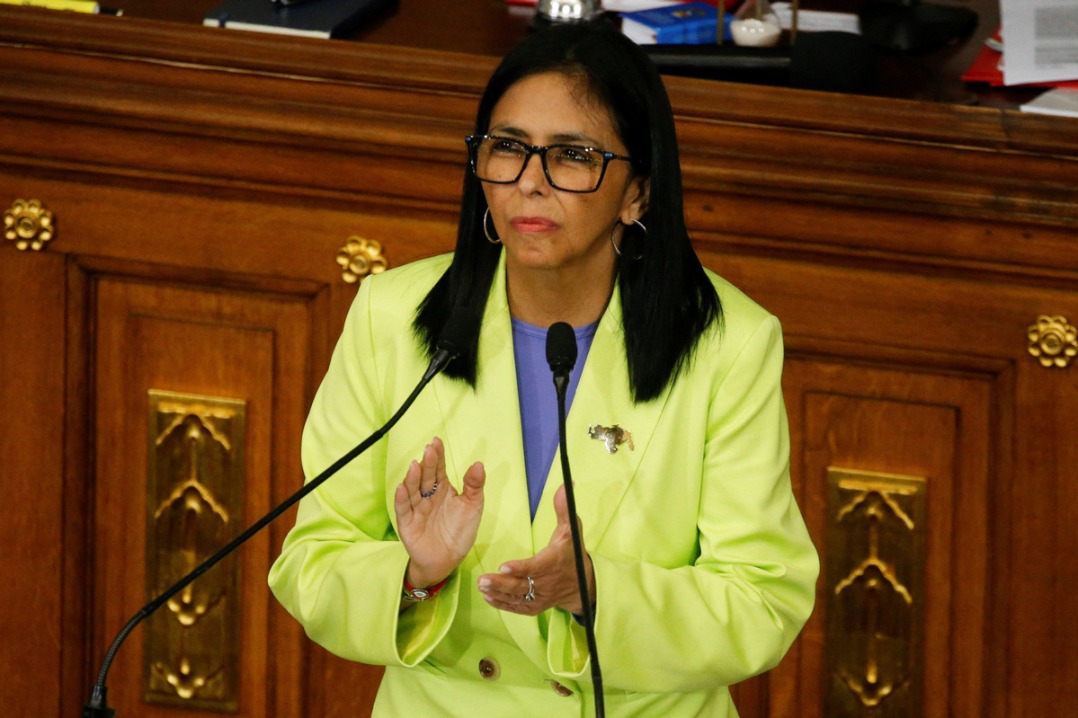
    In a striking demonstration of diplomatic resolve, Venezuela’s Acting President Delcy Rodriguez declared her government’s readiness to engage with the United States despite recent military aggression. The announcement came during her inaugural state of the nation address to the National Assembly on January 15, 2026, following the extraordinary capture of President Nicolas Maduro and First Lady Cilia Flores by US forces.

    Rodriguez struck a carefully calibrated tone that blended defiance with diplomatic openness. ‘Let us not succumb to fear of diplomacy,’ she asserted before assembled lawmakers and international observers. While acknowledging Washington’s ‘historical record of intervention’ across Latin America, she emphasized Venezuela’s preparedness to ‘confront it diplomatically through appropriate political dialogue.’

    The acting president revealed her administration is formulating ‘a novel foreign policy approach’ and urged diplomatic representatives in Caracas to accurately convey Venezuela’s position to their respective governments. Rodriguez simultaneously called for national unity, appealing to citizens to ‘preserve Venezuela’s peace and tranquility with absolute dignity and historical responsibility.’

    In perhaps her most symbolic declaration, Rodriguez stated that any potential travel to the United States would be conducted ‘standing tall, walking, not crawling’ – a powerful metaphor for Venezuela’s intended approach to bilateral engagement. The address represents the first comprehensive statement of foreign policy direction since the dramatic change in leadership, signaling potential openness to negotiated solutions while maintaining revolutionary principles.

  • US Congress members visit Denmark as Trump’s pressure on Greenland rises

    US Congress members visit Denmark as Trump’s pressure on Greenland rises

    A bipartisan congressional delegation from the United States has arrived in Denmark amidst escalating tensions over President Donald Trump’s persistent efforts to acquire Greenland. The 11-member group, comprising both Senate and House representatives, is scheduled to meet with Danish Prime Minister Mette Frederiksen and Greenlandic leader Jens-Frederik Nielsen in a demonstration of diplomatic solidarity.

    This diplomatic mission follows unsuccessful high-level discussions in Washington aimed at discouraging President Trump from pursuing his controversial territorial ambitions. The president has repeatedly asserted Greenland’s strategic importance to US national security, claiming Denmark lacks adequate defense capabilities against potential Russian or Chinese aggression in the Arctic region.

    Despite Greenland’s sparse population, the territory possesses substantial natural resources and occupies a geostrategic position between North America and the Arctic, making it invaluable for missile detection systems and regional surveillance operations. The United States already maintains approximately 100 permanent military personnel at its Pituffik base, operating under existing bilateral agreements that permit unlimited troop deployments.

    President Trump has escalated the situation by not only renewing purchase offers—previously rejected by both Danish and Greenlandic authorities—but also openly contemplating military seizure of the territory. These suggestions have prompted Denmark to issue stark warnings about potential consequences for NATO’s integrity, noting the alliance has never confronted scenarios involving armed conflict between member states.

    European NATO members have mobilized in support of Denmark, with multiple nations including France, Germany, Sweden, Norway, Finland, the Netherlands, and the United Kingdom deploying reconnaissance forces to Greenland. French President Emmanuel Macron has pledged additional land, air, and naval assets to reinforce regional security cooperation.

    The congressional delegation, led by Senator Chris Coons, includes both Democratic and Republican members, reflecting rare bipartisan concern over the administration’s approach. While most delegates oppose Trump’s proposals, legislative efforts have emerged from both sides—with some lawmakers seeking to prevent military action while others have proposed bills supporting annexation.

  • South Korean visitor praises Ningxia’s spicy street food

    South Korean visitor praises Ningxia’s spicy street food

    A South Korean social media influencer’s enthusiastic endorsement of a regional Chinese street food has ignited cross-cultural culinary excitement. Kim Jun-hyeok, a former international student at Ningxia University, recently revisited Yinchuan where he discovered lahuhu, a distinctive noodle dish from Northwest China’s Ningxia Hui Autonomous Region.

    His spontaneous reaction to the vibrant red broth at a roadside stall was captured on video and subsequently went viral across multiple platforms. Initially anticipating overwhelming spiciness, Kim expressed surprise at the dish’s complex flavor profile. “The visual intensity suggests extreme heat, but the actual experience is remarkably balanced,” he observed during the tasting. “The chili delivers aromatic warmth rather than pure burning sensation, creating a genuinely comforting culinary experience.”

    Lahuhu represents a unique chapter in China’s street food history, originating in the 1980s as mala chuan (spicy skewers) before evolving into its current form. The dish features a thick, paste-like broth crafted from finely milled chili peppers blended with toasted sesame and wheat flour. Ingredients including chewy wheat gluten noodles and thinly sliced potatoes are simmered directly in the rich sauce.

    The dish’s culinary signature lies in its distinct jiao characteristic—a Chinese gastronomic term describing the lightly toasted, smoky aroma achieved through precision-frying of chili powder in oil. This technique creates depth and warmth without excessive heat.

    Kim’s culinary journey through Ningxia continues beyond this discovery, with the influencer noting his growing appreciation for the region’s noodle traditions. He plans to further explore local cuisine while sharing his gastronomic adventures with his online audience, potentially paving the way for cross-cultural culinary exchange between China and South Korea.