博客

  • Earning Dh15,000 salary? Dubai bank launches first digital home loan pre-approval

    Earning Dh15,000 salary? Dubai bank launches first digital home loan pre-approval

    In a groundbreaking move for the UAE’s real estate finance sector, Mashreq Bank has unveiled the nation’s first fully digital mortgage pre-approval system. This innovative platform enables expatriate residents earning a minimum monthly salary of Dh15,000 to instantly determine their home loan eligibility through an entirely online process.

    The browser-based service generates verified pre-approval letters on the same day of application, revolutionizing what was traditionally a document-intensive procedure. According to Srinivasan Padmanabhan, Head of Mortgages at Mashreq, this digital advancement provides customers with ‘approval in principle’ based on comprehensive financial assessment before they commit to property purchases in Dubai or Abu Dhabi.

    Critical to the approval process is the Central Bank’s regulatory framework, which mandates that a borrower’s total debt burden—including the proposed home loan installment—must not exceed 50% of their monthly income. The system evaluates all financial obligations reflected in credit bureau reports, including auto loans and credit card debts, to determine sustainable repayment capacity.

    While salaried expatriates purchasing their first UAE property can typically finance up to 80% of the property value, the pre-approval mechanism is designed to prevent financial overextension and promote long-term fiscal health. Applicants need only provide their Emirates ID, passport, and IBAN to receive a binding pre-approval commitment rather than merely indicative calculations.

    This digital transformation represents a significant leap forward in mortgage accessibility, offering prospective homeowners clarity on realistic budget parameters before they begin property hunting. The system maintains rigorous standards while streamlining the path to homeownership through technological innovation in the UAE’s dynamic real estate market.

  • India’s astrotourism boom draws urban stargazers beyond city limits

    India’s astrotourism boom draws urban stargazers beyond city limits

    On frigid winter evenings, hundreds of kilometers from India’s urban centers, a new phenomenon is unfolding as urban residents gather around telescopes in remote locations. This growing movement toward ‘astrotourism’ represents a fundamental shift in travel preferences, with dark skies becoming as compelling a attraction as traditional monuments or wildlife sanctuaries.

    While stargazing was once primarily the domain of amateur astronomers and scientific clubs, it has now entered the mainstream consciousness. The catalyst for this transformation stems from severe light pollution and deteriorating air quality in metropolitan areas like Delhi, where the night sky has become virtually invisible to the naked eye.

    The scale of this emerging trend is demonstrated by dramatic visitor increases at designated dark-sky locations. Hanle, a remote village in Ladakh’s cold desert designated as India’s first dark-sky reserve in 2022, witnessed visitor numbers surge from approximately 5,000 to over 30,000 annually according to Dorje Angchuk, engineer-in-charge at the Indian Astronomical Observatory.

    Private enterprises are reporting similar growth patterns. Astroport Global, which offers specialized stargazing experiences and astronomy workshops across five resort locations, has seen participation explode from mere hundreds to approximately 20,000 visitors annually.

    The scientific explanation for this migration to high-altitude regions lies in atmospheric conditions. Astronomers utilize the Bortle dark-sky scale (ranging from 1 to 9) to measure sky clarity. Urban centers like Delhi typically register between 8-9, where only the brightest celestial bodies remain visible. Professor Jasjeet Singh Bagla of the Indian Institute of Science Education and Research explains that when PM2.5 particulate levels exceed 100, most constellations and deep-space objects disappear entirely from view.

    In contrast, high-altitude regions including parts of Rajasthan, Himachal Pradesh, Uttarakhand, and Ladakh offer significantly darker skies ranked around 4 on the Bortle scale. Colder nighttime temperatures in these areas push pollutants closer to ground level, creating ideal conditions for celestial observation where the Milky Way becomes visible without optical assistance.

    The economic model for astrotourism involves basic stargazing workshops priced around 1,200 rupees ($13) per person, excluding accommodation and travel. Extended stays at specialized resorts typically range from 8,000 to 12,000 rupees, with premium facilities commanding higher rates. Winter months attract peak interest due to optimal visibility conditions created by low humidity and exceptionally clear skies.

    Beyond recreational value, the experience carries profound personal significance for many urban participants. For numerous city dwellers, these journeys represent not merely scientific education but an emotional reconnection with night skies reminiscent of childhood memories before urban expansion obscured celestial views.

    The movement has generated substantial economic benefits for remote communities. Hanle has experienced a sharp increase in small hotel establishments over the past three years, creating new employment opportunities for local youth trained as guides and astronomical ambassadors.

    According to Dr. Sachin Bahmba, founder of the Space Group of Companies, the experiential aspect transforms abstract scientific concepts into tangible reality: ‘When people look through a telescope or watch a meteor shower, space science stops being theoretical. The experience sparks genuine curiosity, questions, and organic learning.’

    State authorities in Himalayan regions including Uttarakhand and Himachal Pradesh are now formally supporting this trend through training programs in telescope operation and celestial observation techniques.

    Significant challenges remain for sector development. Remote locations like Ladakh involve substantial travel expenses that limit accessibility. India currently maintains only one officially recognized dark-sky reserve at Hanle, with another emerging at Pench Tiger Reserve in Madhya Pradesh. Unlike Western nations, India lacks organized dark-sky advocacy groups, though awareness is gradually increasing.

    Urban expansion and unregulated lighting continue to diminish natural dark skies near metropolitan areas, complicating efforts to develop accessible alternatives. Despite government initiatives, observatory-community collaborations, and resort adoption of low-light practices, experts acknowledge the sector requires considerable development.

    For urban residents, these astronomical excursions represent more than leisure activities—they provide rare opportunities to reconnect with a natural spectacle that has quietly vanished from daily urban life.


  • Dubai: Month-long Ramadan Market to begin on Jan 17 with food zone, free abra rides

    Dubai: Month-long Ramadan Market to begin on Jan 17 with food zone, free abra rides

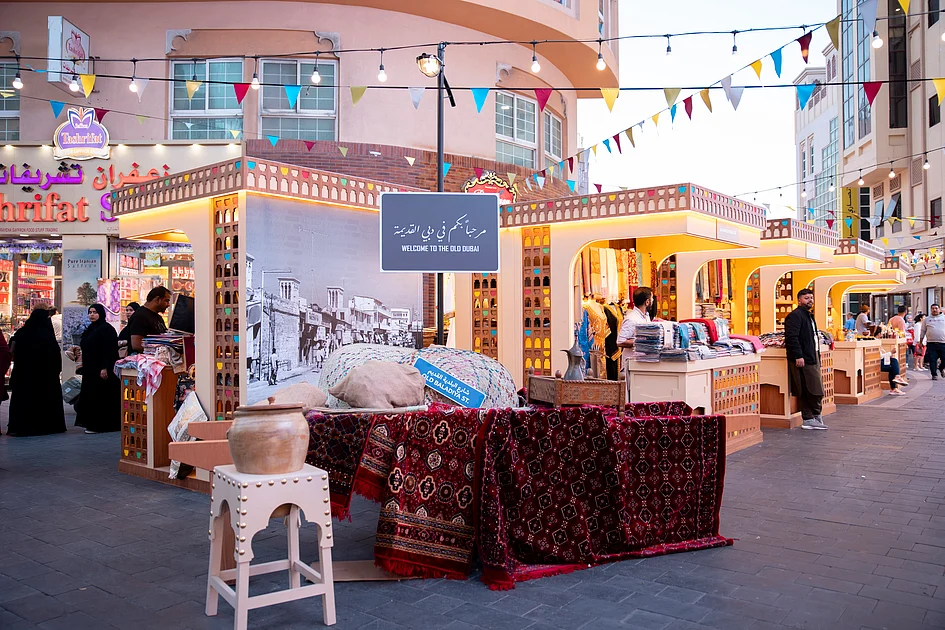
    Dubai inaugurates its annual Ramadan Market on January 17th, transforming Old Municipality Street in Deira into a vibrant cultural hub that will operate through February 15th. The month-long event, personally launched by Sheikh Hamdan bin Mohammed bin Rashid Al Maktoum, Crown Prince of Dubai, forms part of the broader ‘Season of Wulfa’ initiative aimed at preserving Emirati heritage while reinforcing Dubai’s global reputation for cultural tolerance and coexistence.

    The market serves as an integrated community platform that beautifully merges traditional Ramadan preparations with contemporary entertainment experiences. Visitors can explore specialized zones featuring authentic Emirati heritage products including traditional clothing, date-based delicacies, perfumes, spices, and Ramadan essentials. A dedicated food zone hosts over 10 restaurants offering diverse Emirati and international cuisines, complemented by additional culinary stations throughout the venue.

    Cultural programming includes live performances of traditional Emirati folk arts, educational workshops for children, cultural competitions, and special activities commemorating mid-Sha’ban. The spatial design incorporates a welcoming entrance portal, artisan demonstration areas, and an events square hosting Ramadan recitations and historical storytelling drawn from Dubai’s archives.

    Enhancing accessibility between historic districts, Dubai Municipality will operate complimentary abra boats transporting visitors between Bur Dubai and Deira daily from 10:00 AM to 10:00 PM. The market specifically emphasizes inclusivity through active participation of People of Determination and local entrepreneurs.

    According to Asem Al Qassim, Director of Architectural Heritage and Antiquities at Dubai Municipality, this initiative reflects the municipality’s commitment to revitalizing historic markets as living cultural spaces while supporting local economic activity. The event aligns strategically with Dubai Urban Plan 2040 objectives to enhance quality of life and transform heritage locations into dynamic tourism destinations.

  • Encouraging start for Dubai’s Rayhan Thomas in the Bahamas on Korn Ferry Tour

    Encouraging start for Dubai’s Rayhan Thomas in the Bahamas on Korn Ferry Tour

    Dubai-based golfer Rayhan Thomas has commenced his 2026 campaign on the Korn Ferry Tour with an impressive performance at The Bahamas Golf Classic held at Atlantis Paradise Island. The 26-year-old Indian national carded consistent rounds of 64, 70, 66, and 72 to finish at 16-under-par 272, securing a tied 33rd position in the season-opening event.

    Thomas, now in his second season on the developmental tour, recently regained his playing privileges through PGA Tour Qualifying School in Florida last month. His tournament began spectacularly with an opening-round 64 that featured eight birdies through 15 holes before completing the round early Monday morning due to fading light.

    Throughout the four-round competition, Thomas demonstrated remarkable scoring prowess with 23 birdies against five bogeys and one double bogey. The event showcased the exceptionally high standard of the Korn Ferry Tour, where the cut line fell at seven-under-par with merely four players failing to match or better par.

    Tournament victory went to American Taylor Dickson, who posted a dominant 27-under-par total (67-62-67-65) to claim a three-stroke victory. Dickson’s spectacular second-round 62 included a back-nine 29 featuring three eagles and one birdie.

    The Korn Ferry Tour continues with back-to-back events in the Bahamas before transitioning to Panama later this month. Thomas expressed satisfaction with his performance, noting: ‘I played pretty solid all week. I was a little nervous at the start, which is never a bad thing, but overall I was pretty happy with how I played.’

    Thomas looks ahead to The Bahamas Great Abaco Classic at The Abaco Club on Winding Bay, scheduled for January 18-21, 2026, which features an identical $1 million purse.

  • British police chief resigns after criticism for decision to ban Maccabi Tel Aviv fans

    British police chief resigns after criticism for decision to ban Maccabi Tel Aviv fans

    A senior British police commissioner has stepped down from his position following intense criticism over his handling of a contentious decision to prohibit Israeli football supporters from attending a European match in England. Chief Constable Craig Guildford of West Midlands Police announced his retirement on Friday after facing mounting pressure regarding the controversial ban on Maccabi Tel Aviv fans attending the Europa League fixture against Aston Villa in Birmingham.

    The resignation comes after UK Home Secretary Shabana Mahmood publicly expressed her loss of confidence in Guildford’s leadership, citing serious concerns about the intelligence assessment methods used to justify the security measure. An official review by the chief inspector of constabulary identified significant flaws in how local police gathered and evaluated risk information concerning the Israeli club’s supporters.

    During parliamentary hearings, Guildford acknowledged that portions of the evidence presented to support the ban contained inaccuracies, including reference to a non-existent match between Maccabi Tel Aviv and West Ham United that was incorrectly documented using artificial intelligence tools. Despite this admission, the police chief maintained that the decision was a necessary precaution for public safety rather than an antisemitic action.

    The controversy emerged from intelligence shared by Dutch authorities regarding Maccabi fan behavior during a November 2024 match in Amsterdam. According to documents obtained by media outlets, Dutch police characterized hundreds of Maccabi supporters as ‘experienced fighters’ with military connections who displayed highly organized violent tendencies. Video evidence from the Amsterdam incident showed fans attacking local residents and chanting racist slogans.

    Independent MP Ayoub Khan, representing Birmingham Perry Barr where Aston Villa is based, condemned Guildford’s treatment as a ‘dark and shameful chapter,’ accusing authorities of scapegoating an honorable official who prevented potential violence. This incident reflects broader concerns about football-related violence, with Israeli authorities having previously canceled domestic matches involving Maccabi Tel Aviv due to fan riots and security concerns.

  • ‘Dangerous:’ Australian Greens to oppose Federal Government’s Bondi Bill over hate speech laws

    ‘Dangerous:’ Australian Greens to oppose Federal Government’s Bondi Bill over hate speech laws

    The Australian federal government is confronting significant legislative hurdles as parliament reconvenes, with its comprehensive national security package facing bipartisan opposition. Prime Minister Anthony Albanese’s Combatting Antisemitism, Hate and Extremism Bill 2026, drafted in response to the Bondi terror attack, appears unlikely to pass the Senate without substantial amendments.

    The Greens party, led by Senator Larissa Waters, announced their intention to block the omnibus legislation unless it undergoes substantial revision. Waters emphasized that while her party supports proposed gun law reforms, the current bill’s provisions risk criminalizing legitimate political expression and fail to provide adequate protection for all religious communities, including Islamic groups.

    “The risk of unintended consequences is too substantial to rush this legislation’s passage,” Waters stated, indicating the Greens would require extended consultation periods with legal experts and community representatives that the government’s accelerated timeline doesn’t permit.

    Simultaneously, the Coalition opposition declared the legislation “unsalvageable” in its present form. Opposition Leader Sussan Ley criticized the proposal as “half-baked” and characterized by “confusion and contradiction,” pledging to introduce an alternative security package focusing on deportation protocols for non-citizens promoting extremism and enhanced arrest powers for Australian citizens engaging in hate speech.

    The parliamentary impasse leaves the Albanese government needing to negotiate either with the Greens or Coalition to pass any version of the bill. The government’s fallback position involves referring the legislation to an intelligence committee for recommendations that might satisfy the Coalition’s concerns, though both major opposing parties have expressed fundamental objections to the bill’s current architecture.

  • US justice department investigates Minnesota Democrats over alleged obstruction of ICE

    US justice department investigates Minnesota Democrats over alleged obstruction of ICE

    The U.S. Justice Department has launched a formal investigation into Minnesota Governor Tim Walz and Minneapolis Mayor Jacob Frey for allegedly obstructing federal immigration enforcement operations. This development marks a significant escalation in the ongoing confrontation between the Trump administration and Democratic leaders regarding immigration policy.

    The inquiry centers on potential violations of 18 U.S.C. § 372, a federal statute that criminalizes conspiracies to impede federal officers through “force, intimidation or threats.” According to CBS News, federal subpoenas have been issued to both officials following their public criticisms of Immigration and Customs Enforcement (ICE) operations.

    The political conflict intensified following the fatal shooting of 37-year-old Renee Good by an ICE agent in Minneapolis last week. Official reports obtained by CBS indicate Good sustained at least three gunshot wounds to the chest and forearm, with possible fourth injury to the head. Paramedics found her unresponsive with an irregular pulse, and she was pronounced dead en route to the hospital.

    While federal authorities claim Good attempted to run over an ICE agent during an enforcement operation, local officials describe her as a legal observer who posed no threat. Video footage shows ICE agents approaching a vehicle blocking traffic, with an officer instructing Good to exit her Honda Pilot SUV. As she apparently attempted to drive away, an agent standing near the front of the vehicle discharged their weapon.

    Governor Walz responded to the investigation announcement by declaring on social media platform X: “Weaponizing the justice system against your opponents is an authoritarian tactic. The only person not being investigated for the shooting of Renee Good is the federal agent who shot her.” Walz had previously drawn administration criticism for comparing ICE to a “modern-day Gestapo,” while Mayor Frey has demanded ICE agents leave Minneapolis entirely.

    President Trump amplified tensions by accusing protesters of being “highly paid professionals” and claiming local leaders had “totally lost control” of the situation. Though the president suggested earlier this week he might invoke the Insurrection Act to deploy troops to Minnesota, he later stated he saw no current necessity for such measures.

    Meanwhile, Democratic lawmakers conducted hearings in Minnesota on Friday, with Congresswoman Ilhan Omar accusing ICE of attempting to “provoke chaos and fear” and New York Representative Adriano Espaillat describing the agency as a “deadly weapon.” Proposed reforms included requirements for ICE agents to wear body cameras, display identification, and obtain warrants before making arrests.

    The Department of Homeland Security defended its practices, with spokeswoman Tricia McLaughlin telling CNN that individuals “in the vicinity” of operations might be asked to confirm their identity based on “reasonable suspicion,” while denying such tactics reflect racial discrimination.

    Protests continued in Minneapolis throughout the weekend as thousands of ICE officers remain deployed in the state, with local officials appealing for calm during the holiday period.

  • From camouflage to tracksuits – Guinea’s junta leader poised to become civilian president

    From camouflage to tracksuits – Guinea’s junta leader poised to become civilian president

    Colonel Mamadi Doumbouya, who seized power in Guinea through a military coup in September 2021, is poised to be sworn in as the nation’s elected president on Saturday following a controversial electoral process. The 41-year-old former special forces commander, who initially promised not to seek elected office, secured 87% of the vote in December’s election against a severely constrained opposition field.

    Doumbouya’s political transformation has been accompanied by a deliberate image makeover. The once-imposing military figure, known for his mirrored sunglasses and red beret, has increasingly adopted civilian attire—baseball caps, tracksuits, and traditional Guinean boubous—while engaging in public activities such as school openings and cycling through Conakry’s streets. This carefully curated presentation aims to project him as a civilian leader working on behalf of the people, according to security analyst Beverly Ochieng of Control Risks.

    Despite his popular support evidenced by Afrobarometer polls showing trust in the president growing from 46% to 53% between 2022-2024, Doumbouya faces significant criticism over his democratic credentials. Exiled former Prime Minister Cellou Dalein Diallo has dismissed the election as a charade with fabricated results. Researchers point to banned political demonstrations, excluded opposition candidates, suspended parties, and mysterious disappearances of activists and journalists as evidence of democratic backsliding.

    Doumbouya’s governing philosophy emphasizes national sovereignty and resource nationalism. His government has canceled dozens of mining contracts deemed insufficiently beneficial to Guinea and is pursuing greater local processing of mineral resources. The development of Simandou’s massive iron-ore deposits, partially owned by Chinese and Western companies, represents a potential economic transformation that could define his presidency.

    Internationally, Doumbouya has maintained a pragmatic approach, avoiding the outright rejection of France seen in other West African coup states despite his French education and marriage to a French citizen. His administration promises to invest mining revenues in infrastructure, health, and education as Guinea seeks to leverage its natural resources despite persistent poverty.

  • Wind wreaks havoc as McIlroy, Fleetwood falter and Lowry, Elvira seize control

    Wind wreaks havoc as McIlroy, Fleetwood falter and Lowry, Elvira seize control

    The Dubai Invitational witnessed a dramatic power shift during its second round as ferocious winds exceeding 39 km/h transformed the Emirates Golf Club into an arena of survival rather than skill. In an astonishing reversal of fortunes, world No. 2 Rory McIlroy surrendered his commanding lead through a series of uncharacteristic errors that saw four balls find water hazards, resulting in a disappointing three-over 74.

    Amid the challenging conditions that saw only nine players from the 60-strong field break par, Ireland’s Shane Lowry and Spain’s Nacho Elvira demonstrated exceptional composure to seize joint leadership at five-under 137. Lowry, the 2019 Open champion, delivered a masterclass in controlled golf with five birdies against two bogeys, showcasing superb iron play and resilient putting under immense pressure.

    Elvira’s ascent was equally impressive, featuring a spectacular finish with four birdies in his final six holes. The Spaniard attributed his success to recent technical adjustments that improved his driving accuracy, allowing him to capitalize on scoring opportunities despite the adverse weather.

    The tournament’s defending champion, Tommy Fleetwood, experienced similar difficulties, carding a seven-over 78 that included five bogeys and a double bogey. The brutal conditions highlighted the course’s relentless design, particularly its water-lined holes that punished even minor miscalculations.

    Amid the competitive drama, American Ryggs Johnston provided a moment of brilliance with a spectacular six-iron hole-in-one on the 218-yard eighth hole, climbing to level par and a share of 15th position.

    As the competition moves into its third round, the leaderboard remains tightly contested with Englishman Marcus Armitage and Spaniard David Puig trailing the leaders by two strokes at three-under par.

  • Under fire from the sea, families in Odesa try to escape Russian barrage

    Under fire from the sea, families in Odesa try to escape Russian barrage

    From the 16th-floor apartment of Mariia and Sergii in Odesa, the panoramic Black Sea view contrasts starkly with the daily reality of drone attacks and power outages. Their nine-year-old daughter Eva has developed an unsettling familiarity with aerial threats, identifying risks through social media channels when air raid sirens blare. ‘She distinguishes between potential dangers and immediate threats, which helps her cope,’ explains Sergii, watching his daughter monitor the skies.

    This family’s experience reflects the broader crisis in Ukraine’s third-largest city, which has faced intensified assaults on its critical infrastructure in recent weeks. Russian strikes targeting port facilities and energy grids have plunged Odesa into frequent darkness while crippling the regional economy. The strategic southern port, responsible for 90% of Ukraine’s maritime exports last year, has seen agricultural shipments drop by 45% due to relentless attacks.

    The human cost extends beyond economic damage. Residents navigate a precarious existence where 800 air-raid alerts annually disrupt daily life, and descending to shelters for 16-hour periods has become impractical. ‘People have grown dangerously accustomed to the danger,’ admits Maryna Averina of the State Emergency Service, surveying a destroyed gym after an overnight drone strike injured seven people.

    Winter has compounded the crisis, with temperatures hovering around -1°C while power remains severely disrupted. Ada, 36, walking along the beach despite active air alerts, notes: ‘The shelling isn’t as scary as this cold is.’ Families like Yana’s have invested in expensive generators, but operating them costs approximately $10 for seven hours—a significant burden in a country where average monthly salaries reach about $500.

    The city’s historical significance adds layers to its current struggle. Odesa, once hailed as the jewel of the Russian empire, now actively dismantles symbols of that heritage under the 2023 Law on Decolonization. Regional leader Oleh Kiper champions these efforts, replacing Russian-themed street names and removing monuments like the statue of Catherine the Great. ‘The enemy is doing far more than we are to ensure a Russian-speaking city becomes Ukrainian,’ Kiper asserts, referencing how attacks have pushed residents to reconsider their relationship with Russian culture.

    As ballistic missiles continue striking port facilities like Chernomorsk, and partial blackouts enter their second month, Odesa embodies Ukraine’s resilience against Russia’s determination to either capture or cripple vital territories. The city’s residents, from fishermen like Kostya who once served in the Soviet army to young families like Mariia’s, demonstrate remarkable adaptability amid relentless adversity.