博客

  • MP family reunion flights to be capped, economy fares only after expenses scandal review

    MP family reunion flights to be capped, economy fares only after expenses scandal review

    Australia’s parliamentary travel entitlements system has undergone a substantial transformation following an expenses scandal that exposed questionable use of taxpayer funds by high-ranking officials. The Commonwealth Remuneration Tribunal has implemented stringent new regulations that dramatically restrict family reunion flight benefits for parliamentarians.

    Under the newly adopted recommendations, elected officials will now be limited to just one economy-class fare annually for family travel outside Canberra. The comprehensive reforms also mandate that all family travel—including for spouses—must be booked in economy class exclusively. Additionally, parliamentarians must now seek pre-approval from the Independent Parliamentary Expenses Authority before arranging any family reunion travel.

    The tribunal’s decision came after Prime Minister Anthony Albanese requested a review last year, prompted by revelations that several ministers—including Communications Minister Anika Wells, Trade Minister Don Farrell, and Attorney-General Michelle Rowland—had utilized taxpayer funds for family travel to high-profile events like the Australian Open tennis tournament.

    In justifying the reforms, the tribunal acknowledged the challenges parliamentary life presents for family dynamics, noting that “parliamentarians are required to live interstate for long periods” while emphasizing the importance of maintaining family connections. However, the body established strict criteria requiring that travel must be predominantly for parliamentary business purposes and directly facilitate family life.

    The scandal gained significant traction when it was revealed that Sports Minister Anika Wells had charged taxpayers tens of thousands of dollars for family attendance at prestigious sporting events including the Boxing Day Test cricket match, Melbourne Grand Prix, and a skiing trip to Thredbo during a Paralympics event.

    According to tribunal data, the majority of parliamentarians (194 out of 226) did not utilize any Australia-wide family reunion travel during the 2024-25 period, suggesting the reforms will primarily affect a minority of elected officials. The tribunal has urged implementation of these recommendations “as soon as practicable” to restore public trust in parliamentary spending practices.


  • Analysis: China’s birth-rate struggles underscore its millennia-long struggle to manage ‘the masses’

    Analysis: China’s birth-rate struggles underscore its millennia-long struggle to manage ‘the masses’

    China confronts an unprecedented demographic challenge as newly released data reveals its population has entered a period of historical decline, dropping by 3 million to 1.404 billion people. This development marks the lowest birth rate recorded since the establishment of the People’s Republic in 1949, signaling a critical juncture in the nation’s millennia-long struggle with population management.

    The current situation represents a dramatic reversal from decades of restrictive population control measures. The notorious one-child policy, implemented in 1980 to curb rapid population growth, has yielded unintended consequences that continue to reverberate through Chinese society. This policy not only created a disproportionate aging population but also triggered severe social distortions including gender imbalance, the emergence of single-child ‘little emperors’ in urban households, and widespread loneliness among elderly citizens separated from their geographically dispersed children.

    President Xi Jinping has revitalized ancient cultural precepts that equate population strength with national power, describing China’s people as a ‘great wall of steel.’ This philosophical shift accompanies practical policy changes including tax exemptions for condoms, daycare centers, and matchmaking services. The government’s current five-year development plan explicitly aims to cultivate positive attitudes toward marriage and childbearing while implementing financial incentives to reduce the costs associated with raising children.

    The demographic transition occurs against an increasingly competitive international backdrop, with India having surpassed China as the world’s most populous nation in 2023. This development carries significant implications for China’s geopolitical standing and its aspirations to lead the Global South. As contemporary China grapples with the complex legacy of its population policies, the nation faces fundamental questions about how traditional values can coexist with modern realities in shaping its demographic future.

  • ‘Rising tensions’: Australia’s sharemarket falls from eleven week high after ‘trade bazooka’ fears

    ‘Rising tensions’: Australia’s sharemarket falls from eleven week high after ‘trade bazooka’ fears

    The Australian equity market experienced a pronounced downturn during Tuesday’s trading session, primarily driven by escalating geopolitical friction between the United States and European nations. The benchmark S&P/ASX 200 index declined by 58.60 points, representing a 0.66 percent decrease to close at 8,815.90, while the broader All Ordinaries index fell 56.30 points (0.61 percent) to settle at 9,138.60.

    Market analysts attributed the bearish sentiment to renewed transatlantic trade tensions following former President Trump’s tariff threats against several European countries. The confrontation centers on the United States’ strategic interest in acquiring Greenland, with the administration threatening 10 percent tariffs against Denmark, Norway, Sweden, France, Germany, the Netherlands, Finland, and Great Britain. European authorities have responded with countermeasures potentially affecting €100 billion ($174 billion) in U.S. goods.

    Financial and materials sectors led the decline, with all four major banking institutions recording losses. Commonwealth Bank shares decreased by 1.81 percent to $150.48, Westpac dropped 0.98 percent to $38.59, NAB fell 0.85 percent to $41.86, and ANZ finished 1.15 percent lower at $36.94.

    The resources sector faced significant pressure despite BHP reporting substantial commodity price improvements, including a 32 percent annual increase in copper prices and a 4 percent rise in iron ore. BHP shares declined 1.99 percent to $47.78 following revelations that the first phase of its Jansen potash project would exceed initial estimates by over $1 billion, reaching $US8.4 billion. Rio Tinto decreased 2.04 percent to $146.34, while Fortescue slid 0.58 percent to $22.26.

    Market performance showed sector divergence, with seven of eleven industry sectors finishing lower. Utilities and technology stocks provided some offsetting gains, led by Origin Energy’s 2.62 percent surge to $11.34 after announcing an extension of operations at Australia’s largest coal-fired power plant until 2029.

    Individual company performances varied considerably. ARB Corporation shares plummeted 12.04 percent to $28.42 following unaudited sales revenue of $358 million for the first half-year, approximately 1 percent below previous corresponding periods. Conversely, Bellevue Gold rallied 5.01 percent to $1.78 after reporting strong sales metrics, and Hub24 shares advanced 3.1 percent to $101.21 following record net inflows of $5.6 billion.

    The Australian dollar demonstrated resilience amid market volatility, strengthening against the U.S. dollar to trade at 67.29 US cents.

  • US citizen says ICE removed him from his Minnesota home in his underwear after warrantless search

    US citizen says ICE removed him from his Minnesota home in his underwear after warrantless search

    ST. PAUL, Minn. — U.S. Immigration and Customs Enforcement (ICE) agents conducted a controversial operation in St. Paul, Minnesota, detaining a longtime American citizen at gunpoint without presenting a warrant before forcibly removing him into subfreezing temperatures wearing only underwear. The incident has ignited fierce criticism from local officials and community members amid a broader federal surge in the Twin Cities region.

    ChongLy “Scott” Thao, a decades-long U.S. citizen, was awoken from a nap on Sunday afternoon by family members alerting him to armed, masked agents pounding on his door. Despite instructions not to open it, ICE personnel forced entry into the residence, pointed firearms at the family, and detained Thao without allowing him to present identification. Video evidence and family testimony confirm he was escorted outside in handcuffs, clad only in sandals and underwear with a blanket hastily provided for minimal warmth.

    Neighbors and bystanders documented the scene, capturing audible distress from family members—including Thao’s four-year-old grandson—and loud protests against the heavily armed agents. Thao was later transported to an undisclosed location where he was subjected to fingerprinting and photographic identification in frigid conditions before eventually being released without apology or explanation.

    In response, the Department of Homeland Security characterized the operation as a “targeted” effort aimed at apprehending two convicted sex offenders believed to be residing at the address. DHS claimed Thao “matched the description” of the targets and refused identification—an account the family vehemently denies. Public records show no sex offenders residing at Thao’s address, with the nearest registered individual located over two blocks away.

    St. Paul Mayor Kaohly Her, herself Hmong American, condemned ICE’s actions as “unacceptable and un-American,” accusing the agency of overreach and failing to focus on genuine threats to public safety.

    The Thao family’s history adds further context to their outrage. ChongLy Thao’s adopted mother, Choua Thao, was a Hmong nurse who provided medical care to CIA-backed soldiers during the U.S. “Secret War” in Laos. Forced to flee to the U.S. after communist takeover, her service to American interests contrasts sharply with her son’s treatment decades later.

    Thao now plans to file a civil rights lawsuit against DHS, citing lasting trauma and an eroded sense of safety in his own home.

  • Marine Le Pen faces crucial Paris appeals trial over misuse of EU funds

    Marine Le Pen faces crucial Paris appeals trial over misuse of EU funds

    PARIS — The political trajectory of France’s far-right movement faces a critical juncture as National Rally leader Marine Le Pen appears before an appeals court this week, challenging a conviction that could permanently alter the country’s political landscape. The two-day judicial proceeding, commencing Tuesday, represents Le Pen’s final opportunity to overturn a March ruling that found her guilty of systematically misappropriating European Parliament funds between 2004 and 2016.

    The initial verdict delivered severe penalties including a five-year prohibition from elected office, two years of electronic monitoring house arrest, and an additional two-year suspended sentence. This appeal process reexamines the complex financial case alleging that Le Pen and her party orchestrated a ‘fraudulent system’ to divert €2.9 million in EU parliamentary funds intended for legitimate aides to instead finance party operations.

    Court documents reveal that European funds were channeled to various party functionaries including Le Pen’s personal bodyguard, her executive assistant, a graphic designer, and even her sister Yann who organized party events while receiving EU compensation. The case originated from a 2015 alert raised by then-European Parliament President Martin Schulz regarding potential financial irregularities.

    Le Pen’s defense strategy has evolved throughout the proceedings. During the initial trial, she maintained that all aide assignments were legitimate and adapted to lawmakers’ diverse responsibilities. However, her current appeal suggests the party may have committed unintentional administrative errors rather than deliberate fraud, claiming European officials never provided adequate guidance regarding hiring regulations.

    The judicial outcome carries profound implications for France’s 2027 presidential election. Current polling indicates Le Pen would likely emerge as a frontrunner if eligible to run, building upon her second-place finishes against Emmanuel Macron in both 2017 and 2022. Having spent fifteen years rehabilitating the far-right’s image and distancing it from historical associations with racism and antisemitism, Le Pen has transformed the National Rally into France’s largest single parliamentary bloc following 2024 legislative elections.

    Should the appeal fail, leadership would likely transfer to Le Pen’s designated successor, 30-year-old protégé Jordan Bardella. While Bardella has gained significant popularity among younger voters, questions remain regarding his relative inexperience, scripted public performances, and perceived limitations on economic and international policy expertise.

    The appeals court must weigh multiple considerations including ‘the seriousness of the acts committed’ and ‘the harm caused to citizens’ trust in public life’ noted in the original verdict. A final decision is expected by summer, with possible outcomes ranging from complete exoneration to modified sentencing that might still permit political participation.

    Le Pen and party officials have increasingly characterized the judicial process as politically motivated, comparing it to what they describe as ‘witch hunt’ tactics allegedly employed against former U.S. President Donald Trump. However, French judicial authorities maintain their complete independence, with magistrates enjoying protected status against political interference.

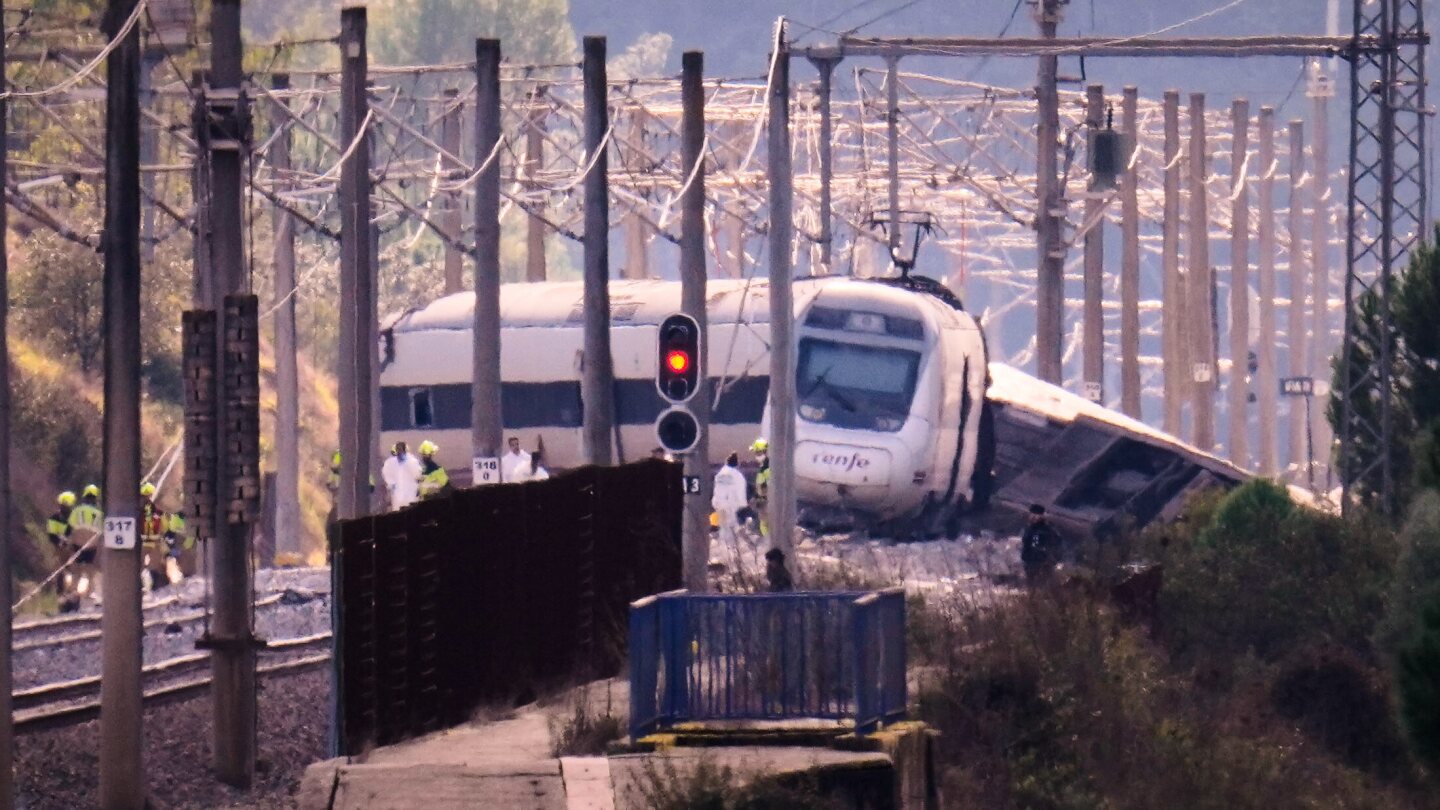
  • Deadly wreck is the first blight on Spain’s leading high-speed rail service

    Deadly wreck is the first blight on Spain’s leading high-speed rail service

    BARCELONA, Spain — A devastating train collision in southern Spain has abruptly ended the nation’s celebrated era of rail safety, casting a shadow over what had been considered a crown jewel of Spanish infrastructure. The Sunday night tragedy claimed at least 40 lives and left dozens injured, marking the first fatal accident in the history of Spain’s high-speed rail network.

    This catastrophe strikes at the heart of Spain’s modern identity. For 34 years, since the inauguration of its first Alta Velocidad Española (AVE) train—meaning ‘bird’ in Spanish—the nation has poured substantial tax revenues and European Union development funds into constructing Europe’s most extensive high-speed network. This ambitious project enabled Spain to not only catch up with but surpass pioneering nations like Japan and France in high-speed rail technology.

    The development of AVE coincided with Spain’s post-Franco renaissance, symbolizing the country’s emergence from economic stagnation and cultural isolation. The system’s expansion has been remarkable: Spain now operates 3,900 kilometers (2,400 miles) of dedicated high-speed tracks, second only to China globally according to the International Union of Railways.

    This infrastructure transformation revolutionized domestic travel. The Madrid-Barcelona route exemplifies this progress, with journey times slashed from approximately seven hours to just 2.5 hours since the 2008 high-speed line opening. Plans announced in November aim to further reduce this to under two hours by increasing speeds to 350 kph (218 mph), matching China’s fastest trains.

    Beyond convenience, the network has served as a national unifier, connecting coastal population centers separated by sparsely populated regions. However, critics note that the relentless expansion to provincial capitals may have come at the expense of maintaining local commuter lines, which suffer significantly more delays.

    The investigation into Sunday’s collision between an Iryo train and a Renfe-operated train remains ongoing. Officials have confirmed both trains were traveling below speed limits, with initial reports ruling out human error. The accident marks a sobering moment for Spain’s recently liberalized rail market, which only opened to private operators in 2022. Iryo (Italian-owned) and Ouigo (French-owned) now compete with state-run Renfe, representing the three current high-speed operators in Spain.

  • Penguins bring forward breeding season as Antarctica warms: study

    Penguins bring forward breeding season as Antarctica warms: study

    A groundbreaking ecological study reveals that Antarctic penguin species are dramatically accelerating their breeding schedules in response to the continent’s accelerated warming trends. Published in the Journal of Animal Ecology, the research documents the most rapid breeding season shift ever recorded in avian species, with some colonies advancing their reproductive cycles by nearly one month.

    The international scientific team, utilizing time-lapse photography across multiple Antarctic locations from 2012 to 2022, observed three penguin species exhibiting significant behavioral changes. Gentoo penguins demonstrated the most pronounced adaptation, advancing their breeding season by 13 days on average—with some colonies shifting up to 24 days earlier. Adélie and Chinstrap penguins followed similar patterns, moving their breeding schedules forward by approximately 10 days.

    According to lead researcher Ignacio Juarez Martinez of Oxford University, the scale of temporal adjustment exceeded scientific expectations. “The magnitude of change is so substantial that penguins across most regions are now breeding earlier than any historical records indicate,” Martinez noted in statements to AFP.

    The behavioral shifts appear directly correlated with Antarctica’s warming climate, which the EU’s Copernicus climate monitoring service confirms as one of Earth’s most rapidly warming regions. Reduced sea ice has created extended periods of accessible hunting grounds and snow-free nesting areas, fundamentally altering the penguins’ reproductive calculus.

    However, the adaptation creates ecological winners and losers. Gentoo penguins, versatile foragers suited to temperate conditions, are expanding their populations and claiming nesting sites previously occupied by other species. Conversely, Adélie and Chinstrap penguins—which depend heavily on specific ice conditions and krill availability—face population declines amid increased competition for resources.

    Co-author Fiona Jones emphasized the broader implications: “As indicator species for climate change, these behavioral shifts signal potential impacts across global ecosystems.” The research team continues to monitor whether these accelerated breeding cycles ultimately produce successful chick-rearing outcomes or represent desperate adaptations to environmental stress.

  • Researchers find Antarctic penguin breeding is heating up sooner, and that’s a problem

    Researchers find Antarctic penguin breeding is heating up sooner, and that’s a problem

    A groundbreaking ecological study reveals that Antarctic penguins are undergoing the most rapid breeding shift ever documented in vertebrate species, with profound implications for their survival in a warming world. Published in the Journal of Animal Ecology, the research demonstrates that three brush-tailed penguin species have advanced their reproductive cycles by approximately two weeks within a single decade—a pace of adaptation that far exceeds previously observed changes in other bird species.

    The research team from Oxford University, utilizing remote-controlled cameras across multiple colonies from 2011 to 2021, documented how rising temperatures in the western Antarctic—the second fastest-warming region on Earth—are fundamentally altering penguin reproductive behavior. With breeding grounds experiencing a 5.4°F (3°C) temperature increase between 2012 and 2022, the Adelie, chinstrap, and gentoo penguins are now breeding significantly earlier than previous decades.

    Lead biologist Ignacio Juarez Martinez emphasized the unprecedented nature of this shift: ‘Penguins are modifying their breeding timing at record velocity, surpassing any other vertebrate species. This synchronization with environmental resources is critical for chick survival, as breeding must coincide with peak food availability.’

    The study reveals a troubling divergence in species adaptation. While gentoo penguins, with their more varied diet and aggressive foraging behavior, have accelerated their breeding cycle most dramatically, the specialist krill-feeders—Adelie and chinstrap penguins—face severe challenges. The overlapping breeding seasons now create intense competition for resources, with gentoos frequently displacing other species from traditional nesting areas.

    Co-author Fiona Suttle reported observable ecosystem changes: ‘I’ve returned to previous Adelie colonies only to find them entirely replaced by gentoos. The data confirms what we’re witnessing visually in these rapidly transforming environments.’

    Climate-induced changes have reduced sea ice, triggering earlier phytoplankton blooms that disrupt the entire Antarctic food web. This ecological transformation, combined with increased commercial fishing activity in the region, creates compounded pressure on krill populations—the primary food source for vulnerable penguin species.

    Martinez projected dire consequences: ‘Chinstrap populations are declining globally, with models suggesting potential extinction before century’s end. Adelies are faring poorly in the Antarctic Peninsula and face similar extinction risks in this region.’

    The research benefited from unprecedented public engagement through the Penguin Watch citizen science platform, where over 9 million images were annotated by volunteers captivated by these charismatic species. This massive dataset provided crucial evidence of behavioral changes occurring at an alarming rate across the Antarctic ecosystem.

  • Trump threats and Bukele model on crime back Latin American progressives into corner

    Trump threats and Bukele model on crime back Latin American progressives into corner

    A profound transformation is underway across Latin America as progressive governments abandon their traditional approaches to organized crime in response to mounting external pressure from the United States and domestic demands for immediate security results. The region’s political landscape has been fundamentally reshaped by El Salvador President Nayib Bukele’s controversial yet popular crackdown on gangs, which has dramatically reduced homicide rates while drawing international criticism for human rights violations.

    The Trump administration has significantly intensified pressure on Latin American nations, designating multiple criminal organizations as foreign terrorist groups, threatening military intervention in several countries, and openly championing Bukele’s punitive model as the preferred solution for regional security challenges. This aggressive stance from Washington has coincided with growing voter impatience with progressive governments that previously advocated for comprehensive solutions addressing root causes of violence through economic opportunities and institutional reforms.

    Guatemala’s President Bernardo Arévalo represents the latest leader to embrace emergency measures, declaring a 30-day state of emergency following the brutal killing of nine police officers by suspected gang members. This dramatic policy shift mirrors Bukele’s 2022 emergency declaration that remains in effect nearly four years later, resulting in over 90,000 arrests despite allegations of authoritarian practices.

    The regional trend extends beyond Guatemala, with Ecuador, Honduras, and Costa Rica implementing similar hardline strategies. Costa Rica recently broke ground on a maximum-security prison modeled after El Salvador’s notorious facilities, signaling the widespread adoption of Bukele’s blueprint. However, analysts note that replicating Bukele’s political success has proven challenging, as many leaders remain hesitant to implement measures as extreme as detaining 1% of their national populations.

    In Mexico, President Claudia Sheinbaum has dramatically escalated operations against cartels, abandoning her predecessor’s ‘hugs, not bullets’ policy that emphasized addressing socioeconomic drivers of violence. Similarly, Colombia’s leftist President Gustavo Petro has pivoted from his ‘total peace’ initiative to threatening joint military operations with Venezuela against guerrilla groups, reflecting the overwhelming pressure confronting progressive administrations throughout the hemisphere.

    Expert analysis suggests this strategic realignment stems from the convergence of Trump administration pressure, upcoming electoral challenges, and the appealing simplicity of Bukele’s approach compared to the slow implementation of holistic solutions. While projecting toughness has become politically advantageous, the fundamental challenge remains translating dramatic gestures into sustainable security improvements across the region.

  • Exhibition highlights American youth voices

    Exhibition highlights American youth voices

    SAN FRANCISCO—An extraordinary collection of artistic works created by American high school students during their cultural immersion trips to China is now captivating audiences at the Cupertino City Library. The exhibition, titled “China in the Eyes of Americans,” showcases photography, sketches, and personal narratives from 21 students who explored China’s Hubei province during the summers of 2024 and 2025.

    Organized by the US-China Culture and Communication Association in collaboration with the Youth Horizon Culture Connection Association, the exhibition represents a unique cross-cultural initiative. The participating students, primarily from California with additional representation from Florida and Tennessee, documented their journeys through Wuhan, Enshi, Xiaogan, and surrounding regions, capturing both iconic landscapes and everyday moments of Chinese life.

    Chloe Xiao, a California high school sophomore and founder of the Youth Horizon association, emphasized the transformative nature of the experience. “In Enshi, we wore traditional Tujia attire, gaining firsthand appreciation for the elegance and rich heritage of Tujia culture,” she recalled, describing the silver hair ornaments and complete costumes as “gorgeous.”

    The exhibition reveals diverse perspectives through different artistic mediums. Jasmine White, a senior from Carlmont High School, focused her photographic work on Hubei’s bridges, particularly the Yingwuzhou Yangtze River Bridge. “This trip taught me the significance of bridges in China—they represent connection: linking people, communities, and cultures across generations,” White explained.

    For many participants, the human connections formed during their travels proved most meaningful. Benjamin Li, a sophomore from Florida, described bonding with Chinese university students from ethnic minority backgrounds in Enshi. “We laughed, played games, and had fun together,” he shared. “It made my summer unforgettable.”

    Aiden Wei Tanner from San Jose contrasted his China experience with previous European travels, noting, “Those cities in Europe feel distinctly foreign. China is different—I felt part of the culture rather than an outsider.” This sense of belonging influenced how he photographed everyday life in Hubei, capturing images of store owners, students, and strangers alike.

    Beyond cultural immersion, students also gained practical benefits. Iris Zhu, a California freshman, reported significant improvement in her Chinese language skills, while all participants gained insights rarely accessible to most foreigners.

    Song Min, president of UCCA, initiated the program six years ago to foster connections between American and Chinese youth. “When young people start to listen to their peers and learn from each other, great things will happen,” Song stated, emphasizing that these American students serve as “practitioners of cross-cultural communication” rather than mere observers.

    The exhibition continues through January at the Cupertino library, offering Bay Area residents a rare glimpse of China through the authentic perspectives of American youth.