博客

  • Russian anti-war politician says he has fled the country

    Russian anti-war politician says he has fled the country

    A prominent Russian opposition figure who built his political profile on an anti-war platform has left Russia for exile in France, becoming the latest critic of Vladimir Putin’s government to be forced out of the country amid a sweeping crackdown on dissent.

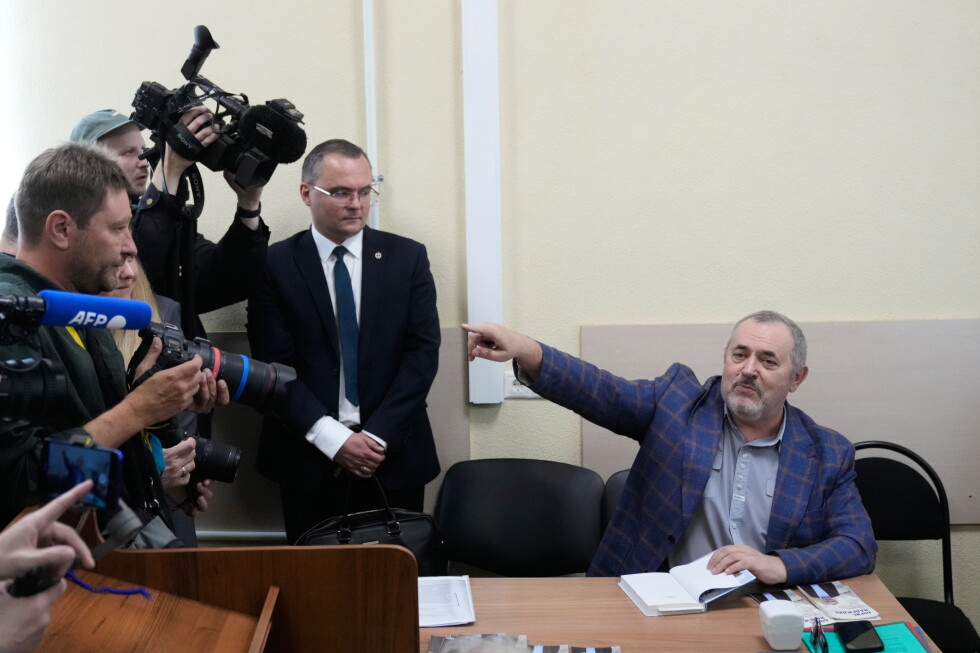
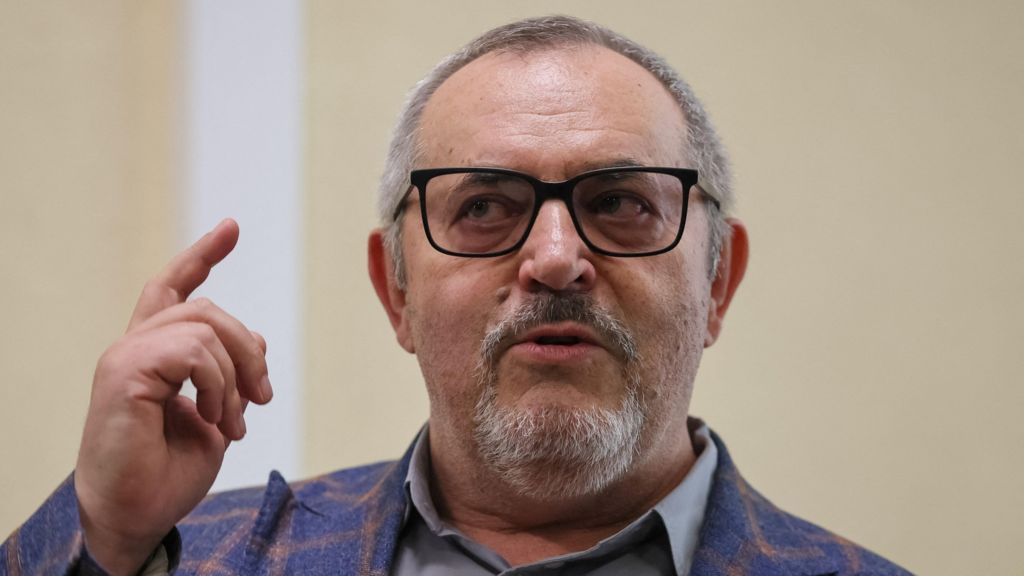
    Boris Nadezhdin, 63, announced his new location in a video message posted to Telegram on Monday, filmed in front of Paris’ iconic Eiffel Tower. “Hi everyone. I have some good news. I’m alive and free. Unfortunately, I’m not in Russia at the moment,” he told viewers in the clip, adding that he would outline his future plans after taking time to assess his situation. “Right now, I need to get my bearings and figure out what to do next. I’ll write about my plans later.”

    Nadezhdin first rose to international attention two years ago when he launched a bid for the Russian presidency, centering his entire 2024 campaign on a call to end the ongoing conflict in Ukraine. His platform also pushed for a reset of diplomatic relations between Russia and Western nations, and he argued that millions of Russian voters already opposed the Kremlin’s current trajectory of authoritarianism and militarism.

    Though his criticism of Putin was relatively measured, leading some political analysts to speculate he might be permitted to run to lend a veneer of legitimacy to the election, the Russian Central Electoral Commission ultimately blocked his candidacy just weeks before voting began. Officials claimed more than 15% of the voter signatures submitted with his application were invalid, a ruling Nadezhdin contested unsuccessfully. He was not the only opposition voice sidelined: all credible alternative candidates were barred from the 2024 race, which Putin won in a landslide to secure a fifth term in office. A 2020 constitutional amendment reset the Russian president’s term limits, clearing the way for Putin to stay in power until 2036, with the next presidential election scheduled for 2030 when he will be 78.

    Earlier this year, Nadezhdin announced he would launch another campaign, this time running for a seat in Russia’s lower parliamentary chamber, the Duma, in the upcoming September elections. That move triggered a fresh wave of legal and regulatory action from the Russian government. Last month, the country’s Ministry of Justice designated Nadezhdin a “foreign agent” — a designation that would have automatically barred him from running for office, and comes with widespread social and economic restrictions for anyone labeled under the law.

    The accusations against Nadezhdin included claims he spread misinformation about the Russian government and encouraged public participation in unapproved anti-government protests. He also faced a separate charge of “displaying extremist symbols” linked to an image of late opposition leader Alexei Navalny that appeared for 10 seconds on a reposted video on his social media accounts in November 2023. Nadezhdin has dismissed the charge as absurd.

    Weeks before his departure, Nadezhdin spoke to BBC Russian from an undisclosed location, describing his political prospects as “vague” after he was forced to abandon his parliamentary campaign. He argued at the time that for any active politician, participating in elections is the core of political engagement: “If you’re a politician, you should participate in politics while you have the opportunity. How do you participate in politics? By participating in elections.”

    Nadezhdin also previously told the BBC that as the Russian economy has fallen into deeper crisis and the Kremlin has expanded internet restrictions for millions of domestic users, ordinary Russians are increasingly connecting their daily hardships — from rising food prices to failing healthcare to restricted digital access — directly to Putin’s policy choices.

    Today, the Kremlin maintains almost complete control over Russia’s political landscape, with virtually no space allowed for legitimate opposition to challenge the country’s current leadership. Nearly all major opposition figures who could offer voters an alternative to Putin’s rule have been imprisoned, forced into exile, or killed.
  • Inside city gripped by deadly protests in Pakistan-administered Kashmir

    Inside city gripped by deadly protests in Pakistan-administered Kashmir

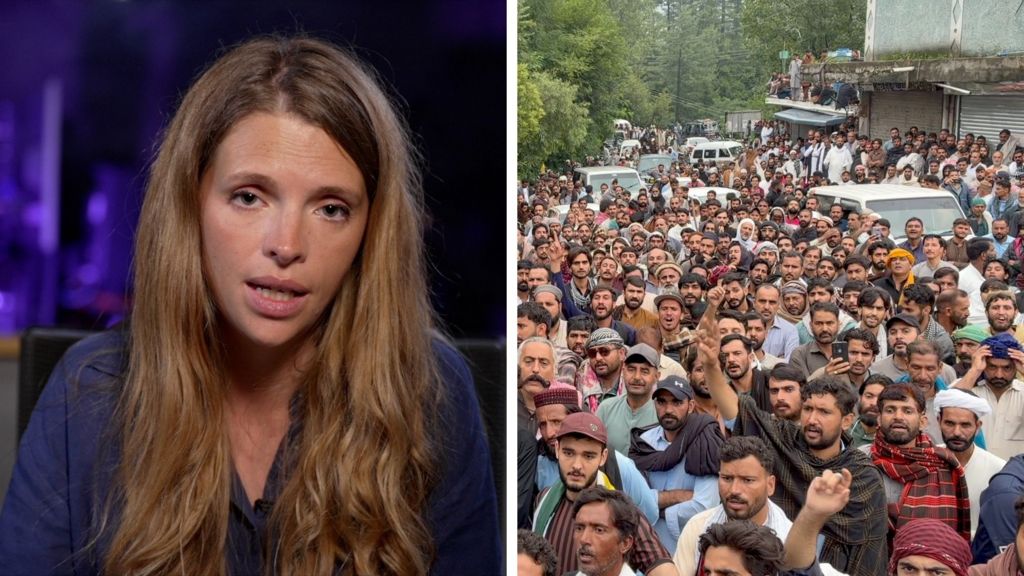
    In the tense aftermath of a wave of fatal demonstrations that have paralyzed daily life across Pakistan-administered Kashmir, the British Broadcasting Corporation has made history as the first international news organization to secure entry to the restive city of Rawalakot. This unprecedented access grants a rare, unfiltered look into a region that has been largely cut off from outside scrutiny since the deadly protests erupted.

    Prior to the BBC’s entry, independent reporting from Rawalakot had been severely limited, leaving large gaps in global understanding of the scale of the unrest, the grievances driving demonstrators, and the human toll of the clashes that have shaken the city. During the on-the-ground reporting, BBC correspondents were able to hold direct conversations with local residents, protest participants, and witnesses to the violence, collecting firsthand accounts that have not been shared with the international public until now.

    The protests, which have already claimed multiple lives, have pushed the already volatile Himalayan region into a new state of emergency, with increased security deployments and widespread disruptions to transportation, commerce, and basic public services. Rawalakot, the capital of Pakistan-administered Kashmir’s Poonch district, has emerged as one of the epicenters of the unrest, making the BBC’s access a critical breakthrough for global audiences seeking accurate information about the unfolding crisis.

  • Watch: Texas sinkhole swallows pickup truck

    Watch: Texas sinkhole swallows pickup truck

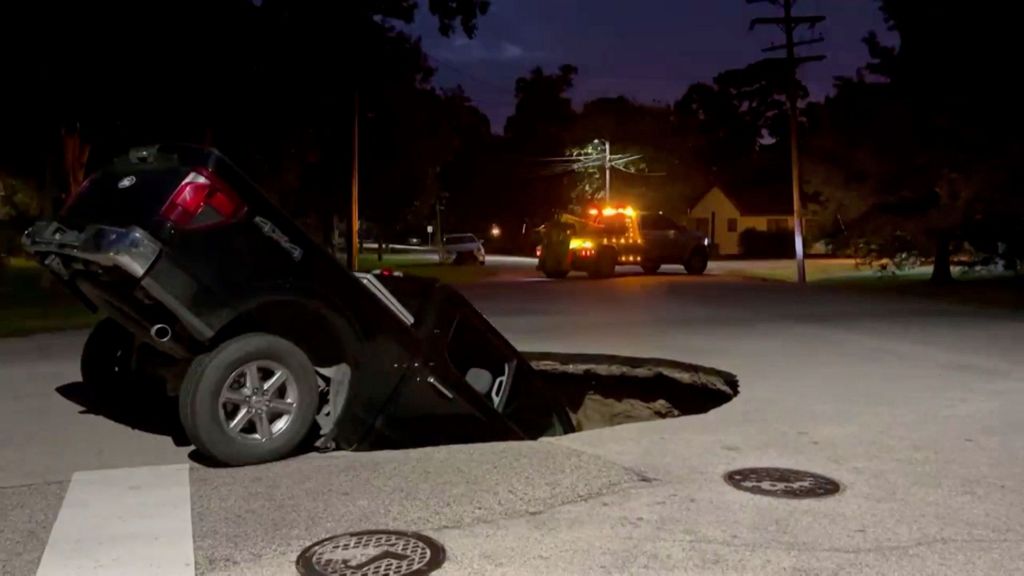
    A dramatic incident in Texas has gone viral after newly released footage captured a large sinkhole completely swallowing a full-size pickup truck, leaving onlookers stunned by the sudden geologic hazard. The shocking clip, which has circulated widely across local social media channels, shows the passenger vehicle plunged nose-first into the unexpected ground collapse, with its front end fully submerged in the hollowed opening and only a small portion of the truck’s rear frame visible above ground.

    Emergency response teams and roadside recovery crews were quickly dispatched to the scene to address the safety hazard and extract the trapped vehicle. After securing the surrounding area to prevent bystanders from getting too close to the unstable ground, crews brought in a heavy-duty tow truck to complete the delicate recovery operation. The step-by-step process, documented in the same video footage, shows the tow truck’s powerful winch system securing a firm hold on the sunken pickup before gradually lifting the vehicle back out of the sinkhole to solid, stable ground.

    Local authorities have not yet released information about any injuries reported in connection with the incident, nor have they shared details on what may have caused the ground collapse in the area. Sinkholes are a relatively common geologic occurrence in parts of Texas, often triggered by prolonged drought, heavy rainfall that erodes underground soil layers, or aging underground infrastructure that fails over time. Officials have urged residents in the region to stay alert for any signs of ground shifting in their neighborhoods and report any unusual depressions or soft spots to local public works departments immediately.

  • A Putin critic leaves Russia after he is barred him from running for parliament

    A Putin critic leaves Russia after he is barred him from running for parliament

    On Monday, 63-year-old Russian opposition figure Boris Nadezhdin, a vocal critic of Moscow’s military campaign in Ukraine who attempted to challenge President Vladimir Putin in the 2024 presidential election, announced he has departed Russia for exile in Paris. The exit comes after a year of escalating official crackdowns that blocked him from participating in this fall’s national parliamentary election.

    In a video message posted to the messaging platform Telegram, Nadezhdin stood in front of Paris’ iconic Eiffel Tower to share the news of his departure. “Good news: I’m alive and free. Unfortunately, not in Russia for the time being,” he stated, noting that he now plans to assess his options and map out his next steps moving forward.

    Nadezhdin’s path to exile began in early 2024, when he launched a long-shot presidential campaign centered on an explicit call for an end to the war in Ukraine. He managed to gather the thousands of voter signatures required to appear on the March 2024 ballot, but Russia’s Supreme Court ultimately disqualified him by ruling that more than 9,000 of his submitted signatures were invalid. The ruling left Putin with only nominal opposition in the election, which he won handily to secure a fifth presidential term.

    A veteran of Russian politics who first entered government in the 1990s as an adviser to current top Putin aide Sergei Kiriyenko, Nadezhdin went on to serve as a national lawmaker and later a municipal councilor. Before his exit, he was one of the last high-profile critics of the Kremlin still residing within Russian borders.

    Following his disqualification from the presidential race, Nadezhdin launched a bid for a seat in the State Duma, Russia’s lower parliamentary house, vowing to continue his opposition campaign even after the Russian Justice Ministry branded him a “foreign agent” in July 2024. The designation subjects recipients to heightened government surveillance and carries severe social stigma in Russia.

    Later that same month, a Russian court levied a fine of roughly $13 against Nadezhdin on charges of displaying “extremist symbols” — a charge Nadezhdin dismissed as entirely baseless. The charges stemmed from a 2023 online video that briefly included an image of Alexei Navalny, the late opposition leader who was convicted of extremism in a case widely condemned by international observers as politically motivated.

    The combination of the foreign agent label and the extremism-related conviction formally barred Nadezhdin from running in September’s parliamentary election, a contest widely expected to be tightly controlled by the Kremlin. The ruling United Russia party is seeking to retain its overwhelming majority in the Duma, with its only nominal opponents being small parties that consistently align with the Kremlin on key policy matters.

    This electoral cycle comes amid growing signs of public fatigue with the ongoing war in Ukraine, as widespread fuel shortages and deepening economic strain erode public support. Observers note this shifting public mood has led Russian authorities to narrow their tolerance for even token political opposition, leaving little space for dissenting voices to participate in the formal political process.

    Before his exit, Russian police briefly detained Nadezhdin over the extremism charge, and he was formally barred from leaving the country at the time. It remains unclear from Monday’s video announcement whether the travel ban has since been lifted, or if Nadezhdin crossed the border despite the restriction.

    Nadezhdin’s exit adds to a growing wave of dissent that has been driven out of Russia since the Kremlin launched its full-scale invasion of Ukraine in 2022. In the wake of the invasion, Russian authorities dramatically expanded a nationwide crackdown on anti-war speech and political dissent, targeting independent media, human rights groups, civil society organizers, and critics of the Putin government. Hundreds of dissidents have been imprisoned on politically motivated charges, while thousands more have fled the country to avoid prosecution.

  • Rhine falls to record low levels as drought strains Europe’s rivers

    Rhine falls to record low levels as drought strains Europe’s rivers

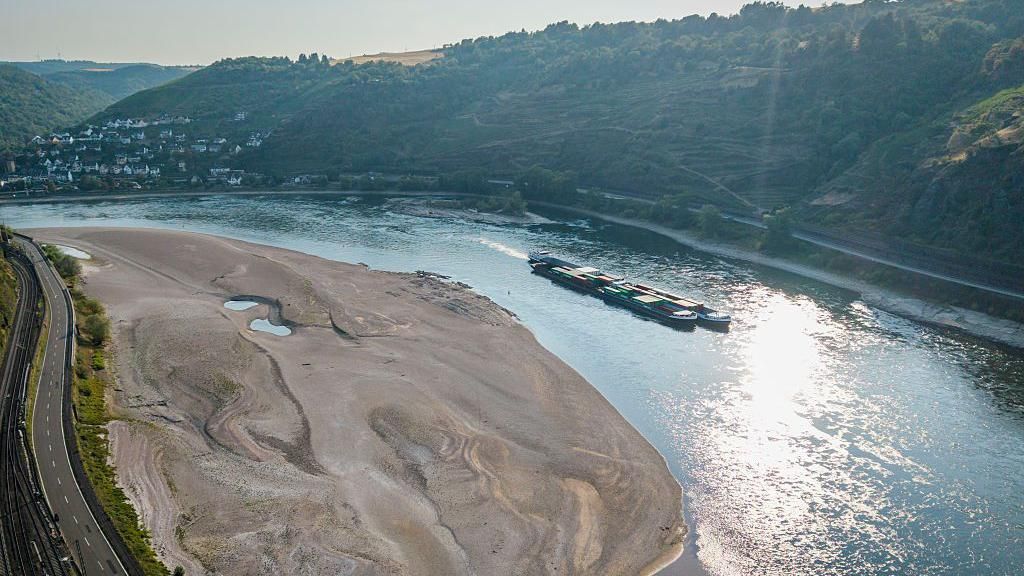
    As unrelenting heatwaves blanket much of Western and Central Europe, one of the continent’s most critical waterways has hit historic lows that are already rippling through regional economies and energy systems. The Rhine River, which stretches from the Swiss Alps to the North Sea, has dropped to all-time record low water levels at multiple measuring points in Germany and the Netherlands, according to official monitoring data from both countries. Last week, gauges in Cologne, Germany, and Lobith—where the Rhine crosses the German-Dutch border—recorded depths lower than any seen since systematic record-keeping began.

    This extreme water scarcity is not isolated to the Rhine. Other major European river systems that underpin cross-continental transport, power generation and agriculture have also plummeted to near-unprecedented lows. The Danube, which travels through 10 European countries, has dropped to its lowest levels in 30 years across Balkan and Central European sections, while Italy’s longest river, the Po, hit a historic low near Cremona in late July.

    Data from the European Union’s Drought Observatories shows that as of mid-July, drought conditions remained stable but critically severe across most of the continent, with dry conditions worsening further in central-western regions. Forecasters project that the renewed heatwave will persist for at least another seven days, pushing temperatures above 40 degrees Celsius across broad swathes of central and southern Europe.

    Germany’s National Low Water Information System (NIWIS) reported that by the end of July, 44% of all Rhine monitoring stations and 78% of Danube stations had registered extremely low water levels. As one of Europe’s busiest inland waterways, the Rhine’s falling depths have sparked urgent concerns about widespread economic disruption from restricted shipping. On Friday, water depth at the critical Kaub chokepoint near Koblenz matched the 2018 record low of 25 centimeters, before ticking up slightly over the weekend. The Kaub gauge is a key benchmark for Rhine navigability, as its measurement directly determines how much cargo vessels can safely carry. Extremely low levels here sharply restrict the capacity of inland shipping.

    Martin Wolters, a representative of the Rhine Waterways and Shipping Authority, told German public broadcaster WDR that a full suspension of shipping along the river is unlikely, but mandatory precautions will still drive up costs and create supply chain bottlenecks. Vessels must spread cargo across more ships to reduce draft, a change that cuts total transport capacity and increases operational costs. “There comes a time when loads are too small to be worthwhile or vessel owners are worried about damaging their ships,” one commodity trader told Reuters.

    The drought has already triggered cascading disruptions to Europe’s energy sector along the Danube. Hungary was forced to shut down its only nuclear power plant last week due to insufficient water for cooling systems, and Prime Minister Peter Magyar confirmed Monday that the timeline for restarting operations remains uncertain. “We don’t know when we will be able to restart [the plant]. We hope that it will happen as soon as possible and we hope that the cooling, liberating rain that the forecasters do not yet see coming will arrive,” Magyar said.

    Neighboring countries have also faced energy disruptions: Serbia has reduced output at its coal-fired power plants because of cooling system failures linked to low water levels, while Romania carried out a controlled explosion to clear a large rock from the Danube’s banks to increase water flow to the Cernavoda nuclear power plant.

    In Italy, the historic low levels of the Po have forced authorities to raise drought alerts to “high” across the entire Po Valley, with experts warning of potential disruptions to drinking water supplies. Reduced flow at the river’s mouth has also allowed Adriatic saltwater to intrude upstream into the riverbed, disrupting freshwater ecosystems and leaving farmers without usable irrigation water for crops.

    While a recent analysis from the World Weather Attribution scientific group found no clear long-term downward trend in rainfall across most of Europe, researchers confirmed that anthropogenic climate change is amplifying drought risk by raising temperatures and increasing evaporation of soil and surface water moisture. Higher temperatures also drive increased demand for freshwater for household, agricultural and industrial use, exacerbating already tight supply. Prolonged drought also lowers lake levels, reducing overall stored freshwater reserves across the continent.

    The 2022 European drought, one of the worst on record, contributed to a surge in wildfire activity that pushed carbon emissions well above the 21st century average, according to data from the EU’s Copernicus Climate Change Service.

  • Court fight begins over South Africa’s land law that irks the Trump administration

    Court fight begins over South Africa’s land law that irks the Trump administration

    JOHANNESBURG — Legal arguments over South Africa’s polarizing Expropriation Act, a land reform policy that has severely strained bilateral ties between Pretoria and the former Trump administration, got underway in the Western Cape High Court on Monday. The judicial challenge marks a critical flashpoint in the country’s decades-long effort to redress historical injustices stemming from the apartheid era.

    Enacted last year by President Cyril Ramaphosa, the Expropriation Act forms the cornerstone of the South African government’s push to address the deep-rooted land dispossession and systemic economic inequality that defined 40 years of white minority apartheid rule, which formally ended in 1994. Under the legislation, the national government gains the authority to seize privately held land when doing so serves the public good. It also allows for expropriation without financial compensation in cases where negotiations over a fair purchase price collapse. Government officials have repeatedly emphasized that the law does not permit arbitrary land seizures, and that its core goal is to bring underutilized private land into productive use to benefit historically disadvantaged Black South African communities.

    The law has sparked fierce domestic and international backlash. Then-U.S. President Donald Trump claimed the legislation was crafted to specifically target white South African farmers, and used the policy as justification to cut all U.S. financial aid to South Africa and place steep new trade tariffs on the country. The Trump administration also moved to grant asylum to Afrikaner farmers—descendants of Dutch and other European settlers who arrived in South Africa more than 300 years ago—who claimed they faced systemic persecution, a claim the South African government rejects.

    Leading the domestic legal challenge is the Democratic Alliance, South Africa’s main opposition party that currently holds a seat in the country’s national unity government. The party has joined forces with multiple civil society and lobby groups to contest the law’s constitutionality. Other parties to the lawsuit include the Institute for Race Relations, which argues the law fails to establish sufficient protections for private property rights, and AfriForum, a prominent Afrikaner advocacy organization.

    On the opening day of proceedings, legal representatives for the challengers argued that the Expropriation Act directly violates foundational protections for private property enshrined in South Africa’s post-apartheid constitution, which explicitly bans the expropriation of land without just compensation. Court proceedings are scheduled to continue through the end of this week, but there is no clear timeline for when judges will issue a final ruling. Judicial observers note the ruling could take weeks or even months to be delivered, as the court weighs the complicated constitutional and societal questions at the heart of the case.

  • Russian Embassy in Rome blames Ukraine for deadly Italian restaurant bombing in Moscow

    Russian Embassy in Rome blames Ukraine for deadly Italian restaurant bombing in Moscow

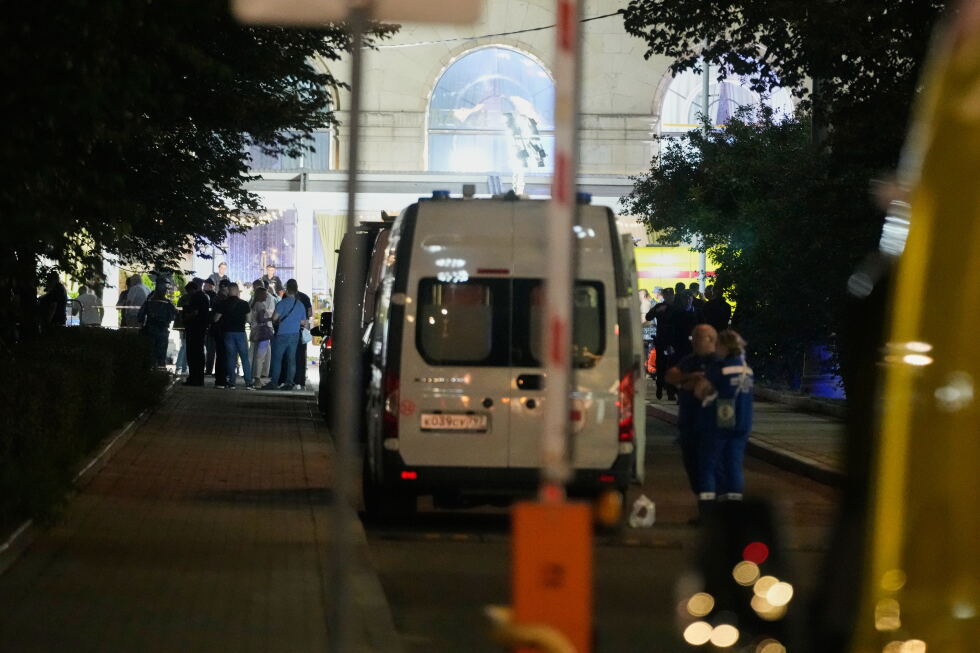
    A deadly bombing that ripped through an upscale Moscow restaurant over the weekend has sparked a sharp diplomatic accusation, with Russia’s Embassy in Rome placing responsibility directly on Ukrainian authorities on Monday. The Saturday evening attack on the Balzi Rossi restaurant, a popular dining spot located on the ground floor of one of Moscow’s iconic Stalin-era skyscrapers, has left five people dead and 19 others injured, according to the Russian Embassy’s statement.

    In the scathing public statement, the diplomatic mission labeled the attack as the work of “Kyiv terrorists,” framing the incident as a deliberate campaign to intimidate Italian citizens working in Russia. The bombing was intended, the embassy argued, to send a clear message that Italians based in Russia are intentional targets and could face violence as the next victims. The statement also noted that the restaurant’s Italian head chef and his team escaped unharmed, crediting the vigilance and self-sacrifice of a Russian security guard for their survival.

    Initial official reports from Russia’s National Anti-Terrorism Committee, the inter-agency body that oversees domestic security responses, put the death toll at three immediately after the blast, with 21 people reported injured. The committee confirmed that the explosive device was brought into the venue by a female attacker, who died alongside a security guard that intercepted her and a restaurant guest. It did not, however, identify a suspected mastermind or state who the intended target of the attack was. To date, the Russian Foreign Ministry has not responded to requests to clarify the discrepancy between the updated death toll and the initial official count, nor has it issued an independent statement confirming the embassy’s claims. Ukraine has not issued any immediate comment in response to Russia’s accusations.

    Unconfirmed local media reports have circulated in the hours after the attack claiming that the strike targeted a senior Russian military general celebrating a birthday at the restaurant. Multiple Russian outlets have named the alleged intended target as Colonel-General Alexander Chaiko, recently appointed to lead Russia’s aerospace forces. These claims have not been verified by independent third-party observers.

    This latest bombing fits a pattern of targeted attacks on Russian soil that Moscow has repeatedly blamed on Kyiv since the full-scale invasion of Ukraine began in February 2022. Following a string of earlier strikes on senior military and political figures earlier this year, Russian federal security officials announced sweeping measures to tighten protective security for high-ranking government and military personnel.

    The list of high-profile attacks stretches back more than two years. In December 2024, a scooter bomb killed Lieutenant General Igor Kirillov, commander of Russia’s nuclear, biological and chemical protection forces — one of the few such attacks that Ukraine openly acknowledged responsibility for. That same year in April 2025, a car bomb that Russia blamed on Kyiv killed Lieutenant General Yaroslav Moskalik, a deputy chief of the Russian General Staff’s main operational department; Ukraine did not claim the attack but suggested it was behind the strike. In December 2024, a car bomb attack in southern Moscow killed Lieutenant General Fanil Sarvarov, head of the Russian Armed Forces General Staff’s Operational Training Directorate, which Ukraine did not comment on. Earlier this year, Lieutenant General Vladimir Alexeyev, deputy head of Russia’s GRU military intelligence agency, survived an assassination attempt that left him shot three times at his Moscow apartment, an attack Ukraine denied involvement in.

    Beyond senior military officials, two other high-profile figures linked to the Kremlin have been killed in attacks on Russian soil: Daria Dugina, daughter of prominent ultranationalist thinker Aleksandr Dugin, and Vladlen Tatarsky, a widely followed pro-Kremlin military blogger. Ukraine denied any role in Dugina’s death and has declined to confirm or deny involvement in Tatarsky’s killing.

  • ‘It’s just a loss to Ireland’: Fans pay tribute to Glen Hansard at public wake

    ‘It’s just a loss to Ireland’: Fans pay tribute to Glen Hansard at public wake

    The Irish music community and fans from across the globe are gathering in Dublin this week to mourn the sudden passing of legendary Oscar-winning singer-songwriter Glen Hansard, who died last week in a tragic single-vehicle motorcycle crash. A public wake, open to all who wish to pay their respects, is being held on Monday at the Baroque Chapel of the Irish Museum of Modern Art (IMMA) in Dublin’s Kilmainham neighborhood, one day ahead of Hansard’s formal funeral service.

    By early Monday morning, a queue of hundreds of mourners already stretched around the IMMA grounds, with organizers projecting thousands of attendees will pass through the venue over the course of the day. Though the line moved steadily, new visitors continued to arrive through the morning, each coming to honor the musician who left an indelible mark on Irish music and culture.

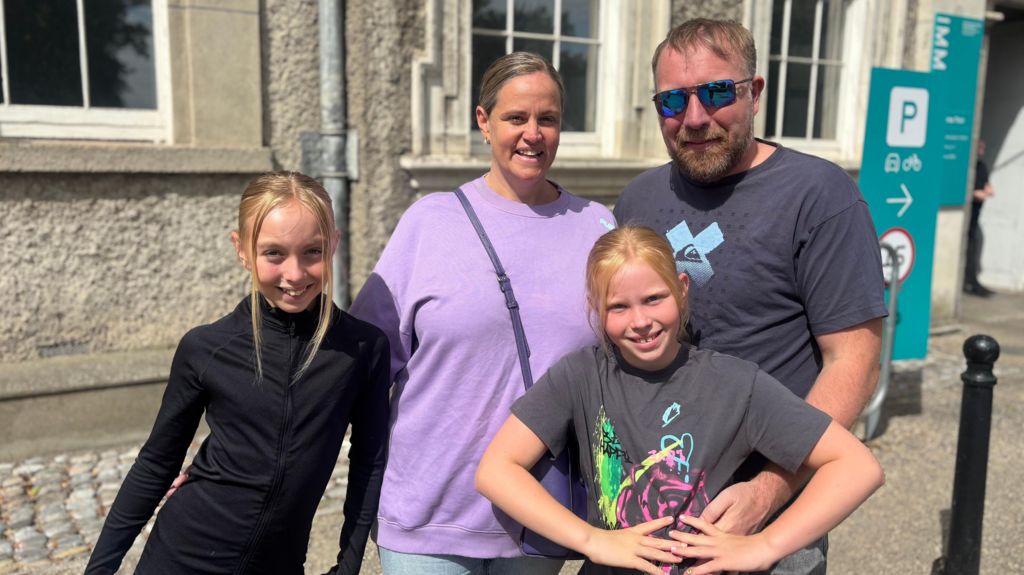
    For many attendees, Hansard’s music was woven into the most meaningful chapters of their lives. Ronan Buckley, who attended the wake with his wife Rebecca and their two children, Leah and Lily, explained why the whole family made the trip to pay their respects. “I’ve been to dozens of his concerts, his music was extraordinary, and his perspective on life was truly brilliant,” Buckley said. Rebecca Buckley added that the children had grown into fans through their parents’ love of Hansard’s work, calling his death “a massive loss for Ireland.”

    Danni Rohde, a lifelong fan of Hansard’s long-running band The Frames, has attended roughly 50 of the group’s live shows, including one of Hansard’s final public performances at Dublin’s Trinity College on July 3. For Rohde, the band’s music shaped her formative young adult years. “That whole era of my late teens and early 20s is completely tied to Frames gigs, when they played almost every weekend,” she told reporters. “It still doesn’t feel real that he’s gone.” She attended the wake alongside her mother, Miriam Rohde Joyce, who said they felt compelled to come honor Hansard’s legacy.

    Longtime fan Chris James shared his own story of connection to the musician, recalling first seeing Hansard busk on Dublin’s iconic Grafton Street 25 years ago. Waiting near the front of the queue after roughly 30 minutes in line, James said that encounter changed the course of his life. “It was one of the most incredible things I’d ever seen, and it’s one of the main reasons I picked up the guitar and started playing,” he explained. “I met him a couple of times over the years, and he was just such a lovely, totally unassuming man. He cared deeply about people, recognized how much hardship so many face, and instead of complaining about it, he just brought people together through his music.”

    Hansard’s funeral service will be held Tuesday afternoon at 1:30 p.m. local time at Dublin’s St Patrick’s Cathedral. News of the musician’s sudden death sent shockwaves through the global music industry, triggering an outpouring of tributes from artists across generations. Global music stars including Ed Sheeran and Bruce Springsteen have shared their grief, with Springsteen saying he was “heartbroken” by the loss.

    Over a three-decade career, Hansard built a reputation as one of Ireland’s most beloved and authentic musical voices. His most notable career milestone came in 2008, when he and collaborator Marketa Irglova won the Academy Award for Best Original Song for the hit track “Falling Slowly” from the low-budget romantic musical film *Once*. The pair went on to release three full-length albums together as the duo The Swell Season, while Hansard also found critical acclaim as a solo artist. His 2016 solo record *Didn’t He Ramble* earned a Grammy Award nomination, cementing his status as a leading figure in global folk and rock music.

  • Grieving mother dolphin carries her dead calf for days

    Grieving mother dolphin carries her dead calf for days

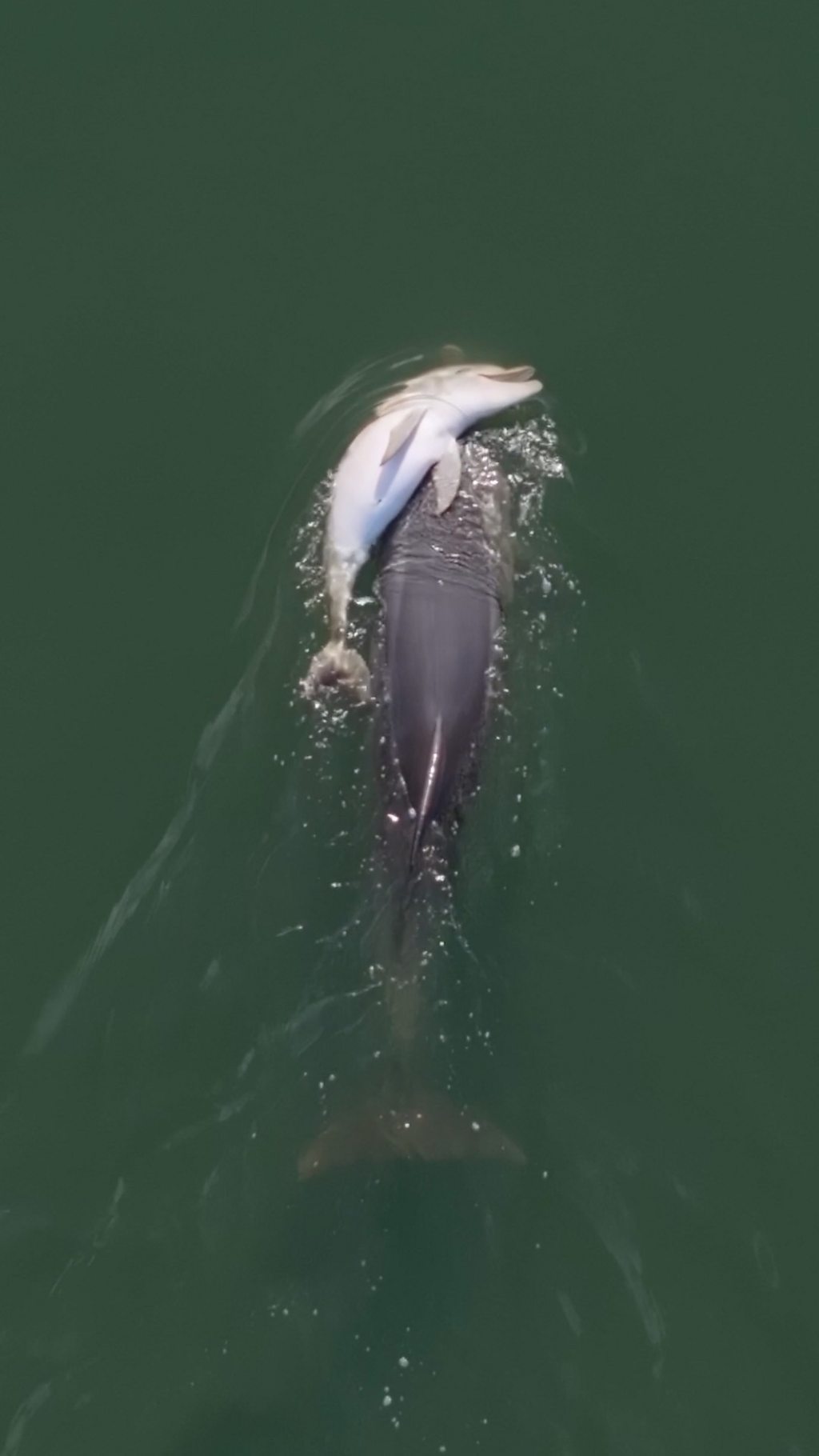
    Marine observers have documented a deeply moving display of animal emotion, as a mother dolphin has been observed carrying her deceased calf through the water for multiple consecutive days in an extended period of mourning. The remarkable behavior, which has captured the attention of marine biologists and animal lovers alike, offers a rare and intimate look at the complex emotional lives of cetaceans, long hypothesized by researchers to experience grief and social bonding similar to humans. Witnesses to the event say the mother dolphin stayed close to her calf at all times, using her body and fin to keep the lifeless infant near the surface, refusing to leave it behind despite days passing since the calf’s death. This incident adds to a growing body of anecdotal and scientific evidence that dolphins, known for their high intelligence and tight-knit social structures, possess deep emotional capacities that extend to mourning their dead.

  • Moroccan king’s letter confirms naming of major highway in honour of Trump

    Moroccan king’s letter confirms naming of major highway in honour of Trump

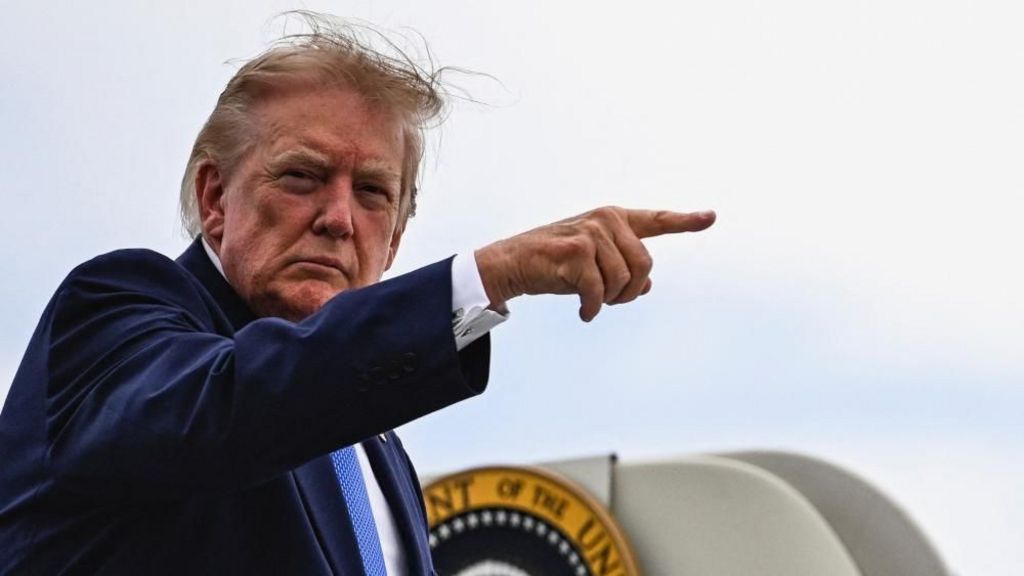
    Nearly five years after the Trump administration upended decades of international consensus on Western Sahara by formally recognizing Moroccan sovereignty over the disputed territory, Rabat has moved to honor the former U.S. president with a high-profile naming gesture. Morocco’s state-run press agency has released a previously unannounced letter from King Mohammed VI to Donald Trump, confirming that the strategic 1,055-kilometer Tiznit-Dakhla highway that stretches into Morocco-occupied Western Sahara will be renamed in Trump’s honor.

    The honor was first revealed by Trump himself last week, when the former president posted a message of thanks to King Mohammed on his Truth Social platform, alongside a video highlighting the nearly $1 billion infrastructure project. Until the royal letter’s publication over the weekend, Moroccan officials had not publicly confirmed the decision. In the correspondence dated July 2, King Mohammed described the renaming as a deeply personal gesture of respect, noting that the decision is rooted in gratitude for Trump’s landmark 2020 policy shift.

    That 2020 policy change came as part of a broader brokered deal between the two nations: Morocco agreed to normalize diplomatic relations with Israel, in exchange for the U.S. breaking with longstanding global neutrality to recognize Rabat’s claim over the entire Western Sahara region. In his letter, the Moroccan monarch emphasized that this decision will hold a permanent place in Moroccan collective memory, writing that Trump’s “historic recognition… of Morocco’s sovereignty over its Sahara” would “forever be etched in the memory of Moroccans, from generation to generation.” He added that while bilateral ties between Morocco and the U.S. have long been defined by close friendship and steady loyalty, the relationship has grown more dynamic and productive than ever during Trump’s two presidential terms.

    The highway itself is framed by Moroccan authorities as a critical strategic corridor connecting the northern and southern areas of the country, a designation that aligns with Rabat’s formal position that Western Sahara is an integral part of Morocco, referred to officially as the kingdom’s “southern provinces.”

    The Western Sahara dispute is one of the longest-running territorial conflicts on the African continent, spanning more than 50 years. The territory was a Spanish colony until Spain’s withdrawal in the 1970s, and the United Nations still classifies it as a non-self-governing territory pending a final resolution. Morocco controls and claims most of the territory, while the Algeria-backed Polisario Front leads an armed independence movement for the indigenous Sahrawi people, controlling a smaller portion of the region. The UN has long advocated for a binding referendum that would allow Sahrawi residents to determine their own future, but that vote has never been held.

    International stances on the dispute have shifted in recent years. The African Union formally recognizes the independence of the Sahrawi Arab Democratic Republic, while many European nations maintained a neutral position for decades. In recent years, however, key powers including the United Kingdom and Spain have publicly backed Morocco’s proposal for regional autonomy under Moroccan sovereignty, rejecting full independence for the territory.

    In his Truth Social post, Trump expressed enthusiasm about the honor, writing that he looks forward to traveling the full length of the renamed highway someday in the near future.